It was a weekend of firsts in Paris. On Sunday afternoon, before a packed Court Philippe-Chatrier, Alexander ‘Sascha’ Zverev lifted his maiden Grand Slam trophy at 29. The weight of the moment was palpable for a player who had already lost three major finals, and whose nerves were tested once more in a five-set battle against Italian powerhouse Flavio Cobolli. A day earlier, 19-year-old Mirra Andreeva had claimed her own maiden Slam, overcoming Maja Chwalinska in straight sets. Here is our breakdown of the 2026 Roland Garros finals.
Zverev had come painfully close before: the US Open in 2020, Roland Garros in 2024 and the Australian Open in 2025. Of those three Grand Slam defeats, the first left the deepest scar. The losses to Carlos Alcaraz and Jannik Sinner came against the tour’s defining forces. But the 2020 final against Dominic Thiem was there to be won. Ever since, a mix of self-inflicted pressure and media-driven scrutiny has followed Sascha into the latter stages of the majors. Frequently labelled “the best player never to win a Slam”, the German carried a burden that only grew heavier with the years.
Yet over the past two weeks, Zverev had been acutely aware of the pressure surrounding him, particularly after Sinner’s defeat to Juan Manuel Cerúndolo opened the draw. Still, he played it cool. In press conferences, his stoic approach positioned him as a player focused on his own game rather than the opponents around him. On Sunday, against Flavio Cobolli, that mindset appeared to work in the opening set, as he powered past the Italian 6-1. Zverev stood just two sets away from his first Grand Slam title.
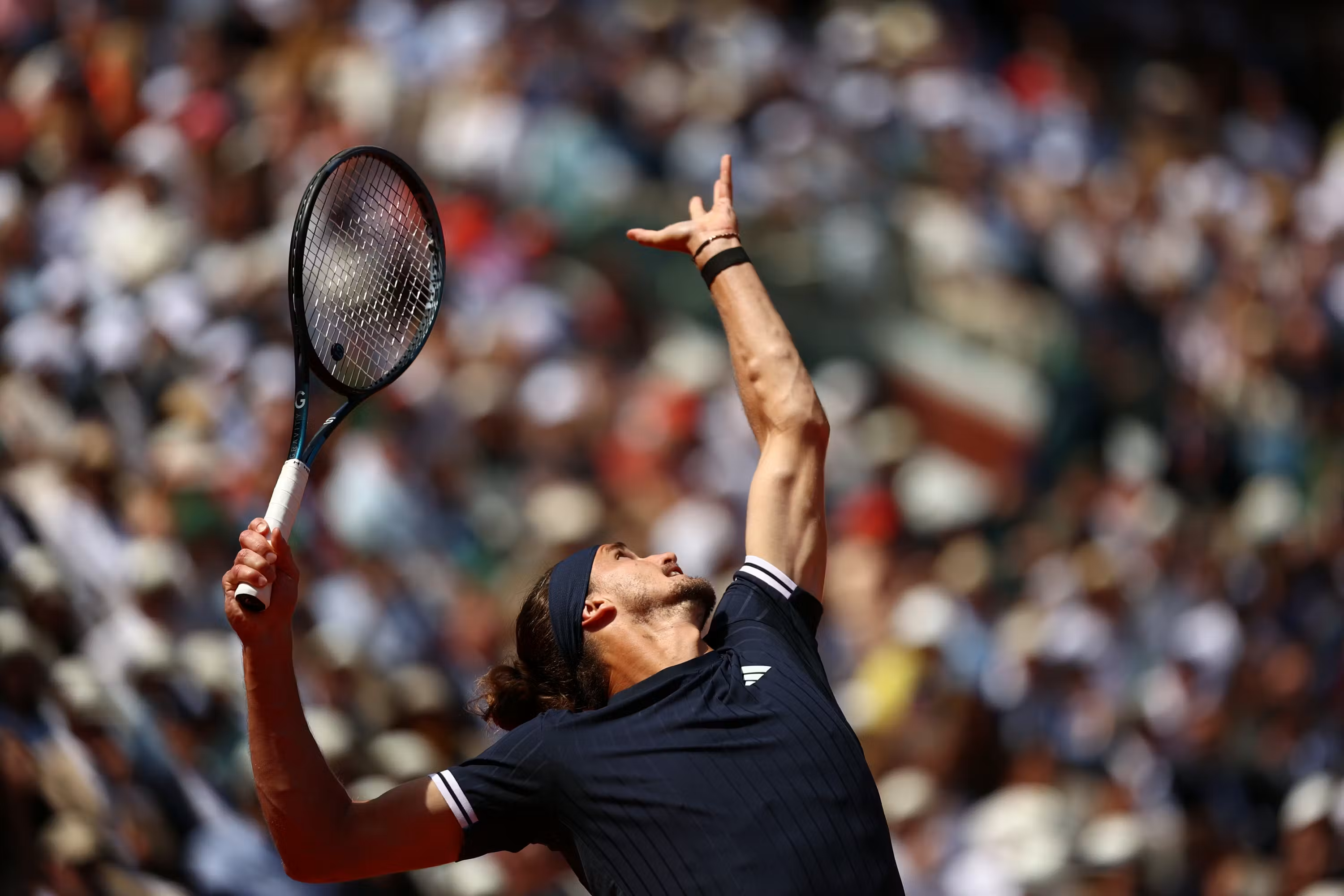
What followed in the second set, however, was worthy of a Roland Garros finalist: tenacity and courage from a Roman player whose level continued to rise. Faced with a sharper, more energised opponent, Zverev struggled to find his rhythm, accuracy and serve. At 3-3, two double faults and an unforced error on break point handed Cobolli the opening. The Italian took it, closing the set 6-4.
Sunday’s Roland Garros final became a rollercoaster of emotion for players and crowd alike. In the third set, Zverev recomposed himself, rediscovering his serving rhythm and applying pressure to Cobolli, who was beginning to struggle behind his own. The German had identified the Italian’s backhand as the weaker wing and returned to it whenever an opening appeared. From 30-0 up, Cobolli then produced three unforced errors, allowing Zverev to seize the set.
The fourth was the real test. Cobolli broke early, sending a clear message that he was ready to force a decider. Yet at 3-2 on serve, the Italian fell 0-40 behind and, after a tense deuce, handed Zverev the chance to break back. What followed was an uneasy battle, both players visibly gripped by the weight of the moment. Zverev stood one set away from becoming Roland Garros champion, but the prospect of losing that opportunity seemed to tighten his game. Cobolli sensed it, moving 5-3 ahead as the German began to show signs of cramp. Still, Zverev refused to let the set slip quietly. He broke back with a sequence of sensational shots, dragging the fourth into a tie-break.
The tie-break became the first of two defining tests between Zverev and the title. Yet Cobolli’s resilience would not let him through easily. The Italian played with the urgency of a man fighting for survival. At the start, Zverev moved 3-1 ahead and appeared close to closing the match, but Cobolli regained control on serve and edged in front at 4-3. The pressure then returned to the German, whose sixth double fault of the final offered another opening. Cobolli seized it, sealing the tie-break with a stunning forehand winner.
The effort, however, left the Italian drained. Exhaustion and frustration caught up with him in the fifth set, as he surrendered his opening service game and handed Zverev the initiative. Cobolli never recovered. In a mirror image of the first set, he was swept aside 6-1. At last, Zverev collapsed onto the clay, overwhelmed by a court that had tested him repeatedly through the years: first with an almost career-ending injury, then with a painful final defeat. This time, Roland Garros finally belonged to him.
A few words must be reserved for the Italian world No.10, who three years ago was dismissed by Carlos Alcaraz in the opening round. Cobolli became only the third Italian man in the Open Era to reach the Roland Garros singles final, and he did so with courage and conviction.
After a nervous opening set saw him swept aside by Zverev, the Roman returned with his characteristic charm and energy. Behind him stood a blue wall of Italian Tennis Federation supporters. Cobolli used them as a shield, a propeller and, at times, a punching bag for every emotion that surfaced on court. Few players wear their character so visibly.
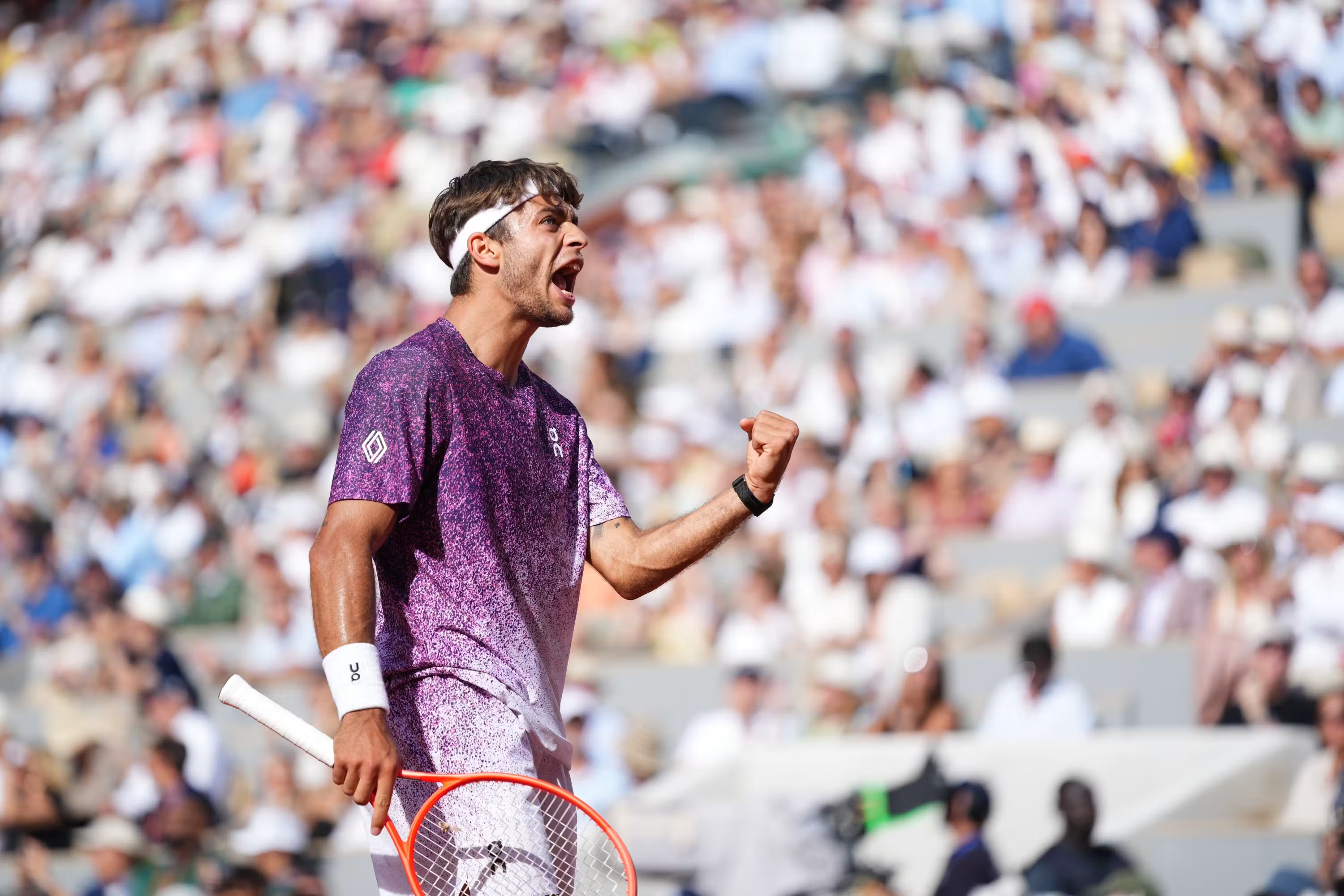
Cobolli recovered to take the second set, fell behind again in the third and then delivered a sensational fourth. So intense was the effort that it ultimately left him short of the energy required to contest the fifth on equal terms. Yet Roland Garros, and tennis fans around the world, will remember him for turning the final into a battle rather than a routine coronation. He covered every corner of the court, feathered drop shots, unleashed his formidable forehand and fought to protect his backhand for as long as he could.
Behind him, on Court Philippe-Chatrier, the words read: “Victory belongs to the most tenacious.” Cobolli embodied that spirit at a level he had never reached before. He may have left Paris without the trophy, but with the talent, energy and belief to return to a Grand Slam final before long.
On the women’s side, Mirra Andreeva made history at just 19. The Russian, coached by the widely respected Conchita Martínez, dispatched Polish qualifier Maja Chwalinska, the world No.114, in straight sets, 6-3, 6-2. Chwalinska’s run had already been remarkable: she became only the second qualifier in the Open Era to reach a Grand Slam final.
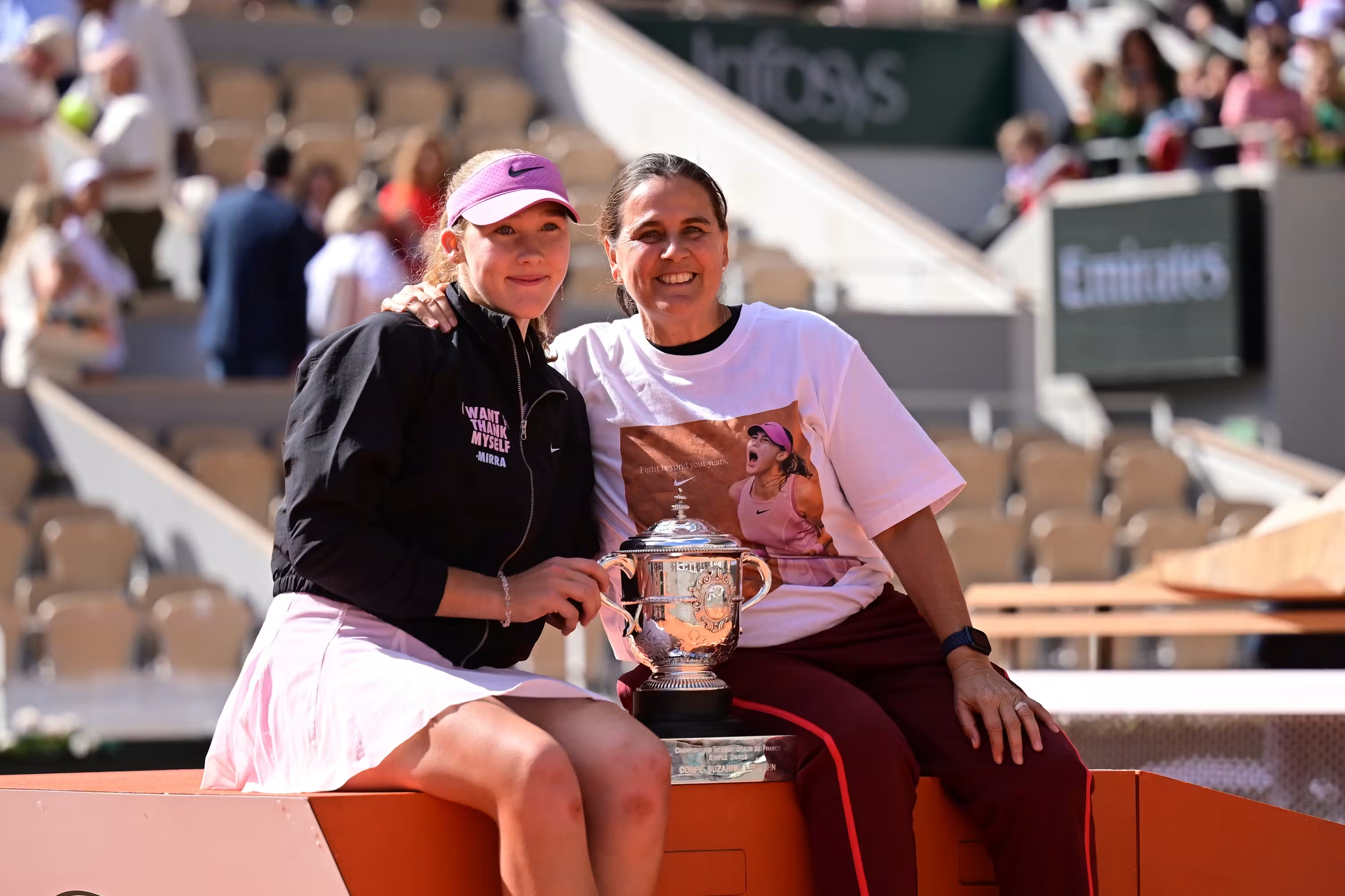
Andreeva came close to succumbing to her emotions in the opening set, tested by windy conditions and an resistant opponent. Yet emotional control has become central to her rise and part of Martínez’s light-hearted approach, their playful relationship and the work of sports psychologist Alexis Castorri – which have all helped the young prodigy to manage the pressure surrounding her talent.
The result confirmed Andreeva as the youngest Roland Garros champion since Monica Seles in 1992, and the third-youngest Grand Slam winner of the 21st century after Maria Sharapova and Emma Raducanu. Such early success is difficult to replicate, and harder still to sustain. Andreeva’s next challenge is not proving she belongs at the summit, but learning how long she can remain there.
With clay behind them, the tennis elite now turn sharply towards grass and the road to Wimbledon. Here is what is worth tuning into:
· Stuttgart Open (250/ATP), June 8 -14 with the likes of Fritz, Tiafoe and Bublik.
· Queen’s Club (500/WTA), June 8 -21 with the likes of Elena Rybakina, Marta Kostyuk and Victoria Mboko.
Wimbledon’s Main Draw begins on June 29th.