Only Roland Garros can descend into this kind of tennis madness. Within a week, Jannik Sinner and Novak Djokovic were gone, the men’s draw was thrown wide open and a new generation suddenly found itself within touching distance of Parisian glory. Meanwhile, the women’s draw has lost defending champion Coco Gauff and four-time winner Iga Swiatek, leaving Aryna Sabalenka as the clear favourite to conquer clay. Here’s our take on the most unpredictable Slam of the decade.
The world No.1 arrived in Paris chasing the one title missing from his collection: Roland Garros. With Carlos Alcaraz ruled out and Sinner riding a remarkable streak of seven consecutive Masters 1000 titles, few doubted he was the man to beat. He opened his campaign in a night session after temperatures had climbed to 33°C during the day, dispatching Clément Tabur 6-1, 6-3, 6-4 with usual authority. Yet when his second-round clash with Juan Manuel Cerúndolo was scheduled for a daytime slot on Thursday, few imagined that Sinner’s greatest obstacle in Paris would not be his opponent.
If there is one condition that can trouble Sinner, it is extreme heat and humidity. Signs had already appeared earlier this year at the Australian Open, where severe cramping only subsided after the roof was closed and the air conditioning switched on. In Paris, the Italian was comfortably above Juan Manuel Cerúndolo’s level, leading 6-3, 6-2 and 5-1. Four points away from victory, however, the match turned. Sinner’s legs began to shake, stumble and, within minutes, the world No.1 could barely move around the court.
What followed had never been seen before with him. He lost 18 consecutive points, took a medical timeout and even asked the umpire whether he could leave the court to vomit. From that moment, the task for Cerúndolo became simple in theory, though far from easy in practice: stay composed, avoid the pressure of facing a visibly impaired opponent and keep striking winners. The Argentine did exactly that, completing one of the tournament’s great turnarounds to win 3-6, 2-6, 7-5, 6-1, 6-1 and defeat the world’s No.1 player. Let that sink in for the 56th ranked 24-year old who is playing the fourth round this evening against Matteo Berretini.
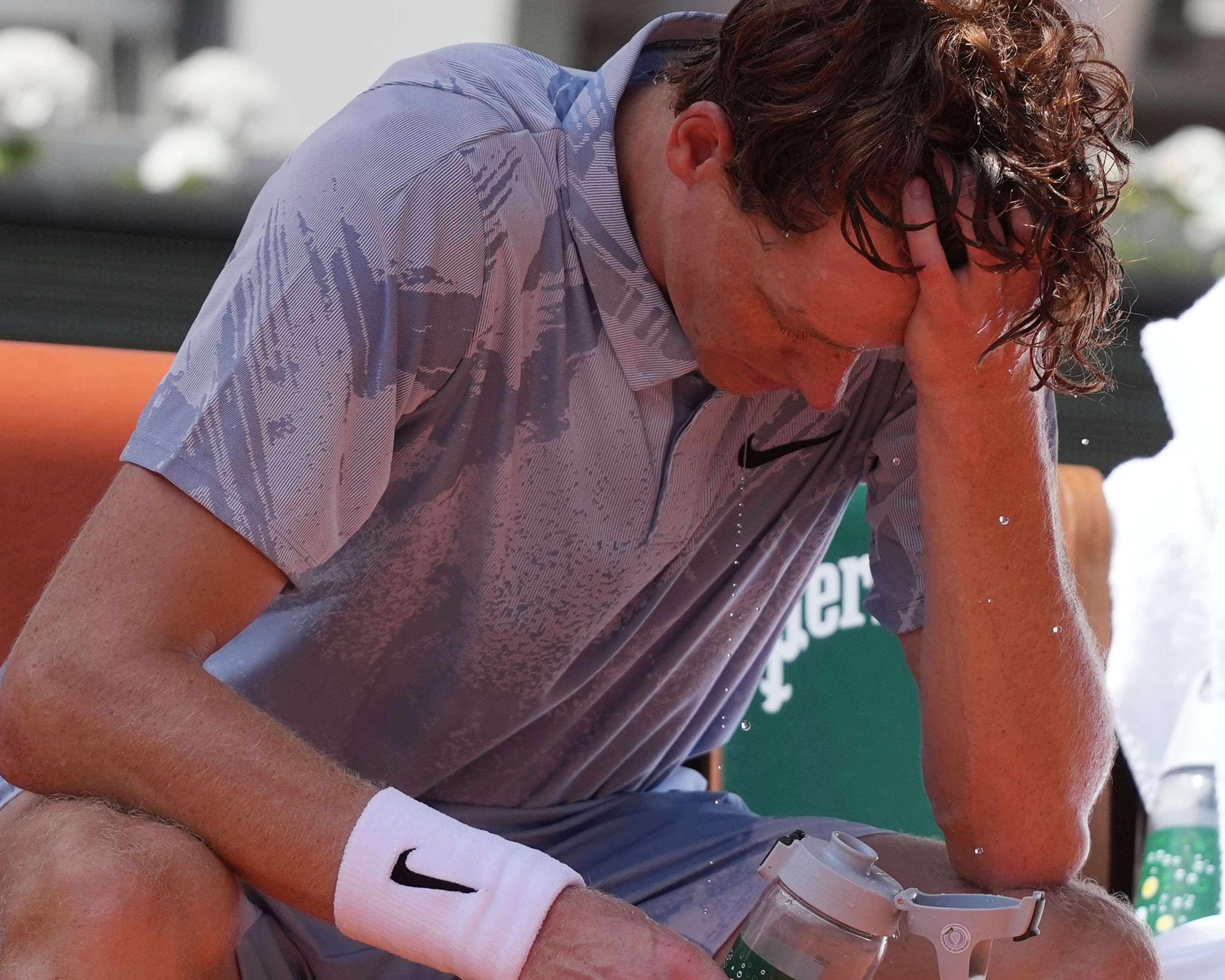
What followed had never been seen before with him. He lost 18 consecutive points, took a medical timeout and even asked the umpire whether he could leave the court to vomit. From that moment, the task for Cerúndolo became simple in theory, though far from easy in practice: stay composed, avoid the pressure of facing a visibly impaired opponent and keep striking winners. The Argentine did exactly that, completing one of the tournament’s great turnarounds to win 3-6, 2-6, 7-5, 6-1, 6-1 and defeat the world’s No.1 player. Let that sink in for the 56th ranked 24-year old who is playing the fourth round this evening against Matteo Berretini.
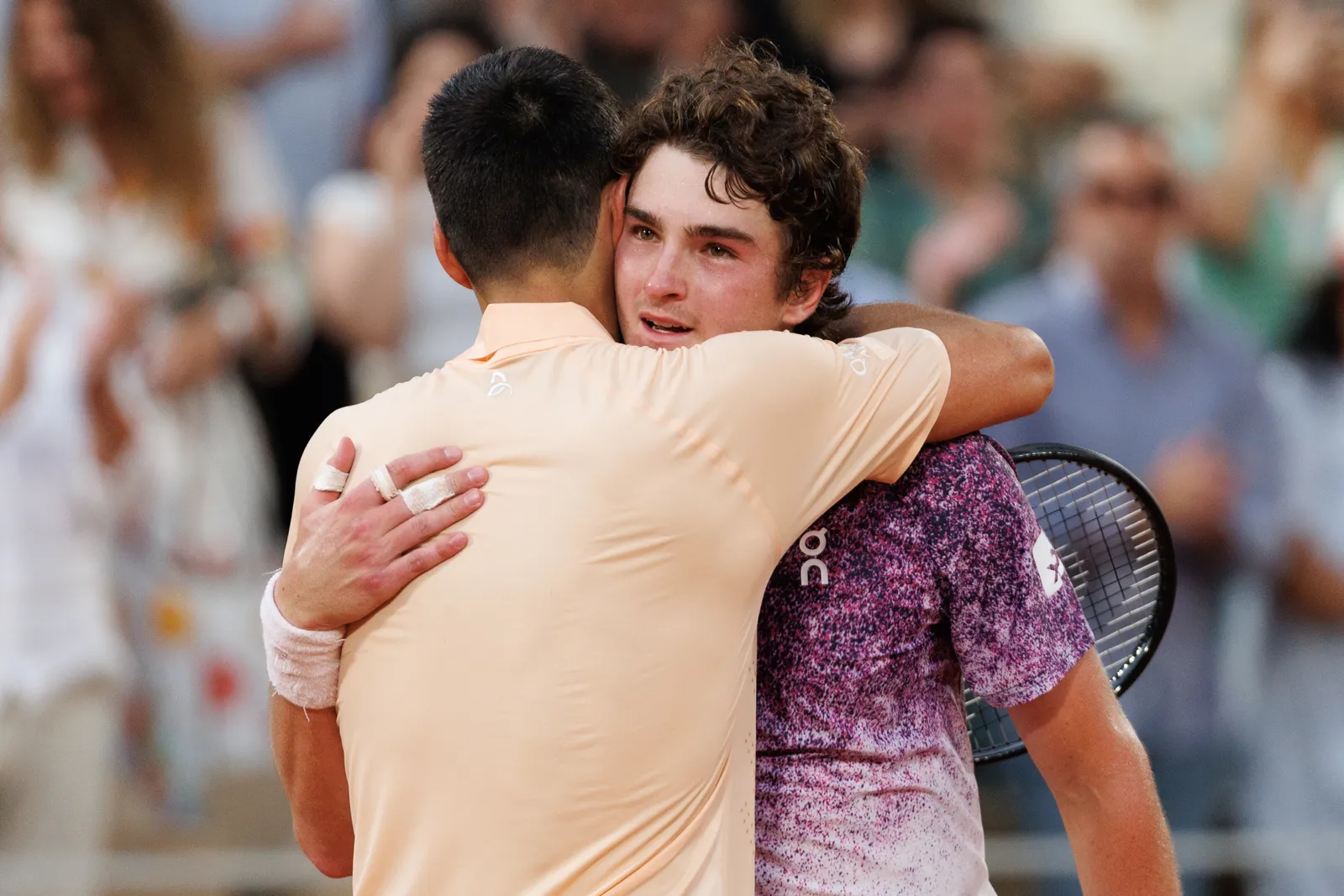
After Sinner’s exit, the spotlight shifted to Novak Djokovic and his pursuit of a record-extending 25th Grand Slam title. Few imagined what followed. Djokovic had lost only once in Grand Slam history after leading by two sets to love. João Fonseca delivered the second blow. With a break advantage in the fifth set, Djokovic appeared to have one foot in the next round. Yet Fonseca refused to bend. The Brazilian broke back, swung the momentum entirely in his favour and sealed one of the biggest victories of his career with three consecutive aces. Paris had lost another favourite.
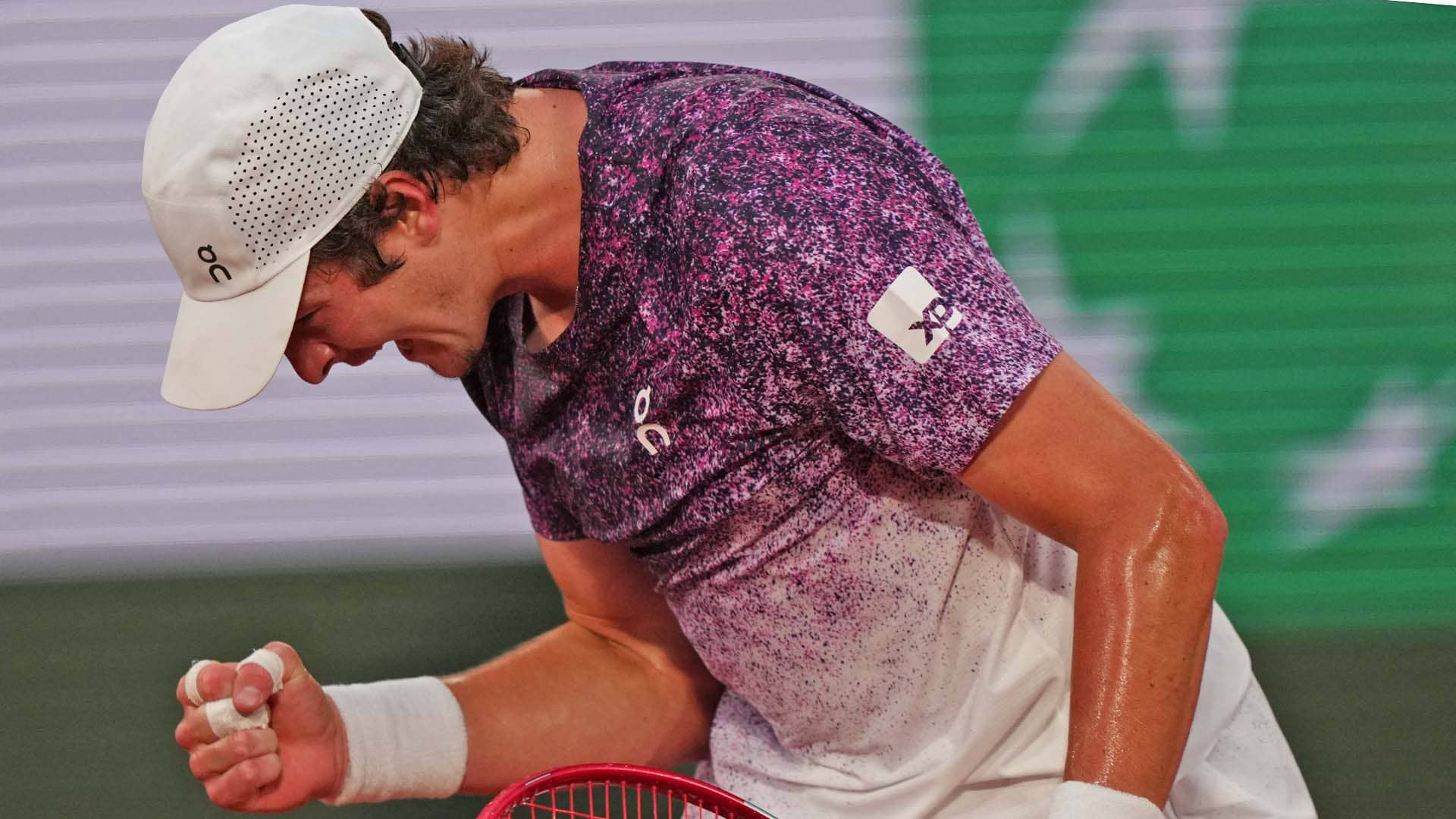
Joao Fonseca, the 19-year-old Brazilian marvel we’ve been impressed by since his Next Gen ATP win is hitting harder than anybody else at Roland Garros. Not only did he sentence Novak Djokovic in what probably has been his biggest career win through sheer power, but last night delivered the best performance this year’s Roland Garros has ever seen in a breathtaking match against Casper Ruud, the clay court specialist.
Fonseca defeated the Norwegian 7-5, 7-6 (8), 5-7, 6-2 in a battle that stretched close to four hours. Comparisons with Gustavo ‘Guga’ Kuerten, Brazil’s only Roland Garros champion, have inevitably followed. Kuerten arrived in Paris in 1997 outside the world’s top 50 and left with the trophy at age 20. Fonseca, ranked No.30, has now become only the second Brazilian man to reach the Roland Garros quarter-finals - and he is still just 19.
It was fitting, then, that Guga watched from the front row. “He was here for my first match as a junior. It’s a pleasure to have him back here and to win in front of him,” Fonseca said, almost breathless, during his on-court interview. After eliminating Djokovic and Ruud, the Brazilian suddenly finds himself among the leading contenders for the title. First comes Jakub Menšík. Beyond that could await Alexander Zverev or Rafael Jódar.
The other leading contender to take the prize money is, of course, the highest remaining seed: Alexander Zverev. Tomorrow, he faces Rafael Jódar in what promises to be one of the tournament’s most fascinating clay-court battles. The new generation is ready to seize tennis’ biggest stages. Zverev, meanwhile, remains the standard-bearer of the so-called ‘missed generation’, and perhaps has one final opportunity to reach a Roland Garros final without having to navigate past Jannik Sinner, Carlos Alcaraz or Novak Djokovic. Such an opening may never appear again. That opportunity, however, comes with immense pressure. As John McEnroe put it: “there’s more pressure on him now than any tournament he’s ever played”.
The Brazilian, the Spaniard and Zverev occupy the same half of the draw, meaning only one can reach the final. The opposite half appears more open: from a group including Flavio Cobolli, Félix Auger-Aliassime, Frances Tiafoe, Matteo Berrettini and Juan Manuel Cerúndolo will emerge the other finalist. Yet based on what Paris has witnessed so far, the tournament’s champion will probably come from the section occupied by Fonseca, Zverev and Jódar. These tennis players are not playing around for fun.
Amid one of Russia’s largest attacks on Kyiv since the invasion began - involving hundreds of drones and dozens of missiles - Ukrainian players Marta Kostyuk, Elina Svitolina and Oleksandra Oliynykova have continued competing in Paris. Kostyuk’s opening-round match came just hours after a Russian strike landed near her parents’ home in Kyiv. Following an emotional victory, she shared images of the destruction with international media. She now faces compatriot Svitolina, the recent Rome champion, in a quarter-final that promises to be one of the matches of the tournament.
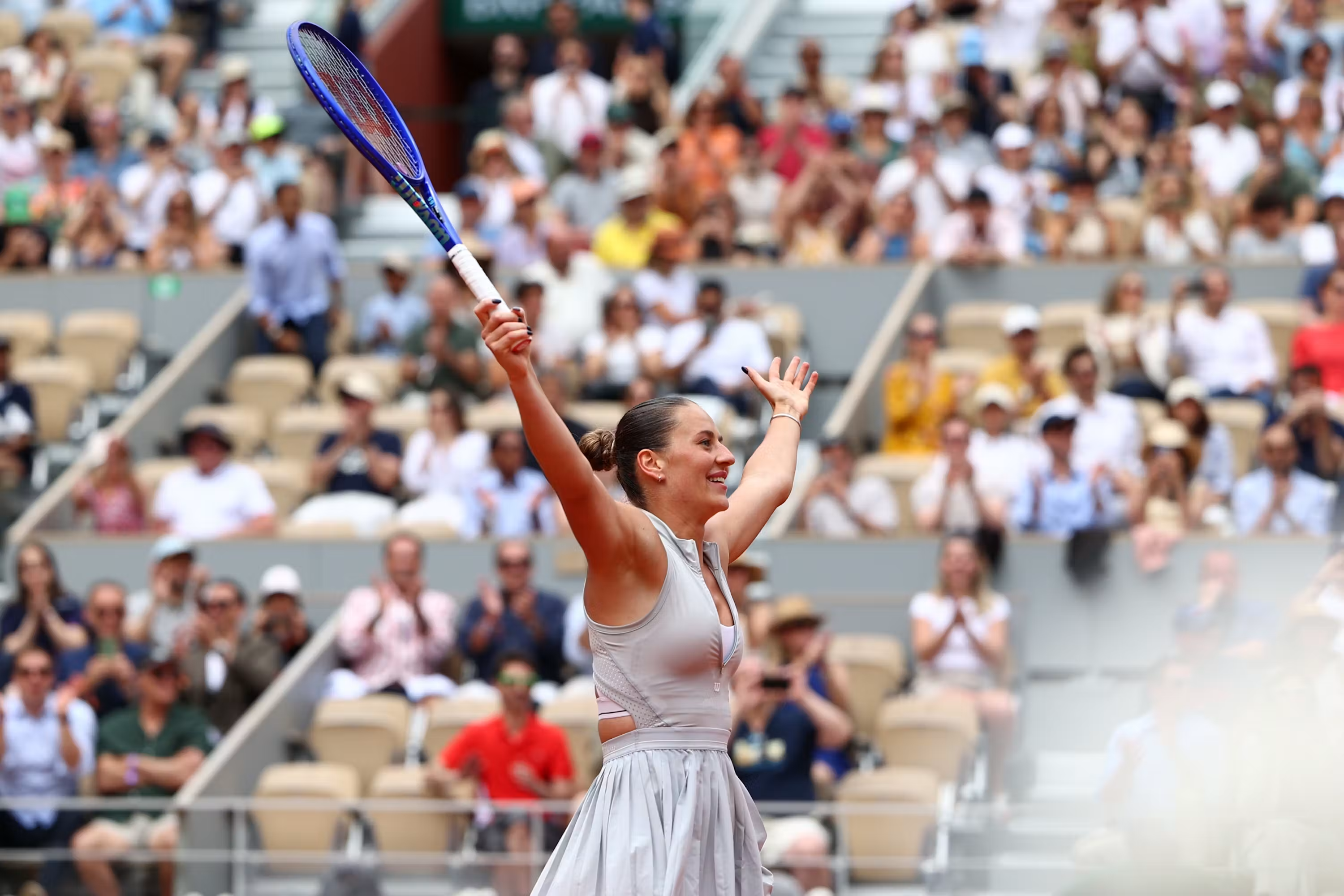
Yet only one Ukrainian will progress to the semi-finals - where either Mirra Andreeva or Sorana Cîrstea await - but their presence deep into the second week already carries significance beyond tennis. Every victory has become another reminder of the conflict unfolding back home.
The possibility of an even more politically charged final remains alive. World No.1 Aryna Sabalenka faces Naomi Osaka tonight for a place in the quarter-finals and remains the tournament favourite. Sabalenka has largely avoided commenting on the war, a stance that has drawn criticism from several Ukrainian players over the past three seasons. Should she meet a Ukrainian opponent in the latter stages, Roland Garros would find itself hosting not only one of the tournament’s biggest matches, but one of its most emotionally charged trophy ceremonies.
Here is our selection of the matches you cannot miss this week:
· Aryna Sabalenka vs Naomi Osaka - Monday, June 1, 7.15pm (BST)
· Elina Svitolina vs Marta Kostyuk - Tuesday, June 2, 11.10am (BST)
· Alexander Zverev vs Rafael Jódar - Tuesday, June 2, 2.20pm (BST)
· Jakub Mensik vs João Fonseca - Tuesday, June 2, 7.15pm (BST)
The total prize fund for 2026 is €61.723 million. Prize money increased by 9.53% compared to 2025.
The French Open runs until Sunday, June 7th.