With Roland Garros pasts us, Living Sports has taken a closer look at the relationship between Lacoste - tennis’ third-largest apparel brand - and its tournament sponsorships. On-site at the Mutua Madrid Open, we witnessed a standout day of tennis where Jannik Sinner, Rafael Jódar and Anastasia Potapova all shared the courts.
Yet the more revealing story unfolded behind the windows of Lacoste’s hospitality box, where a tournament activation became a window into the brand’s wider tennis strategy.
Alongside José Miguel Seijo, CEO for EMEA, we explore Lacoste’s relationship with the Madrid Open and its wider vision shaping the brand within tennis culture today.
Our Madrid Opener retraced the tournament’s rise since its acquisition by global sports agency IMG in 2021 – an acceleration towards global relevance that came at a cost for another Spanish tournament, the Barcelona Open. A smaller, yet historically prestigious stop for players and sponsors alike, the Conde de Godó Open lost its appeal even for apparel brands. After years nurturing a relationship – Lacoste sponsored the tournament between 2018 and 2021 - the brand ultimately turned towards the larger stage in Spanish tennis: Madrid.
The move is viewed internally as a natural evolution. “Madrid is the crown jewel,” explains José Miguel Seijo. The numbers support the claim: the Mutua Madrid Open has become Spain’s most visible tennis tournament, growing from 270,000 attendees in 2018 to roughly 380,000 in 2026. It matters because sponsors operate on audience reach. The more fans you can prove you reach, the better the sponsor conversations – something the Barcelona Open no longer discloses publicly. Attendance figures are no longer easy to find publicly, a detail that quietly reflects the widening gap with Madrid and Barcelona’s weakened hand in sponsor negotiations.
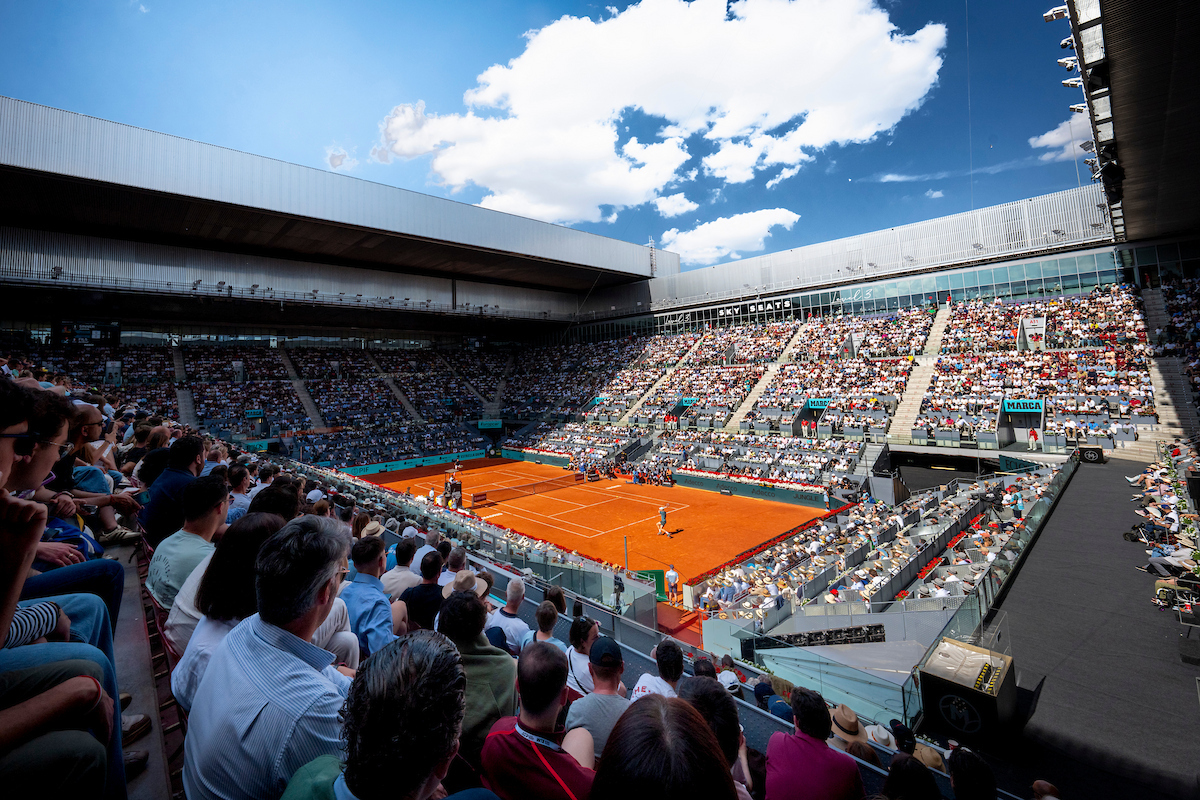
But for the crocodile brand, the decision goes beyond size alone. Madrid not only offers local scale, but also global distribution, with more than 50 broadcasters carrying the tournament worldwide, a stronger player field led by Jannik Sinner and Aryna Sabalenka, Spain’s interconnected tennis ecosystem and a long-term vision backed by external investment. Together, those elements help explain why the brand moved away from historical loyalty and now sits in the Spanish capital.
Shifting cities, however, also means adapting tone. For Lacoste, that adjustment comes in the form of refining activations. The brand’s preferred format has become the pop-up:
“It allows the brand to adapt to the city and the audience it wants to reach,” Seijo explains. “Our Madrid Open activations are designed to connect culturally with the tournament and the host city.”
The strategy reflects a broader ambition: coexisting with tennis is not only meant to sell apparel, but also reinforce Lacoste’s wider narrative around heritage, elegance and belonging within the sport.
However global Lacoste has become over the years, the brand remains, above all, René Lacoste’s creation. While his descendants no longer hold controlling ownership over the brand since they sold their shares to Swiss group Maus Frères in 2012, its survival and continued growth are deeply tied to the tennis ecosystem.
Living Sports witnessed how that strategy materialised at the Madrid scale. Inside the Mutua Madrid Open’s main concourse, a large Lacoste store sits strategically at the centre of spectator traffic. One of two bespoke tournament pop-ups, the space blends the brand’s latest collections with Madrid-specific pieces, placing particular emphasis on tennis apparel for fans to observe, purchase and wear. Audience tiering is central to the pop-up approach: visibility is created across stadium and broadcast audiences while a highly effective retail environment is nurtured.
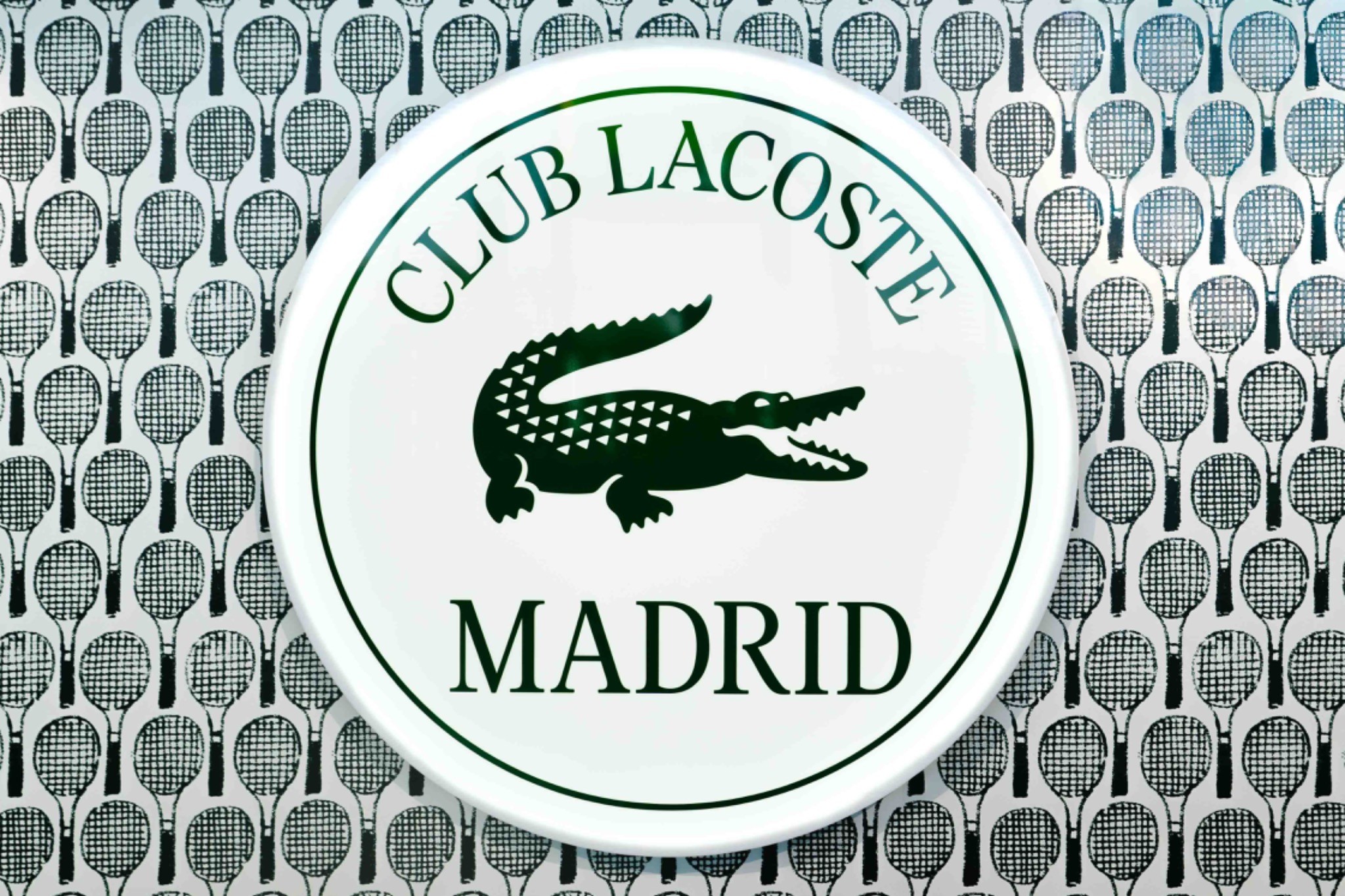
Beyond the public-facing spaces, Lacoste’s communication becomes more layered. Inside the brand’s hospitality box, the Club Lacoste identity emerged clearly: green lounge chairs, vintage postcards drawn from the brand’s advertising archive, personalised stickers and a mirrored installation inspired by the umpire’s chair. Lacoste’s carefully constructed atmosphere attends to other guests: influencers, ambassadors, athletes, journalists and high-level clients. Its objective is to reinforce Lacoste’s place within fashion and culture itself, not just sell apparel.
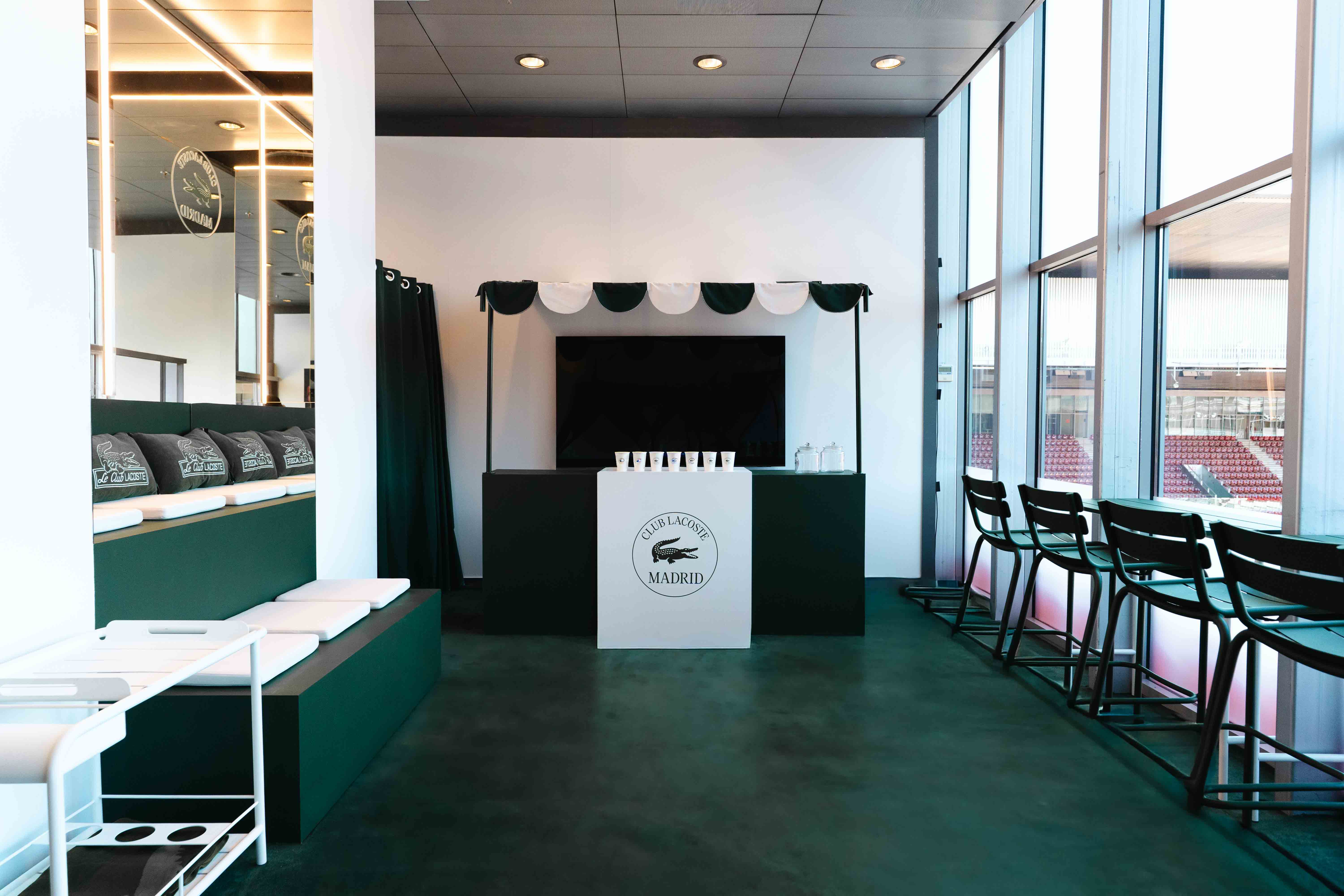
Lacoste’s use of pop-ups forms part of a far broader global strategy. At the Miami Open in March, the Australian Open in January and at Roland-Garros in May, the brand deployed activations built around the same principle: blending tennis, fashion and lifestyle into immersive spaces.
In Miami, Club Lacoste took shape as a beach tennis court, in Melbourne, a floating tennis court on the Yarra River while in Paris, a rooftop clay court overlooking the Eiffel Tower with the brand’s leading ambassadors, including Novak Djokovic .Madrid followed the same philosophy, though with a specific exclusive tone at private dining club 61.Sixtyone, where bespoke tennis-ball desserts were served among artists, stylists, influencers and actors.
Therefore, behind these activations sits a wider brand narrative. And it’s built around audience segmentation. Lacoste naturally speaks to different generations at once explained José Miguel Seijo in simple terms to Living Sports. From grandparents’ association with elegant sportswear and summer holidays, to young urban audiences, drawn to more contemporary styles and ties to urban culture and parents rediscovering a label pulled back into the store by a teenager. Fashion narratives are rooted in emotion, memory and identity. For Lacoste, that thread is heritage: the ability to make nostalgia feel contemporary, desirable and commercially powerful.
The challenge though, lies in speaking to those audiences simultaneously without diluting the brand’s identity: a balance Lacoste did not always achieve. During the 1990s and early 2000s, the brand lost appeal across global markets due to a licensing strategy that did not end up performing. The turnaround began under former CEO Robert Siegel, who started consolidating licences and restoring coherence. Once stabilised, the brand entered a more ambitious phase with Thierry Guibert, appointed in 2015. Guibert pushed Lacoste further into fashion and cultural relevance through high-street capsules, strategic collaborations and the appointment of former Adidas and Yeezy designer Pelagia Kolotouros as Creative Director. Since 2025, Eric Vallat has carried that strategy forward as CEO, ensuring the crocodile is positioned where culture is.
Experiential retail, fashion-led storytelling and a renewed emphasis on tennis heritage have since become central to Lacoste’s identity. The results are tangible: in 2024, the brand reportedly approached $3 billion in revenue - roughly a 50 percent increase from 2015. With Roland Garros underway, the link is clear: tennis remains its core identity, but fashion drives expansion.
An intersection we witnessed throughout Madrid: the steady flow of influencers through the Club Lacoste hospitality space suggested something broader than a sponsorship activation: a heritage brand strategically engaging with the people that in the modern world drive new identities and styles forward: influencers.
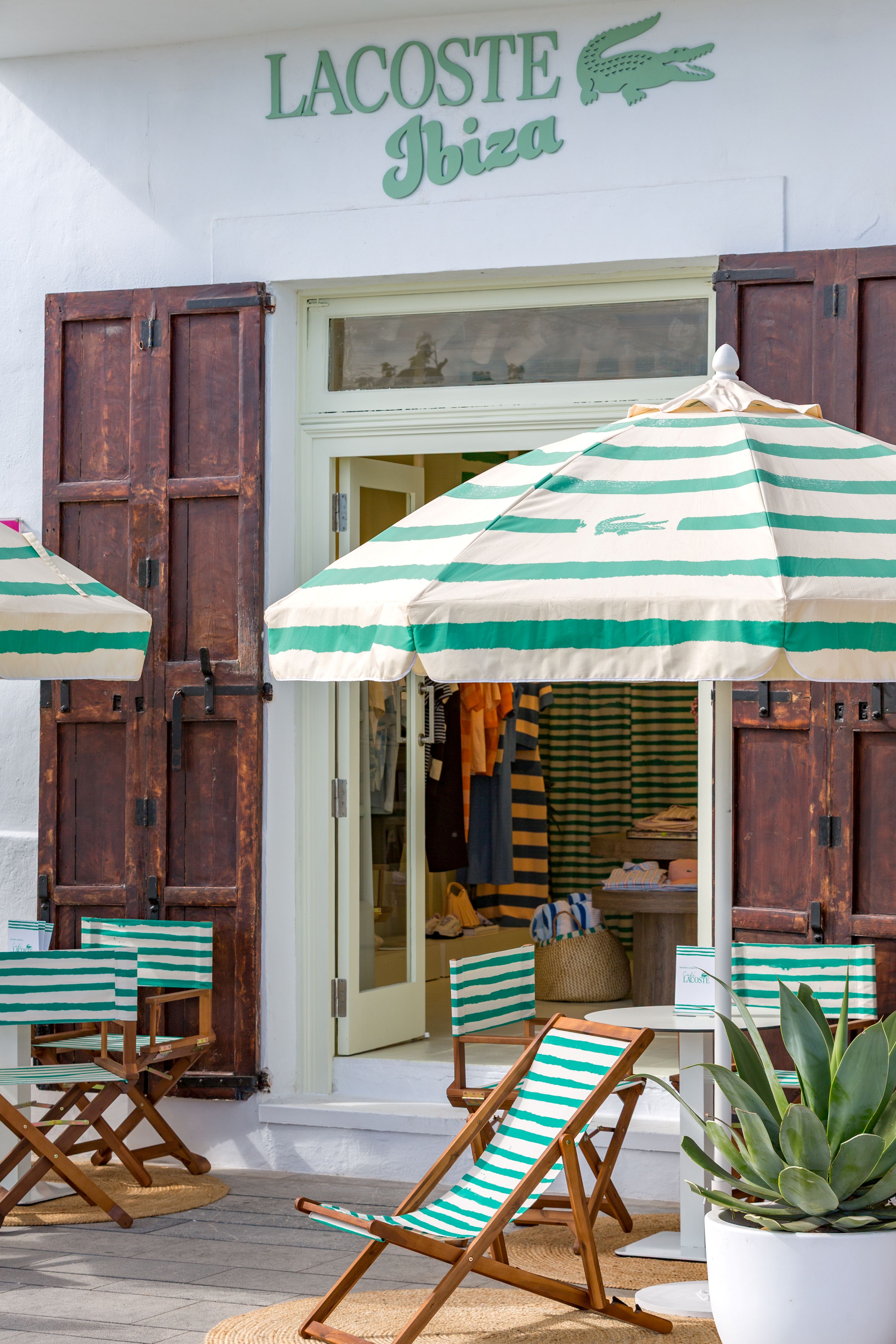
To follow the crocodile brand’s journey in Europe, you can simply step into a flagship store or pop-up. Lacoste’s activation in Ibiza sees the brand return to the island’s old town for the summer season with a refreshed concept building on last year’s edition. For visitors heading to the Balearics, expect a carefully curated experience, where a café sits together with magazines and the brand’s latest summer collection.
While Paris captured attention with Pelagia Kolotouros’ custom wolf-spirit jacket for Novak Djokovic, Lacoste’s summer activations may reveal more about the brand’s direction than any single star’s piece. From Madrid to Ibiza and Roland Garros, the crocodile is not simply appearing at tennis tournaments. It is working with them them to define where sport, fashion and culture go.