Welcome to our quarter-final roundup, bringing you a daily digest of the Australian Open. From Learner Tien’s epic battle with Alexander Zverev to Iga Swiatek’s wavering serve, we unpack the highs and lows of these past pivotal days in Melbourne.
While much of the spotlight fell on Carlos Alcaraz’s clash with home favourite Alex de Minaur, and Jannik Sinner’s high-octane duel against an in-form Ben Shelton, the Melbourne quarter-finals quietly delivered another message. Learner Tien may be edging closer to becoming a familiar name among the top 20. His quarter-final battle with Alexander Zverev was more than a test — it was a signal worth paying attention to.
Zverev is no stranger to these defining stages, and he opened with the assurance of experience, taking the first set 6–3. Tien, however, needed a statement response — and he delivered. The second set went the distance to a tie-break, where Tien prevailed through precise serving and beautifully measured left-handed forehands that left Zverev stranded. He also exposed a rare vulnerability, drawing the German forward with deft drop shots near the net.
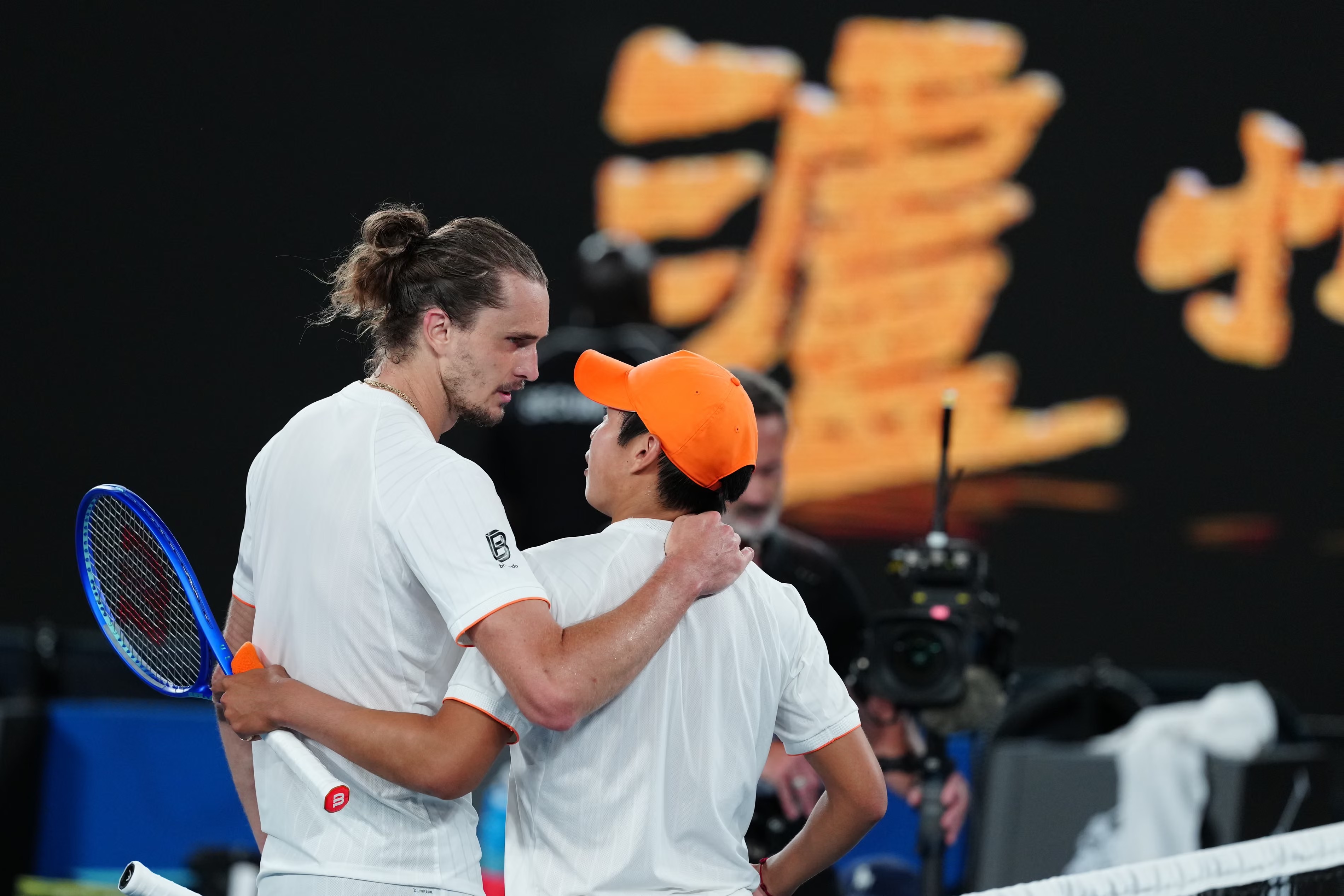
The third set, though, swung decisively Zverev’s way. While the fourth was finely balanced — both players trading breaks — it was Zverev who once again showed why experience matters when margins tighten. He dominated the decisive tie-break 7–3 to book his place in Friday’s semi-final against Carlos Alcaraz. Tien’s shot-making raised genuine questions at times, but Zverev’s late-stage match handling ultimately prevailed. And a match statistic underlines it: Tien made double faults in every set he played; Zverev, in just one.
The sole quarter-final upset came in the Musetti–Djokovic clash. The Italian seized control early, breaking Djokovic repeatedly to claim the opening set 6–4. The second followed a similar script, with the Italian showing he was the better man that afternoon: 6-3. Djokovic was suddenly in real trouble, even calling for a medical check on his right foot ahead of the decider. Yet the upset came from the other side of the net. Just before the third set, Musetti requested a medical timeout to receive treatment on his right adductor. He lost three games early on, giving Nole a 3-1 lead and clearly looking uncomfortable. And that seemed to decide it, with Musetti feeling he could not continue. He retired, handing Djokovic a walkover and leaving the Italian visibly distraught for not carrying to the semifinals what had been his finest performance of the tournament.
With Sinner and Alcaraz powering past their quarter-final opponents — Ben Shelton and Alex de Minaur respectively in straight sets — the tournament now enters its decisive stretch. At this stage, neither Zverev nor Djokovic appear equipped to deroute them. Zverev has shown moments of fragility throughout the fortnight, while Alcaraz has looked close to flawless. Djokovic, meanwhile, struggled to contain Musetti when the Italian dictated play, raising doubts about his ability to withstand Sinner’s relentless intensity.
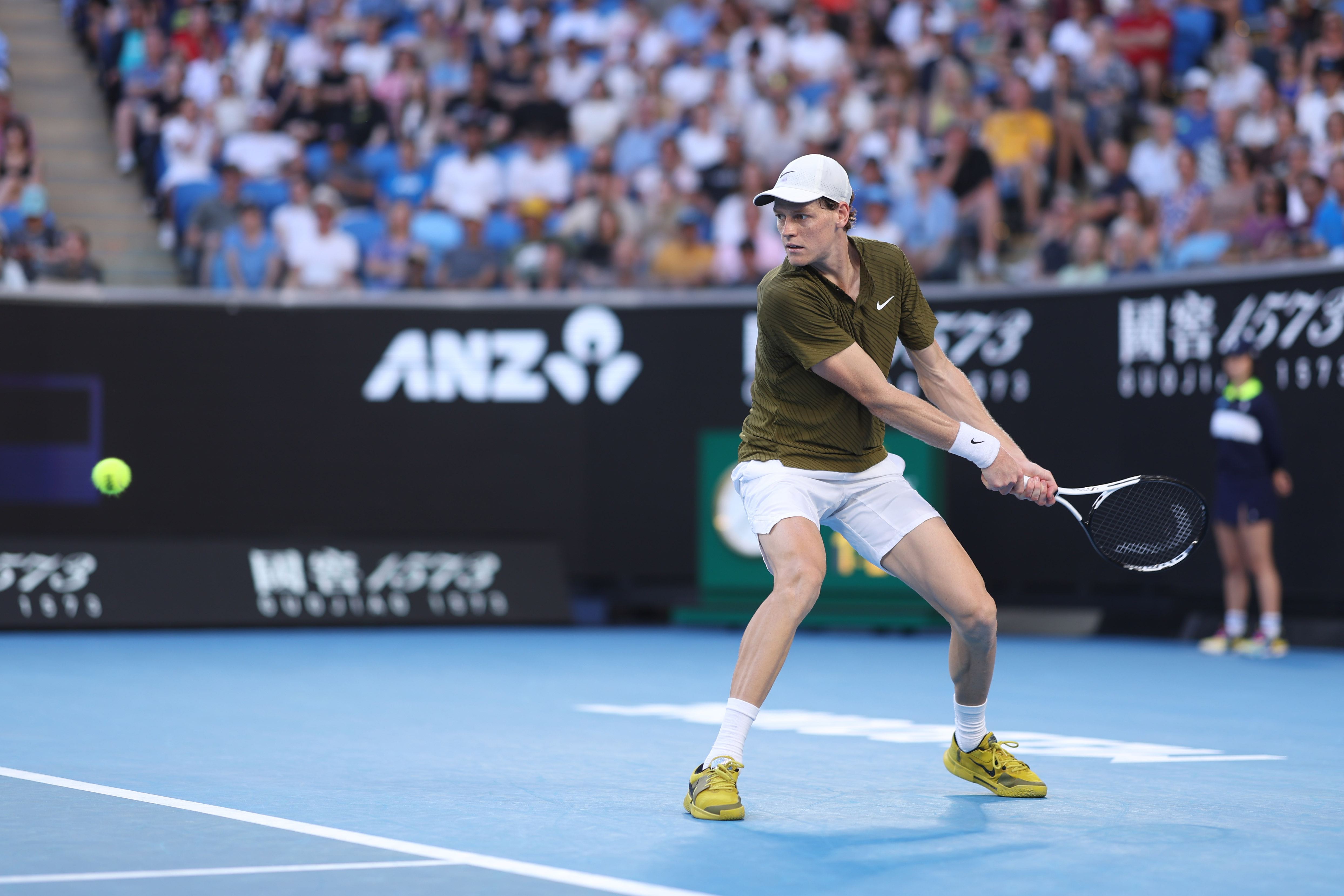
All signs point towards it. A Sincaraz final is taking shape — and with it, the promise of a spectacular Grand Slam showdown to open the year.
One of the game’s quiet burdens is expectation — and few weigh heavier than the pursuit of a Career Slam. Iga Swiatek arrived in Melbourne with that ambition firmly in view, delivering a near-flawless Open until she ran into one of the tour’s most unforgiving match-ups: Elena Rybakina. A former finalist here, the Kazakh has long been a problem few relish facing on hard courts.
Swiatek fell in straight sets, edged out in a tight opening tie-break before yielding control entirely in the second. By the numbers, Rybakina’s serve told the story: an imposing 11 aces, freedom under pressure — even when staring down a 0–40 deficit — and a staggering 93% first-serve points won in the opening set, compared to Swiatek’s 63%. Against a player renowned for precision and adjustment, it simply wasn’t her day. Forced into extended rallies to claw back service points, Swiatek was left chasing control as Rybakina dictated terms. For the Pole, the takeaway is clear. The margins are fine, the lesson sharper still: time to return to the serve — and refine it. As she so well did in Wimbledon last year.
While Elena Rybakina will face the only US player left in the tournament, Jessica Pegula who ousted all fellow Americans Madison Keys and Amanda Anisimova, the form Rybakina is on and her win against Switake position her favorite to reach another final.
On the other side of the draw, it has been an all-Sabalenka affair. The world No.1 looks entirely in sync — with herself, with the tournament, and with her tennis — powering through Melbourne with a singular intent. After a dominant fourth-round display against Mboko, she brushed aside another rising talent in the quarter-finals: Iva Jović, the 18-year-old Californian who has emerged as one of this year’s revelations. Sabalenka needed little time to assert control, sealing a 6–3, 6–0 win that reinforced her status as the tournament’s defining force.
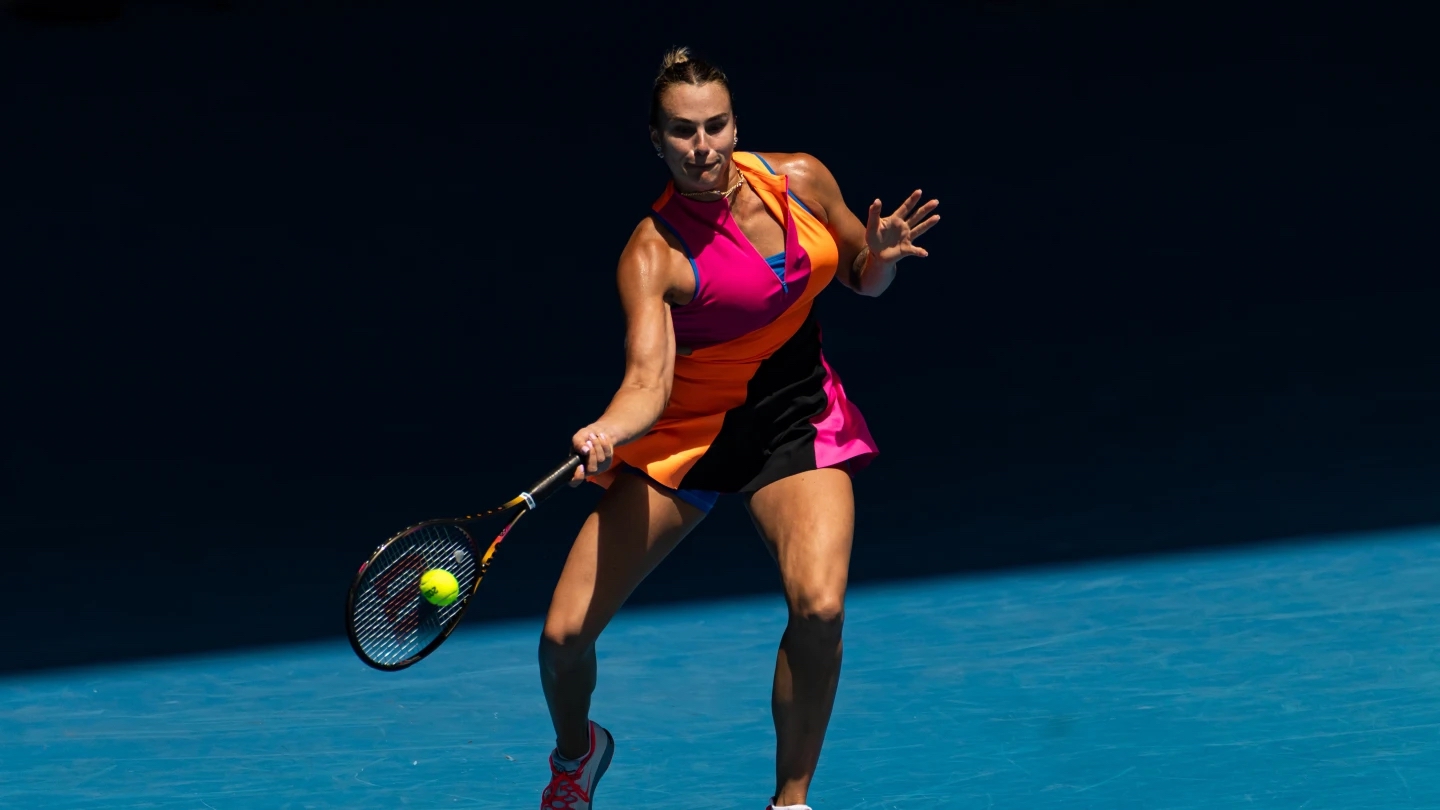
Awaiting her now is world No.12 Elina Svitolina, fresh off a commanding 6–1, 6–2 victory over Coco Gauff. The Ukrainian arrives with momentum, having lifted the Auckland Open and dropped just one set across her opening ten matches of the season. She will look to apply pressure, despite Sabalenka holding a commanding 5–1 head-to-head advantage. On Thursday, form, experience — and unspoken political tensions — will collide for a place in the final on Saturday.
For a full disclosure of the quarterfinal round draws, visit ausopen.com/draws. For more stories on the Australian Open 2026, visit our Tennis category page.