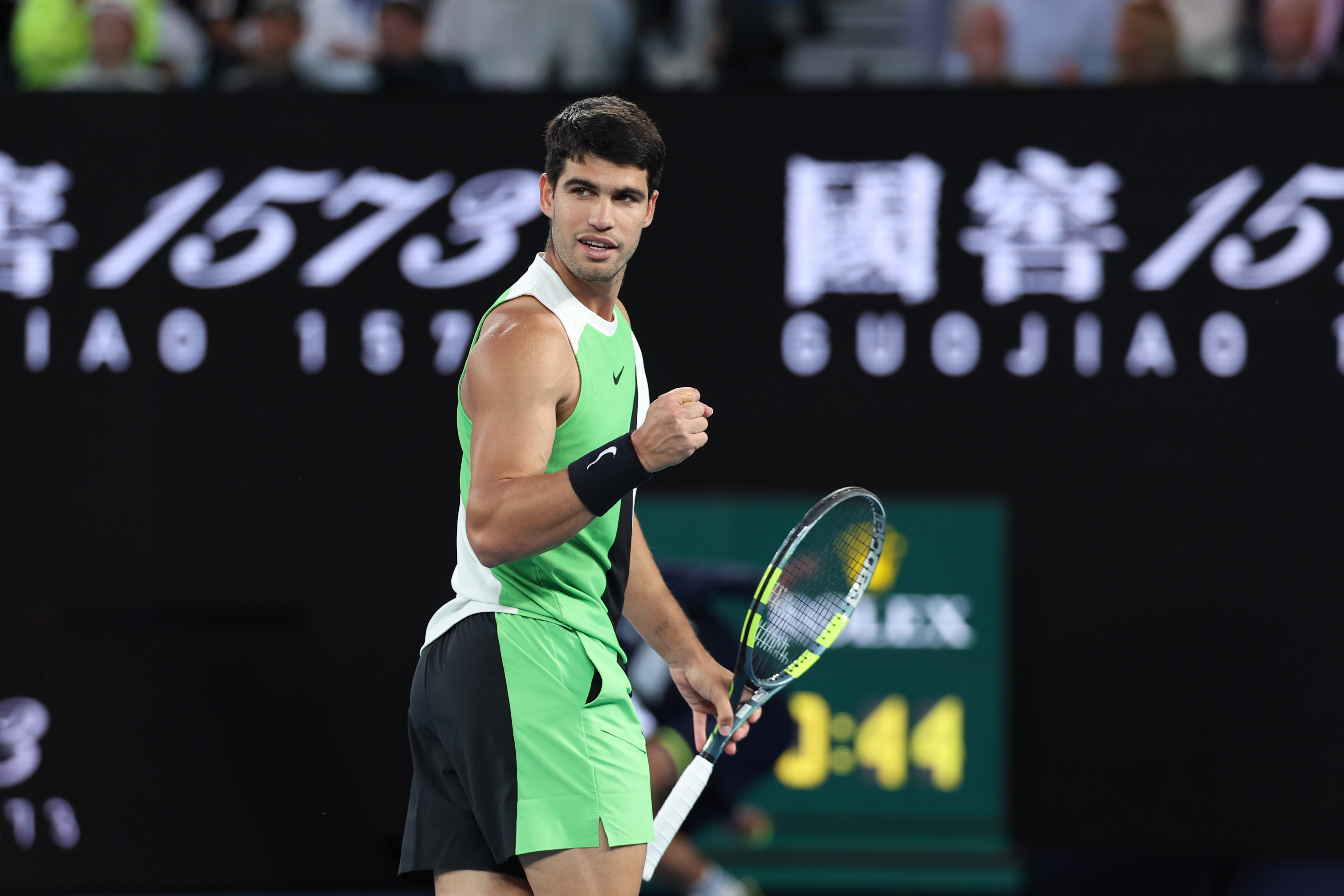
Carlos Alcaraz etched his name into tennis history on Sunday, becoming the youngest men’s player to complete a Career Grand Slam at just 22. He did so against Novak Djokovic, in a final that carried significance beyond the scoreline: it was the first major test since Alcaraz’s bold decision to part ways with lifetime coach Juan Carlos Ferrero. Freer in spirit, more instinctive in his choices and less bound to constant instruction, Alcaraz played with a sense of ownership that spoke volumes. Before our eyes, lay a champion trusting his own reads, embracing responsibility and showing a new layer of maturity. Here’s our take on how the final between two generations of tennis unfolded.
Novak Djokovic set the tone early in Melbourne. From the opening games, his intensity was unmistakable. He struck first, breaking Carlos Alcaraz with authority and surging to a 4–1 lead before closing out the set 6–2. The serve was clicking — both first and second deliveries landing with precision — and whenever Alcaraz hinted at a foothold, Djokovic found answers. It was a statement opening, built on control and conviction. But sustaining that level was always going to be demanding.
As the second set unfolded, the momentum began to tilt. Alcaraz raised his serving level, injected initiative into the rallies and played with the fearless creativity that defines his best tennis. At 2–2, he forced the break, then backed it up in a grinding deuce game that showcased the full range of his court craft. Another break followed. The Spaniard closed the set 6–2, mirroring Djokovic’s earlier dominance and resetting the match entirely.
The third set carried weight. It would either reignite Djokovic’s charge or hand Alcaraz a decisive edge. Aware of the stakes, Alcaraz pressed early, probing Djokovic’s service games. The Serbian responded with guile — a drop shot here, a deep drive there — forcing Alcaraz into defence rather than dictating from inside the court. Djokovic began striking more freely, recalling the authority of the opening set. Yet the margins tightened. A handful of unforced errors crept in, and Alcaraz seized the opening. The break came, followed by a point that lit up the night: relentless retrieval, blistering acceleration and a finish that left both Djokovic and the crowd momentarily stunned. At 5–3, the pressure mounted. A rare double fault betrayed Djokovic’s nerves, and after another tense deuce exchange, Alcaraz claimed the set 6–3.
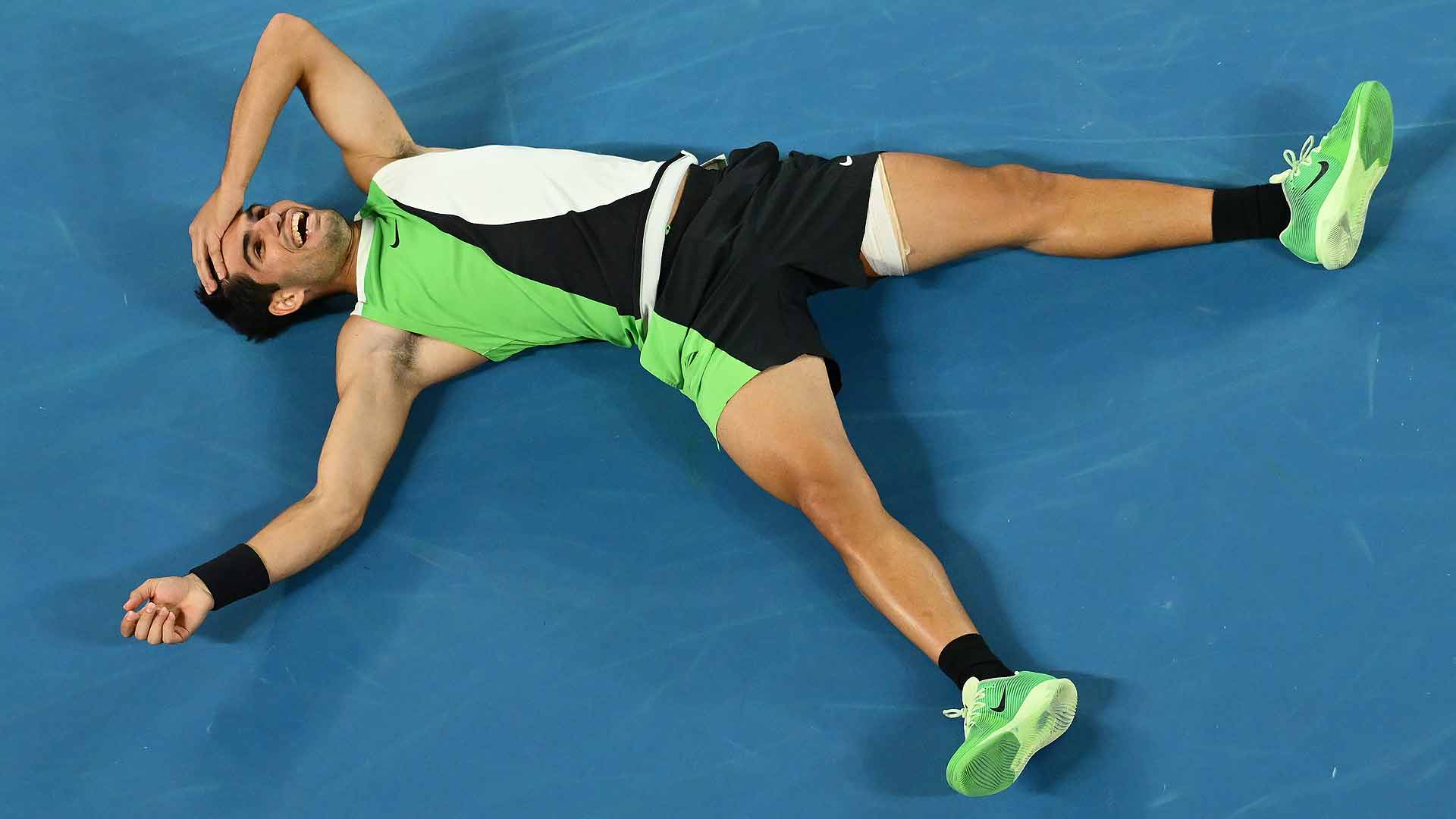
By the fourth, Alcaraz held the advantage. Replicating the clarity of the previous two sets would be enough to see him home. Djokovic, meanwhile, showed signs of physical strain — a step slower, errors arriving more frequently. Alcaraz sensed it, earning six break points in the early stages. Still, Djokovic resisted. At 5–5, the arena rose with him, urging on one last surge in pursuit of a 25th Grand Slam. For a moment, the connection between player and crowd felt powerful enough to turn the tide. But it did not last. Alcaraz held firm, moving ahead 6–5 and forcing Djokovic to serve under maximum pressure. One mistake sent the ball into the net, handing Alcaraz two championship points. Djokovic swung for one final escape, but the ball drifted wide. It was over. In that moment, Carlos Alcaraz became the youngest player in history to complete a Career Grand Slam — calm under fire, relentless in belief, and unmistakably ready to define an era.
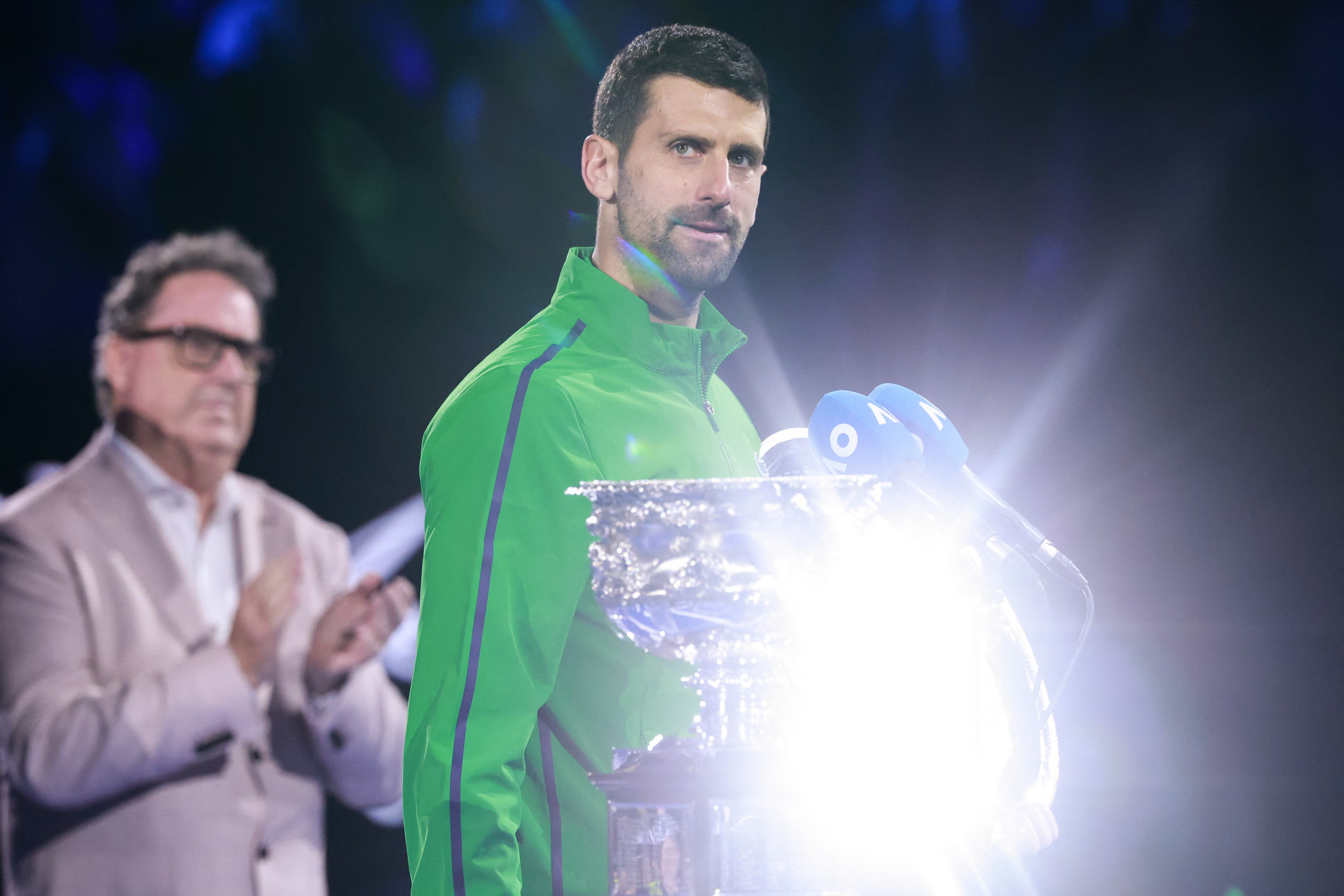
As he stepped forward to speak, Rod Laver Arena rose as one, the chant rolling in rhythm — “Novak, Novak, Novak.” It was one of those rare moments sport reserves for its true greats, an ovation earned over time rather than demanded by victory. Beneath the roar, and watched by a former rival who once shared the very same stage, Rafael Nadal, Djokovic paused to take it in.
He began by turning to Carlos Alcaraz, calling the achievement “historic” and “legendary”, adding with a hopeful smile that their paths would cross many more times in the years ahead. He then thanked his family and team for “enduring” him through months marked by injury, uncertainty and persistent retirement rumours. In a gesture heavy with meaning, he invited Nadal into the moment, acknowledging his presence — the first time the Spaniard had watched him play live — before closing with heartfelt gratitude to the Australian crowd, whose support, he said, had carried him through the tournament.
The stature of the player was reflected in the depth of his words. Djokovic understands how to honour the moment, how to give voice to both struggle and gratitude. He left the court as champions do — applauded, respected, and very much standing tall.