Paris awakend to the third day of tennis in clay’s most unforgiving scenario: Roland Garros. On Monday morning, world No.1 Aryna Sabalenka opened her campaign before attention turned to Jannik Sinner, the ATP’s man of the moment. Both arrive in Paris with the same objective: lifting the French crown on 7 June. Yet Roland Garros will be their hardest test of the season, one where distraction is punished more brutally than any tournament on tour.
This year’s edition already carries tension that caught the headlines: boycott controversy, farewells for Gaël Monfils and Stan Wawrinka, and Sinner standing one title away from completing the Career Slam. Here we unpack three storylines shaping Paris this week.
On Friday during media day, Coco Gauff ended her press conference after glancing at her phone. “I have one minute left,” she told journalists. Sixty seconds later, she apologised and walked out. Behind the moment sits a wider player protest led by Aryna Sabalenka, who has been the most vocal about the initiative refusing to participate in anything beyond mandatory media duties, limiting appearances to a 10-minute press conference followed by a five-minute interview.
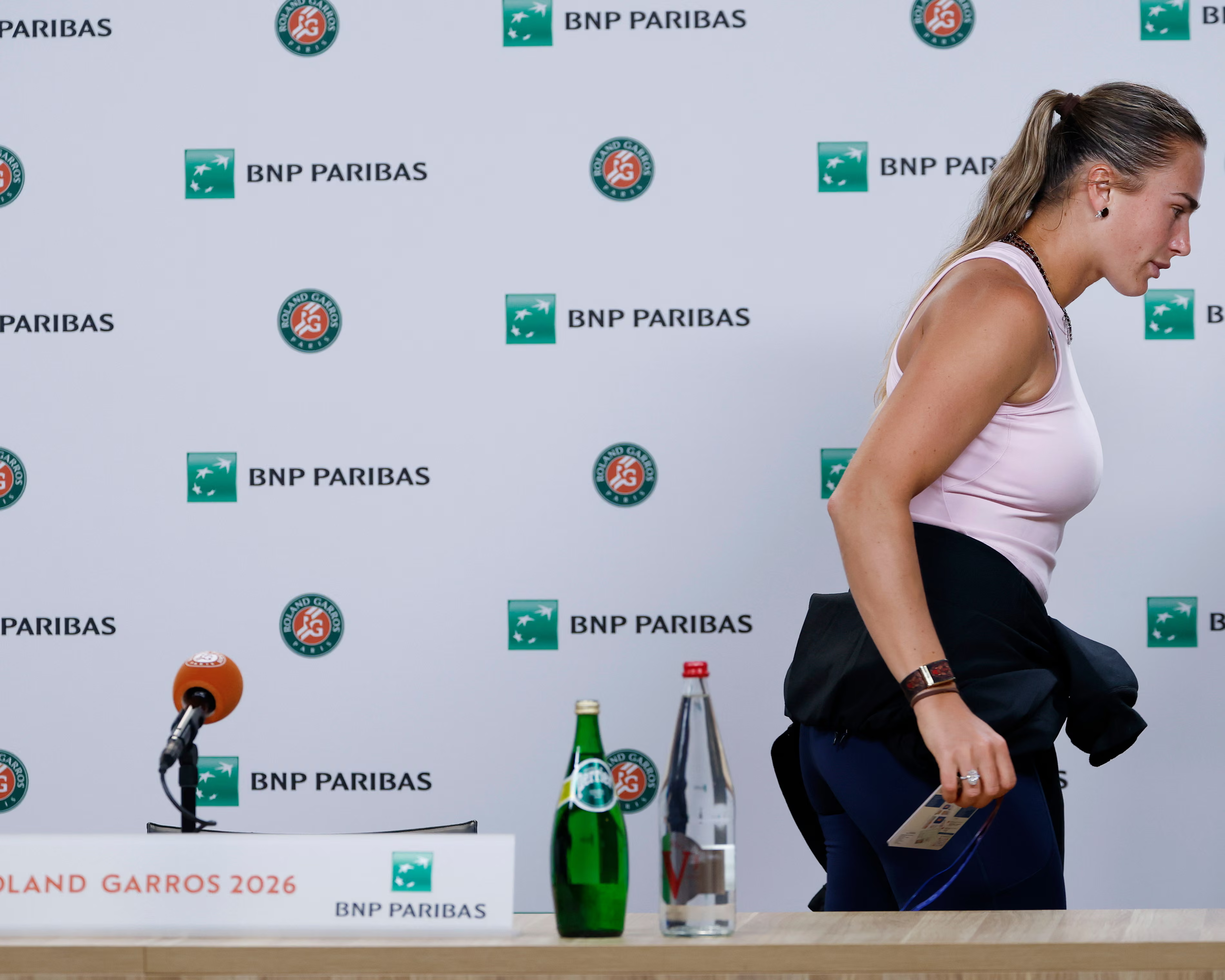
The movement quickly spread across both tours. Jannik Sinner, Iga Swiatek, Jessica Pegula, Mirra Andreeva, Félix Auger-Aliassime, Ben Shelton, Daniil Medvedev and Taylor Fritz all joined the initiative, turning what first appeared as isolated frustration into one of the tennis’ defining off-court tensions of the year.
The protest centres on one issue: revenue distribution. 15 minutes given to media were though of to refect the 15% cut players receive from Roland Garros’ revenue. Despite generating more than $ 1.5 billion annually, Grand Slams currently return only around 15 to 20 percent of revenue to players: proportionally less than many Masters 1000 events. This year’s action was triggered after Roland Garros increased its prize pool by only 9.5 percent from 2025, bringing players’ share to roughly 15% of the Open’s projected revenue. For many on tour, it remains insufficient: particularly as the French Open the least rewarding Grand Slam financially despite projecting record revenues this year.
Frustration deepened after players realised overall earnings would effectively decrease compared to 2025, while communication between organisers and athletes again deteriorated. The protest followed after public call-outs in press conferences ahead of it.
The imbalance has long frustrated the tour’s leading names, with Novak Djokovic and the Professional Tennis Players’ Association (PTPA) repeatedly pushing for reform. “The pie split between the governing bodies in major sports like NFL, NBA or baseball […] is around 50 percent. Ours is way lower than that” Djokovic argued in 2025. Players are now targeting a 22 percent share of Grand Slam revenue, turning Roland Garros into the latest stage for a growing power struggle within tennis. Yet Novak Djokovic did not join this year’s protest, continuing a stance he has increasingly adopted in the later stages of his career and letting the burden be carried by younger players.
With Wimbledon approaching in June, the conflict shows little sign of disappearing.
Gaël Monfils bid farewell to Roland Garros on Monday in what he called his dernière danse, falling to compatriot Hugo Gaston 2-6, 3-6, 6-3, 6-2, 0-6 on Court Philippe-Chatrier. The 39-year-old leaves behind 21 years of showmanship, athletic brilliance and unforgettable nights beneath the Paris lights enough for the tournament to organise a farewell ceremony worthy of one of its great entertainers.
Before a packed crowd and under the gaze of his wife, Elina Svitolina, Monfils addressed his family, team and supporters. For once, Roland Garros paused its relentless rhythm to celebrate the player who so often turned tennis into entertainement.
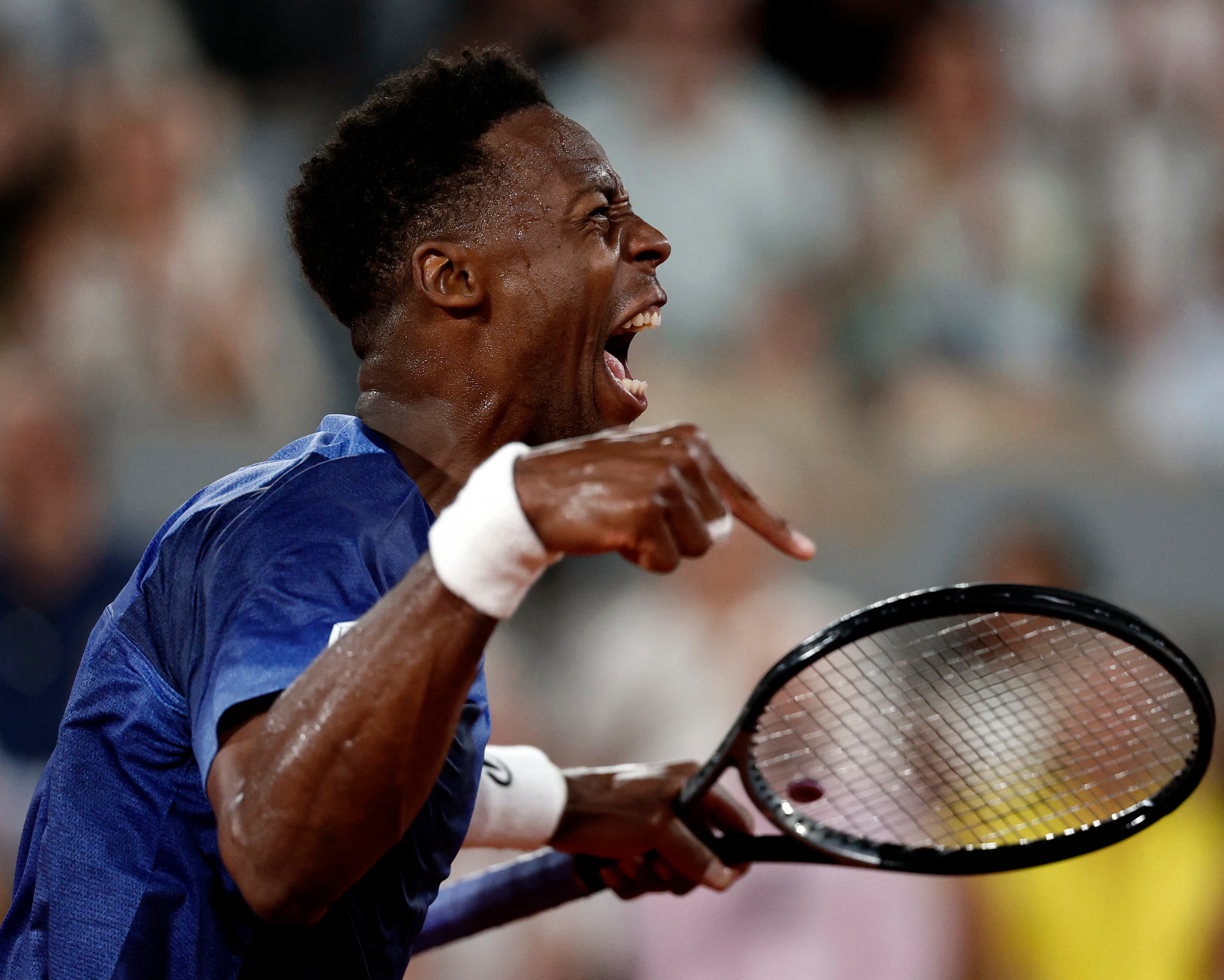
Monfils leaves behind one of the most admired legacies in modern French tennis: former world No.6, 13 ATP titles, semi-finalist at both Roland Garros and the US Open, and - last year in Auckland - the oldest man ever to win an ATP title. The former ASICS ambassador, now partnered with Decathlon, said goodbye to his home crowd on a day shaped by farewells.
Hours earlier, Stan Wawrinka - champion here in 2015 - had also exited Roland Garros after defeat to Jesper de Jong in what was his final Paris appearance beyond the age of 40. Both leave distinct marks on the sport. Monfils, the electrifying showman who turned matches into spectacle. Wawrinka, the one-handed backhand artist capable of unsettling the Big Three at their peak. They will be missed, and remembered.
Roland Garros has already claimed some of the tour’s younger names. Taylor Fritz packed his bags after a four-set defeat to compatriot Nishesh Basavareddy, the world No.148 prevailing after more than three hours on court. On the women’s side, Emma Raducanu struggled badly against Solana Sierra, falling 6–0, 7–6 (4).
Yet good wine ages well. Novak Djokovic faced one of the tournament’s most dangerous opening tests against Giovanni Mpetshi Perricard, the towering Frenchman whose explosive serve threatened to overwhelm the Serbian early on. Djokovic was making a record 82nd Grand Slam appearance - more than any player in history -but quickly found himself trailing after Mpetshi Perricard claimed the opening set 7–5 before a partisan Parisian crowd.
What followed, however, felt deeply familiar. Djokovic absorbed the early storm, gradually extending rallies and forcing the 22-year-old into longer, more physical exchanges. By the second set, the balance had shifted entirely. The Serbian moved through the match with increasing control, winning 7-5, 6-1, 6-4 as Mpetshi Perricard’s energy faded and Djokovic’s level rose. At 39, he so calmly dominates through patience, rhythm and an unmatched understanding of how to dismantle younger opponents over time.

If January’s run to the Australian Open final proved Djokovic still belongs at the summit of the sport, Paris may offer him another opportunity. He handed Jannik Sinner his only defeat of the 2026 season there and enters Roland Garros knowing the draw has opened in his favour. The belief, clearly, remains untouched.
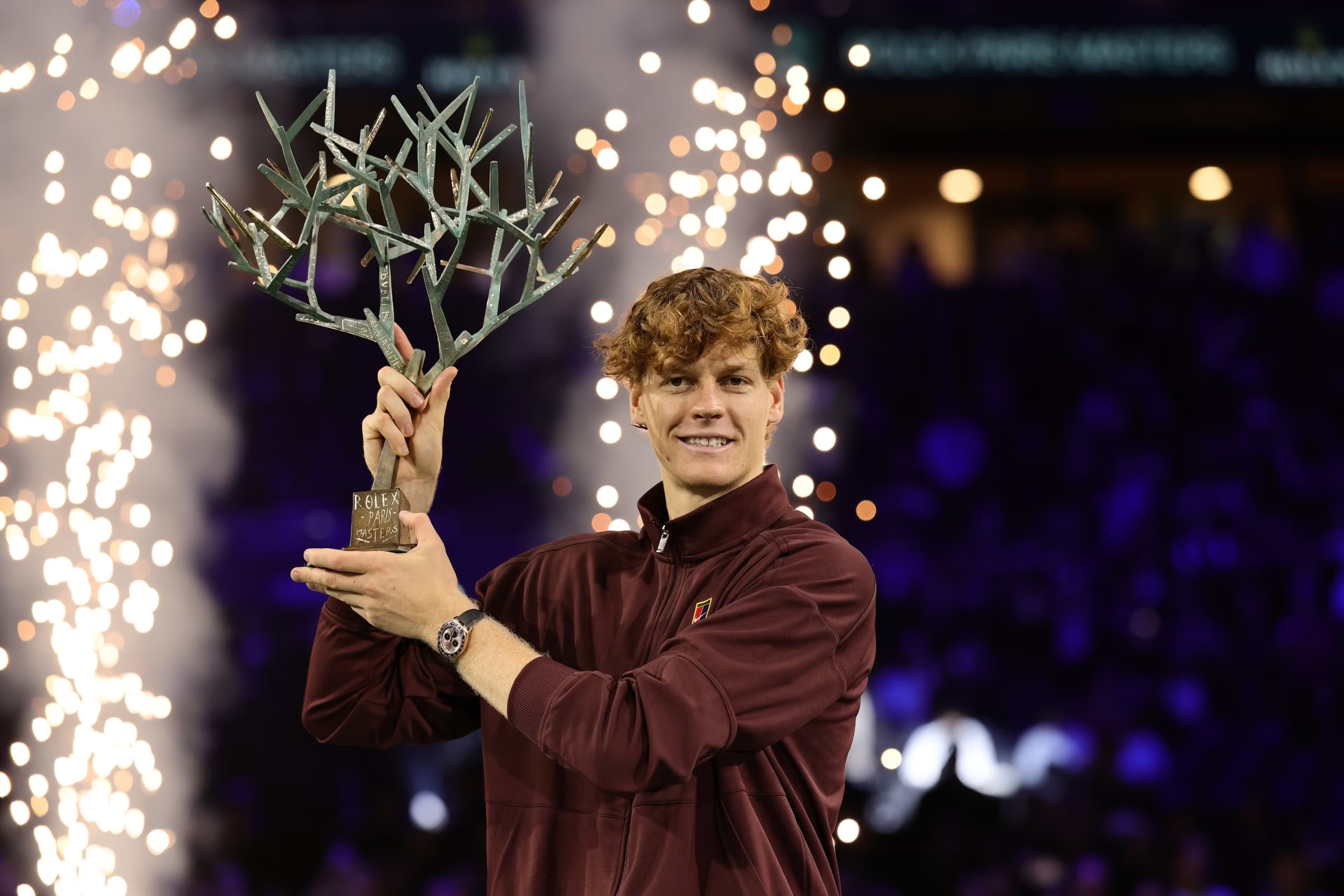
Jannik Sinner headlines Tuesday’s night session against French wildcard Clément Tabur. The Italian’s route through the draw could later bring encounters against Martín Landaluce, Corentin Moutet or Arthur Rinderknech as he chases the one title still missing from his résumé. A year after his painful defeat to Carlos Alcaraz, Sinner arrives in Paris in dominant form and with clear focus on the Career Slam.
On the women’s side, Coco Gauff faces Taylor Townsend after Aryna Sabalenka opened her campaign with a first-round victory. Wednesday will bring Elena Rybakina, Elina Svitolina, Marta Kostyuk - currently riding a 12-match winning streak - and Sabalenka back onto court.
The women’s draw feels especially open this year. Sabalenka remains favourite for the game, though her defeats in Rome and Madrid exposed vulnerabilities on clay. Eastern European contenders such as Svitolina, Kostyuk and Rybakina will collide with American firepower led by Gauff, Jessica Pegula, Hailey Baptiste and Canadian rising star Victoria Mboko. Expect the WTA’s opening rounds to deliver some of the tournament’s fiercest tennis - and likely, its biggest surprises.
The French Open schedule runs until Sunday, June 7th. Roland Garros (French Open) tickets are sold exclusively through the Official Roland-Garros Ticketing Platform, utilizing a public lottery draw, official travel packages, and hospitality tiers.