The Mutua Madrid Open has delivered on its expectations: unexpected exits, flashes of brilliance from emerging names and lucky losers, and crowds that have matched the occasion with relentless energy. The tournament now turns towards a finals weekend poised to hold the sport’s full attention. Here, we take stock of the week so far and what lies ahead.
By Tuesday, Madrid had found its story. La Caja Mágica watched Jannik Sinner move past Cameron Norrie with control, before turning its full attention to the last local hope, Rafael Jódar. By late afternoon, the 19-year-old had swept past Vít Kopriva, earning his first Masters 1000 quarter-final - and a meeting with the world No.1. The city leaned in.
Jódar arrived as the underdog, but played as if he belonged. A year into his professional journey, the Madrid-born talent showed a level of belief and resilience rarely seen against Sinner. The opening set held early tension, balanced until 2-2, when a piercing backhand from the Italian broke the rhythm. From that moment, Sinner tightened his grip, dictating the exchanges and closing the set 6–2 - not through dominance alone, but through quiet inevitability.
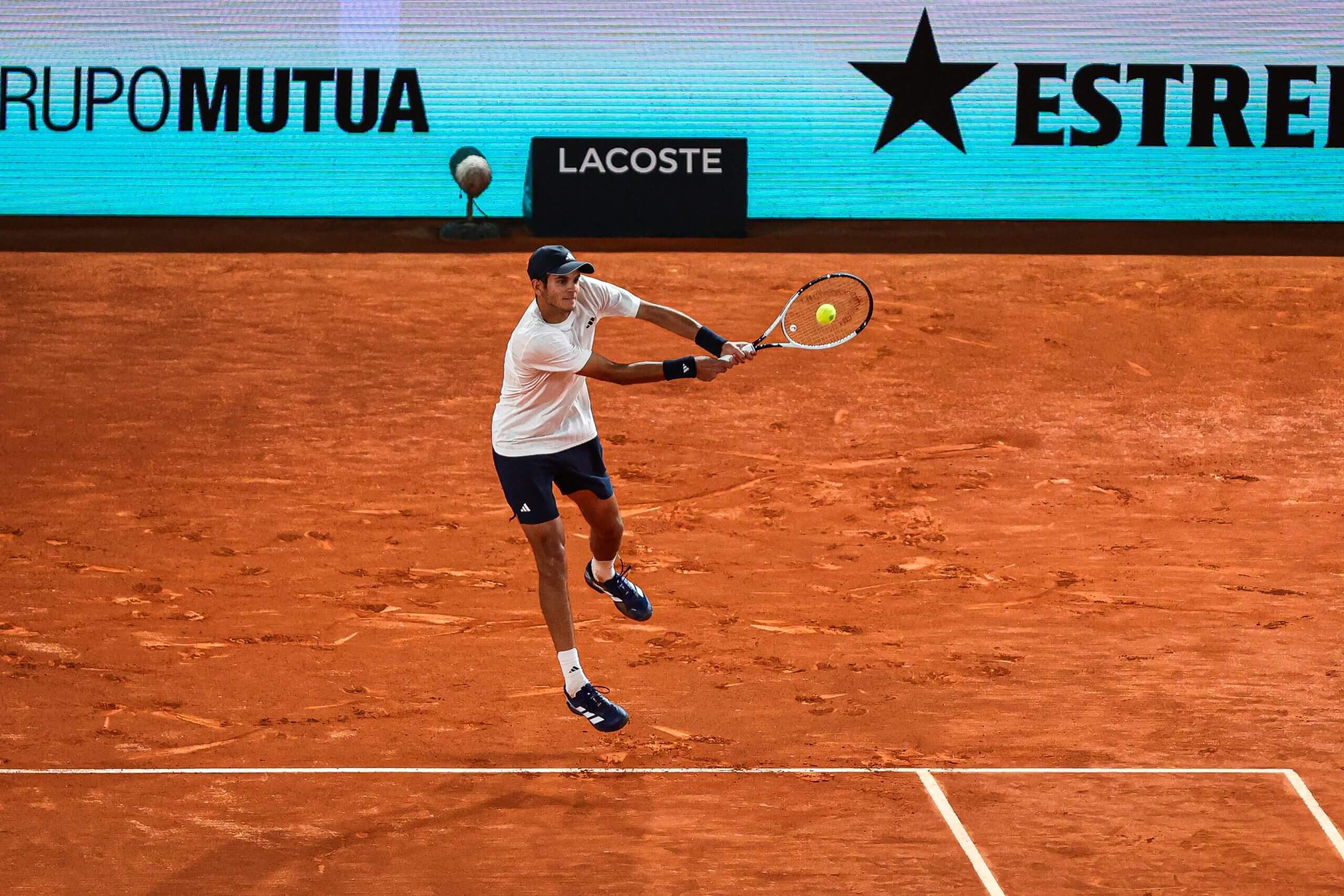
Then came the shift. Jódar settled, the crowd behind him, the energy rising with every point. At 3-2, he held three break points at 40-15 - a moment that could have changed everything. Sinner answered like a champion: wide serve, soft drop, then the passing shot. Precision over emotion. The chance slipped, but the belief did not. They traded holds, the Caja Mágica lifting Jódar with every winner, every sprint, every refusal to fade. At 6-5, the tie-break felt inevitable - and so did its outcome. This is where Sinner lives. Composed, precise and clinical, he closed the match with authority by 7 points to love, extending his Masters 1000 win streak to 26 matches. For Sinner, it was another step in a relentless run for perfection. For Jódar, something else entirely: not a loss, but a soft landing to the biggest stages. One that Madrid will remember.
Arthur Fils is not simply returning to the level he showed before last year’s lower back fracture, he is moving beyond it. His ATP 500 title in Barcelona, claimed just ten days ago, has carried directly into Madrid, where confidence has become his defining edge. His run has been measured and assured. He dismissed Jiri Lehecka 6-3, 6-4 - later admitting he barely had time to warm up - and overcame Tomás Martín Etcheverry in the round of 16.
The result was a place in the semi-finals, and a meeting with world No.1 Jannik Sinner. Fils understands his position: he arrives as the underdog, yet plays without the weight of it. His game is at its sharpest and his demeanour is composed, relaxed and quietly confident. Attributes that matter when facing the top of the food chain.
Alexander Zverev has moved through Madrid with quiet authority. His 6-2, 6-4 win over Flavio Cobolli reflected a level that, outside of Alcaraz, Sinner and Djokovic, none on tour currently match. A two-time champion here, Zverev now stands one step away from another final. This evening, he faces an unfamiliar opponent in Alexander Blockx: a first-time meeting, and a match that carries the intrigue of the unexpected. Zverev remains the favourite, but Madrid has already shown its appetite for disruption.
Blockx has been at the centre of that narrative. For Blockx, this was his debut at the semi-final stage of a Masters 1000. Arriving without a clay-court win in the past month, the 21-year-old has produced one of the tournament’s most compelling runs. It began in the round of 32 with a straight-sets victory over Felix Auger-Aliassime (7-6, 6-3), built on a decisive tie-break. Confidence followed. Against Francisco Cerúndolo in the round of 16, he repeated the pattern: another tie-break to claim the first set, before accelerating through the second (7-6, 6-2).
The quarter-final against defending champion Casper Ruud was meant to halt him. It did not. A moment of misfortune for Ruud with a snapped string at break point, handed Blockx the opening, which he converted to take the first set 6-4. From there, the match shifted from chance to control. At 3-3 in the second, a commanding backhand secured the decisive break. He served it out 6-4, completing the upset with composure.
At 1.93m, Blockx has the physical tools to challenge Zverev’s presence, pairing a strong serve with clean, aggressive forehands. More striking, however, is his belief: “I deserve it just as much as he does,” he told the Tennis Channel after beating Ruud. Tonight, he faces Zverev for a shot at the title.
The women’s draw has delivered unpredictability, though not always the level expected. The week’s defining shock came from Hailey Baptiste, the 24-year-old American who halted Aryna Sabalenka’s 15-match winning streak. After dropping the opening set 2–6, Baptiste recalibrated, raising her level to claim the second 6-2 before edging a tense tie-break to seal the match 7-6. It was a performance built on adaptability and nerve: six match points saved through disruptive slices and heavy forehand variations that unsettled Sabalenka, who ultimately could not close.
Waiting for her was Mirra Andreeva. The 19-year-old prodigy delivered with clarity, producing a composed 6-4, 7-6 (10-8) win. Since her WTA tour debut, the trajectory has been steep. Her singles titles have arrived quickly for someone still building a full experience at the top level. Even when trailing by three points in the tie-break, Andreeva maintained control, mixing precise serving with measured aggression off the forehand, securing her place as one of the youngest players ever to reach a WTA 1000 final at the Madrid Open. The result marks a career high ranking moment for the Russian, who seemingly continues to climb the WTA standings with every match.

On the opposite side, Anastasia Potapova had been one of the week’s standout stories. Ranked No.56 and entering as a lucky loser, she dismantled second seed Elena Rybakina in the round of 16 (6-1, 6-7, 6-3), before overcoming former world No.1 Karolína Plísková in three sets (6-1, 7-6, 6-3). Her run, built on fearless shot-making, carried her to a semi-final few would have predicted.
There, she met another force: Marta Kostyuk. The Ukrainian prevailed in three sets, booking a place in the final and setting up another encounter charged with context. Vocal about the war in her home country, Kostyuk has maintained a no-handshake stance against Russian and Belarusian opponents. Facing Andreeva, the final extends beyond sport: a match that will be shaped as much by conviction as by competition, and one that carries resonance far beyond the court. With Roland Garros and Wimbledon just weeks away, both players arrive at Saturday's final with grand slam ambitions sharpening behind every point.
Clay season has a rhythm unlike any other stretch of the tennis calendar. Between Madrid and Roland Garros, the professional player's mettle is tested not once but repeatedly, across surfaces that punish every technical deficiency and reward those with the mental clarity to endure. Mirra Andreeva, at her age, has shown precisely that clarity — a bright future that is, increasingly, a present reality. Her run to the Madrid Open final is the kind of milestone that reshapes a career high ranking conversation and announces a player to audiences well beyond those already watching. The Madrid Masters 1000 has a habit of doing that: producing a name, a moment, a match that the rest of the season refers back to. This year, that name is Andreeva. With the French Open weeks away and Rome still to come, the clay season hasn't finished revealing what this generation, in both men's and women's category, is capable of.
The Madrid Masters 1000 WTA Final will be played on Saturday 2nd May and the ATP Finals on Sunday, 3 May. With prize money reflecting the WTA 1000 status of the event, both finalists have already secured their best result of the clay season.