Fran Lebowitz, the person who comes closest to being the conscience of New York, put it simply: “The second you complain about something changing, you're a New Yorker.” Though I am not one myself, I know that feeling well. In January 2016, whilst travelling in Manhattan, I set off to visit FAO Schwarz on Fifth Avenue — I wanted to buy my youngest daughter a teddy bear, as I had done in the past for my other children. FAO Schwarz had closed. It had not moved, it was not under renovation… it had simply vanished. The corner where I had once stopped had been transformed into an entirely different corner. One of the most iconic toy shops in the world, which had first opened its doors in 1870, was gone. New York is a city full of stories like this.
Manhattan is a city that devours itself continuously and without apology. Your favourite restaurants become banks. The neighbourhood institutions are transformed into luxury flats. Entire blocks that one generation knew intimately are unrecognisable to the next. To love something in New York is, almost always, a love story without a happy ending.
Almost always.
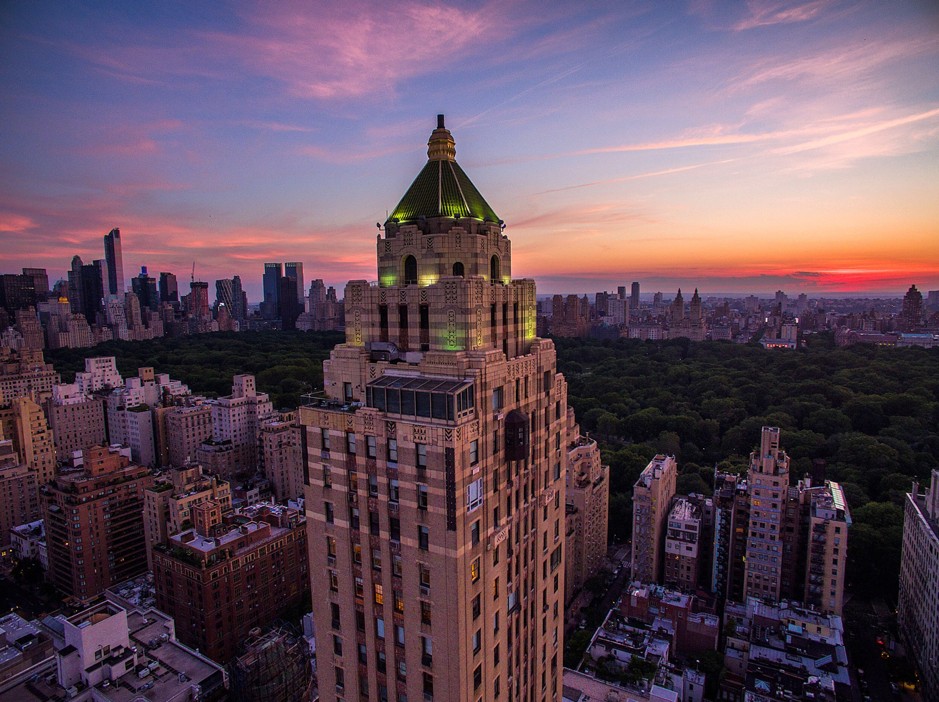
On the corner of Madison Avenue and 76th Street, there stands a 35-storey Art Deco building that has remained essentially unchanged since 1930. The same black-and-white marble lobby. The same bar, with its Central Park murals painted by the same hand that painted them in 1947. The same discretion, the same music, the same feeling that time moves differently there than it does out on the street. No true New Yorker has ever had cause to complain about The Carlyle — it has never given them reason to. It stands still, more alive than ever, asserting through its very presence the essence of New York itself.
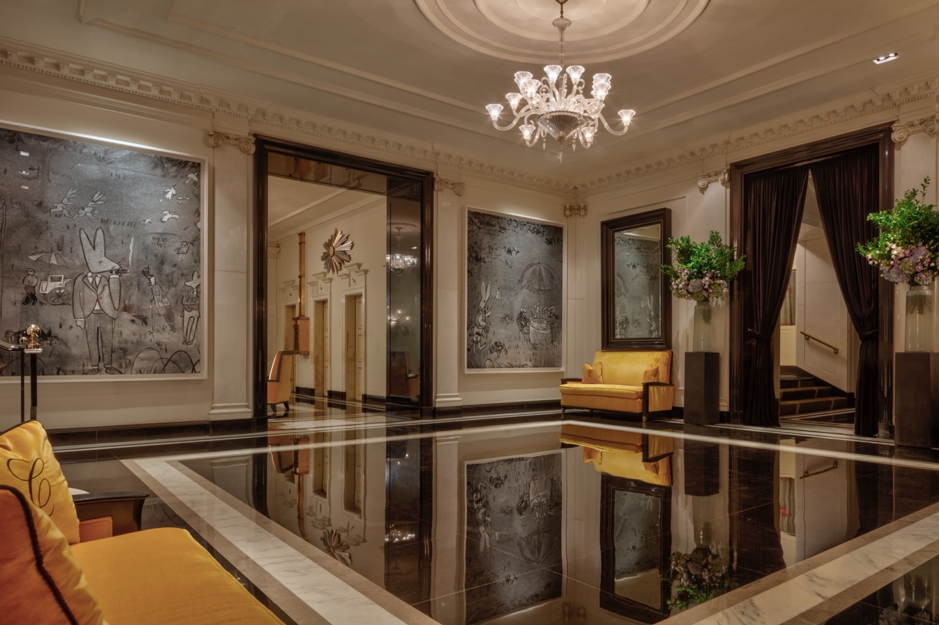
This is no coincidence. It is one of the most deliberate acts in the history of the city.
It all began, as so many things with lasting consequences do, in the shadow of disaster. Moses Ginsberg, a New York banker and property developer, broke ground in 1928 with a vision of European sophistication meeting New York ambition. The result was a 35-storey residential hotel in the Upper East Side, designed by the architectural practice Bien & Prince. Its interiors were entrusted to Dorothy Draper, the pioneering American interior designer whose bold Art Deco sensibility would define the hotel’s visual identity for nearly a century. Ginsberg’s daughter, Diana, gave the hotel its name, chosen in honour of the Scottish essayist Thomas Carlyle — an apt choice, perhaps, for a family of readers: Diana would later become Diane Ginsberg Jaffe, mother of the novelist Rona Jaffe.
When the building opened its doors on the 3rd of November 1930, the stock market had already crashed. Within less than two years, Ginsberg had lost the hotel to foreclosure.
The building should have died there. Instead, it waited.
It passed through several hands before Robert Whittle Dowling — a New York entrepreneur with a singular instinct for what a place could become — acquired it in the mid 1940s’ and set in motion the transformation that would define The Carlyle’s character permanently. Dowling did not merely renovate: he selected and tended with great care to the essence of the hotel.
He ran the hotel in the manner of a private club, requiring prospective guests to provide social references.
In 1947, he opened the Bemelmans Bar, commissioning Ludwig Bemelmans — the illustrator of the beloved children’s Madeline — to paint its walls, hence the bar’s name. The murals depict Central Park across the four seasons, executed in a style at once whimsical and deeply sophisticated. They remain to this day the only surviving example of his commissioned mural paintings on public display. Bemelmans waived his fee and in return took a year and a half of accommodation, taking the liberty of quietly painting himself into one of the scenes, bill in hand.
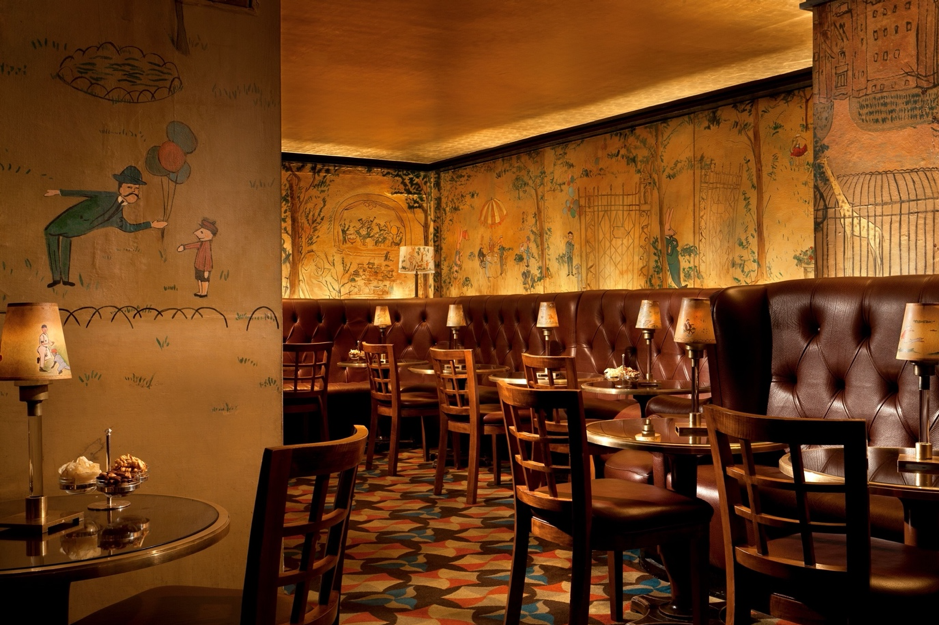
The Bemelmans Bar opens every night of the year. The grand piano fills the room with live jazz, and on any given evening someone with no prior intention of performing might end up seated at the keys. Mariah Carey has sung there after a Christmas tree-lighting ceremony. Bono has played. Liza Minnelli too, amongst so many others.
On a weekend evening, the iconic bar prepares close to a thousand martinis — almost always dirty. In 2022, Architectural Digest identified what it described as the “Bemelmans effect”: bars across Manhattan attempting to replicate elements of the room — its leather upholstery, its amber light, that feeling of being contained rather than merely seated. “Effects” are unreplicable, because they are made of history.
Dowling acquired the low-rise building directly to the west, at 980 Madison Avenue, specifically to protect The Carlyle’s exposure to sunlight and its views. He was not building a hotel. He was building a world and its history, and ensuring that world could not easily be dismantled nor that history lost in the rush of “progress”.
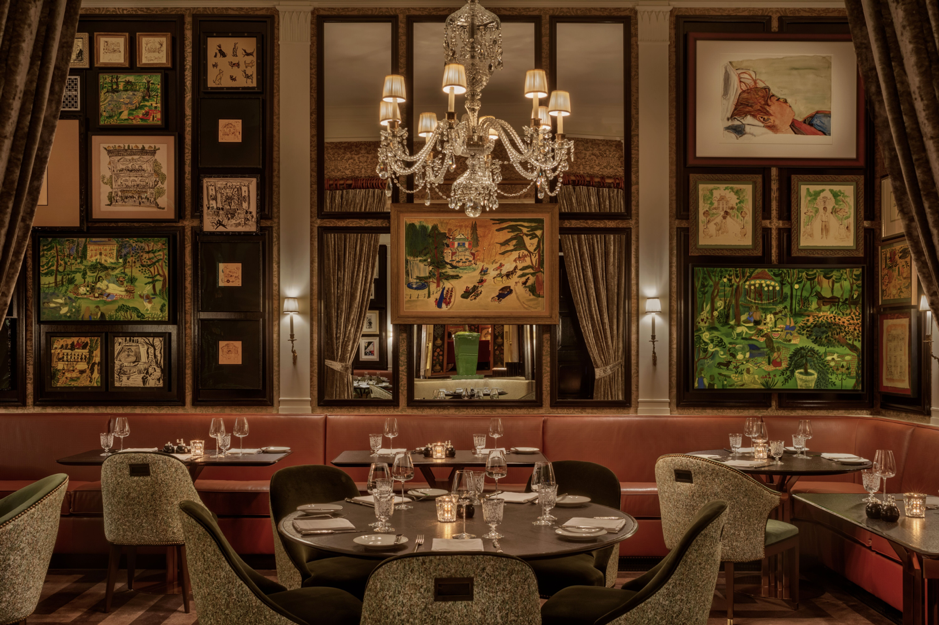
Discretion at The Carlyle is so absolute that it became a form of identity. The hotel earned its nickname: Palace of Secrets, not on account of any particular scandal, but by the steady accumulation of things it chose never to say. A long-serving general manager described the hotel’s essential appeal with characteristic economy: it attracts people who lead very public lives but are desperate to lead private ones. A lobby doorman named Ronald Hector worked there for four decades and refused to share anecdotes about guests — any of them — until after his death. A culture of this particular kind takes generations to form and minutes to destroy.
The Kennedy years made The Carlyle famous in ways that went beyond ordinary reputation. President Kennedy kept a flat on the 34th floor for the last ten years of his life, arriving there just days before his inauguration in January 1961. The hotel became known, in that era, as the White House of New York, and every American president from Truman to Clinton would stay there. Yet The Carlyle never commercially exploited these associations, never featured them in advertisements, never made them the centrepiece of its proposition. The stories simply accumulated, like sediment, becoming part of the building’s weight in the city.
If discretion is the architecture of The Carlyle, music is its pulse.
In 1955, Dowling added the Café Carlyle, a supper club that would become the musical soul of the hotel. Bobby Short, a singer and pianist from Danville, Illinois, had spent decades making his way through the clubs of New York, Paris and London — recording for Atlantic Records, performing at Town Hall — before a 1968 concert alongside cabaret legend Mabel Mercer led to his engagement at the café. He performed there for thirty-six years. Not a season, not a decade — thirty-six years. He became inseparable from the institution in a way that few performers ever become with any venue, anywhere. The hotel remembers him not out of obligation: East 76th Street, between Madison and Park Avenues, now also bears the name Bobby Short Corner in his honour. That is what The Carlyle does. It holds on.
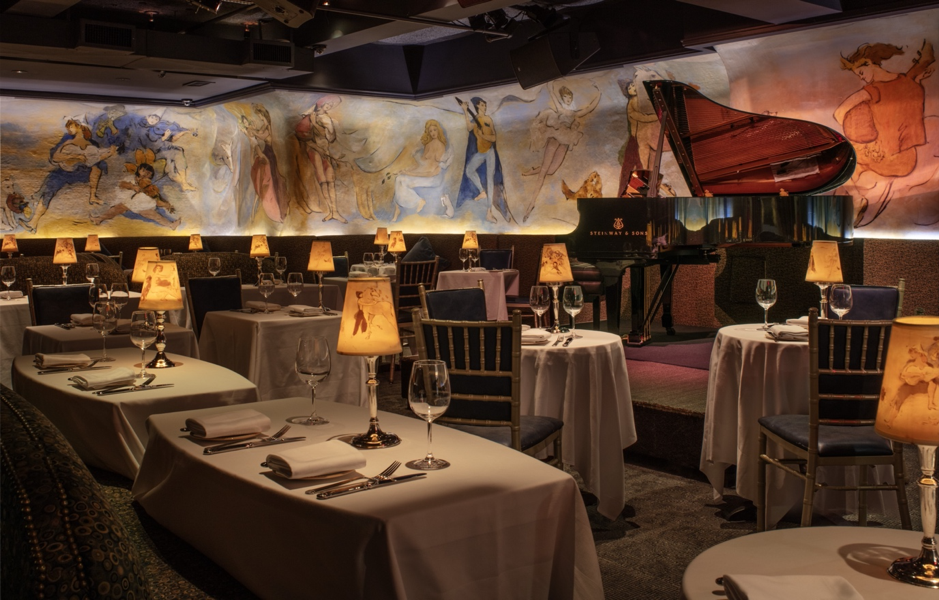
The Café Carlyle possesses a quality rarely found in any performance venue: the performers seem to sing as though they were in their own drawing room, and the audience as though they belonged there alongside them. That quality of intimacy — at once formal and familiar, exclusive and welcoming — cannot be manufactured. It requires, above all, that a place endure long enough for that feeling to crystallise.
What holds all of this impeccably together across nearly a century is not the architecture, nor the reputation, nor even the music: it is the people who have passed through The Carlyle.
Not the guests. The staff.
The documentary Always at The Carlyle, released in 2018, interviewed more than a hundred people connected to the hotel. The distinguished guests — George Clooney, Harrison Ford, Sofia Coppola and Wes Anderson, amongst others — shared their impressions with warmth and good humour. But it was the long-serving members of staff who contributed something far more essential: proof that The Carlyle is, in a genuine sense, a place people arrive at and do not leave. Tommy Rowles had spent half a century tending the Bemelmans bar when the film was made. The concierge Dwight Owsley had passed decades learning the particular preferences of guests who valued, above all else, the fact that he remembered them. It is said that Jack Nicholson sends orchids to his favourite member of staff every time he stays. These are the gestures of people who have found, in a city famously resistant to permanence, something that feels as though it will still be there tomorrow.
The Carlyle never chased relevance. It never repositioned itself for a new generation, never redesigned its identity to align with a cultural moment, never sought the attention it has nonetheless received continuously. In 2001, Rosewood Hotels acquired it — the latest in a long succession of owners since Ginsberg broke ground in 1928. Most institutions absorbed by a global hotel group lose what made them particular. The Carlyle did not. When it has renovated — and it has, carefully, across the decades — it did so in dialogue with what already existed, deepening rather than replacing the earlier layers. The past is not preserved here as nostalgia. It is actively inhabited.
As the story goes, Donald Trump paid a brief visit to the hotel and was overheard saying: “This place is a joke.” For those who understand what The Carlyle has built, and what it has cost to build it, the remark only serves to confirm the point. Some things cannot be appraised quickly. They can only be understood slowly, by those willing to pay attention.
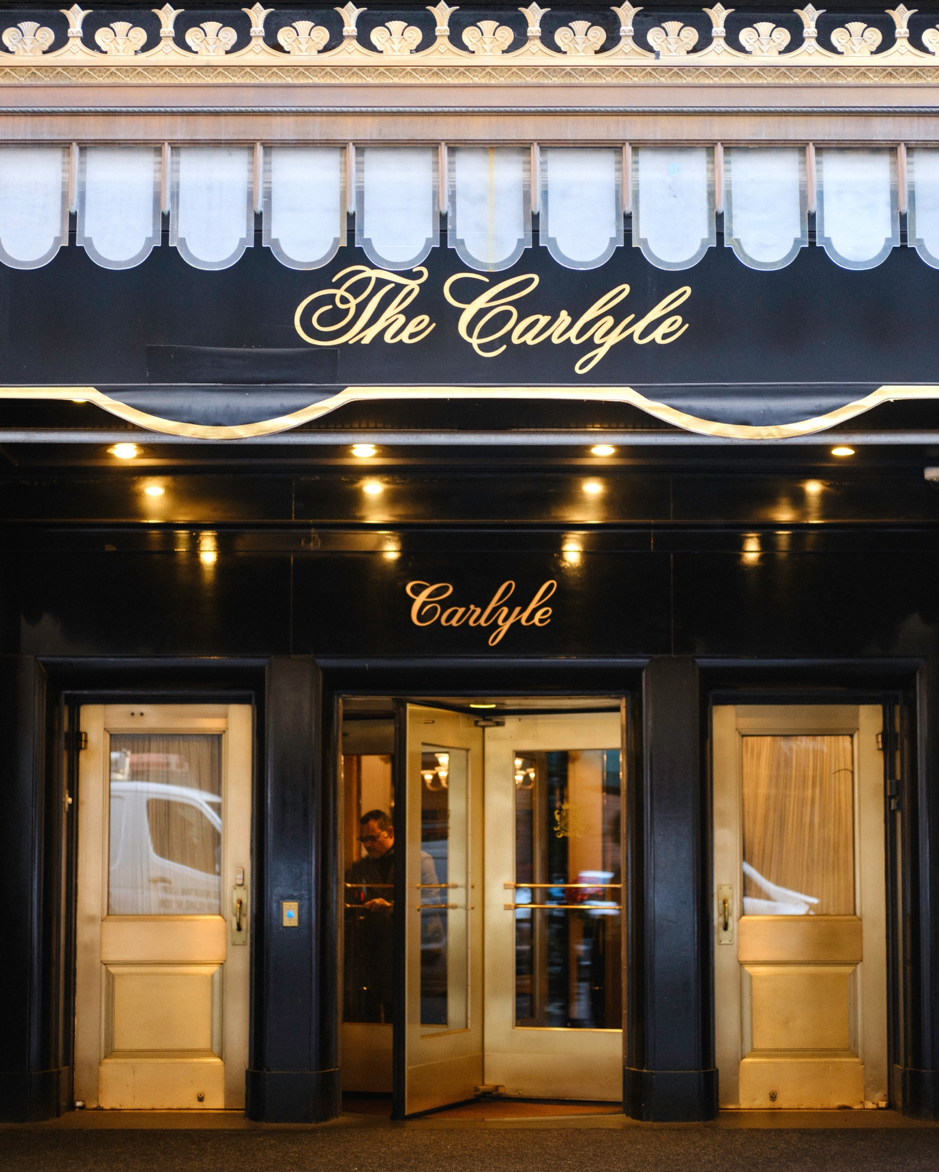
Fran Lebowitz was right. The second you complain about something changing, you're a New Yorker. The Carlyle turned 95 in 2025. In nearly a century, no one has had cause to complain about this corner. Quietly, without fuss, it simply remains there… holding its place on Madison Avenue as it always has — and its walls will never tell you why.
With enduring gratitude to The Carlyles of this world that still stand — and whose stories fill us with joy and make us better people.