Two weeks in Tennis Paradise have reignited the hard-court season. Indian Wells felt electric, relentless and, ultimately, beyond expectation. Daniil Medvedev fought his way into a Masters 1000 final for the first time in over a year, only to fall to the precision and resilience of second seed Jannik Sinner. On the women’s side, Aryna Sabalenka finally overcame Elena Rybakina in a championship match, avenging her Australian Open defeat to the Kazakh. Here, we look back at the newly crowned champions and a decisive weekend in the Californian desert.
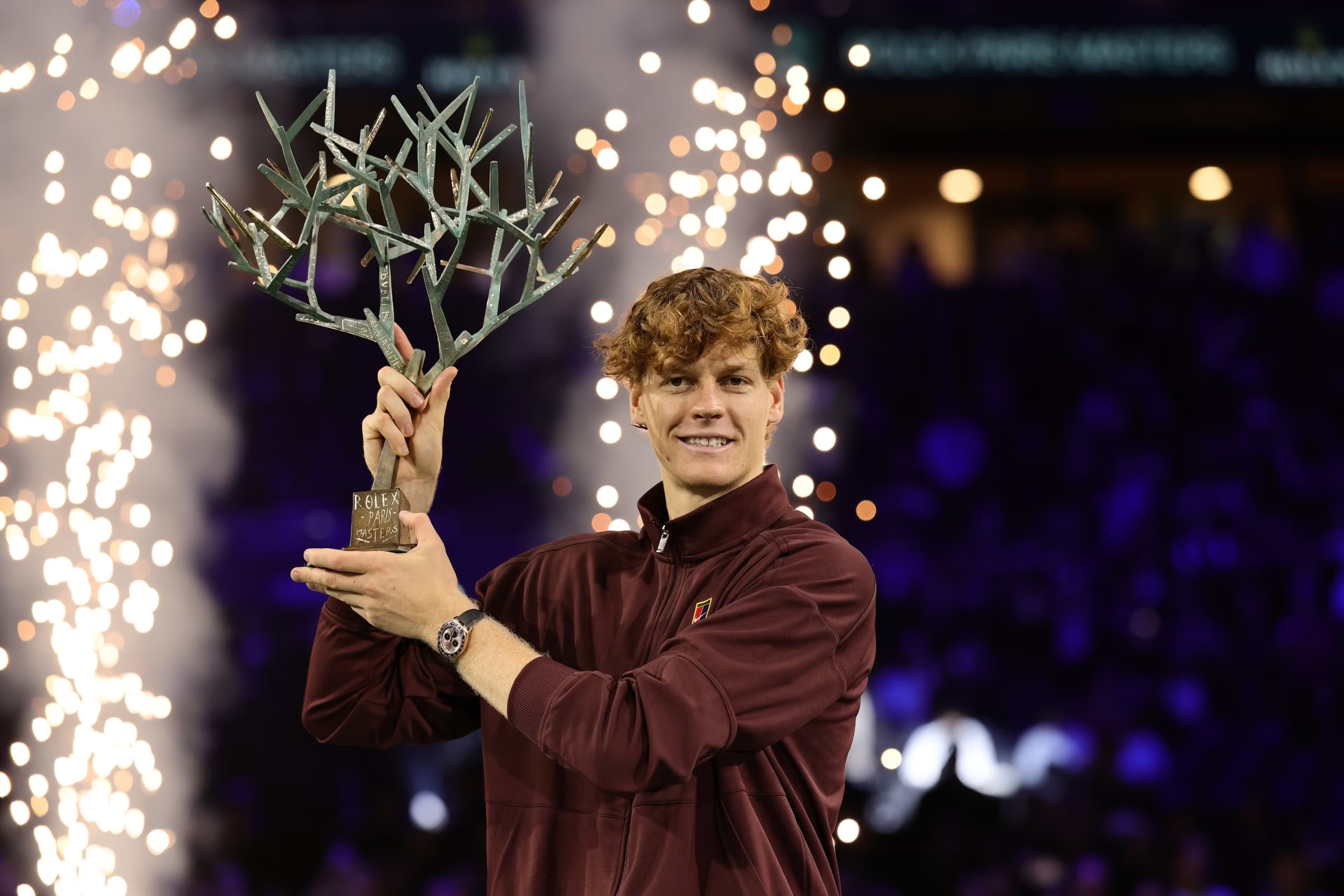
Jannik Sinner captured the BNP Paribas Open title against Daniil Medvedev (11) in one of the tightest finals of the 2026 season, sealing his first Indian Wells crown7–6(6), 7–6(4) on Sunday. The punishing duel - with neither player securing a break of serve - was decided by fine margins. A handful of Medvedev errors proved costly, while Sinner’s resilience prevailed. Trailing 0-4 in the opening tie-break, the Italian produced a stunning comeback to take control and close out the championship.
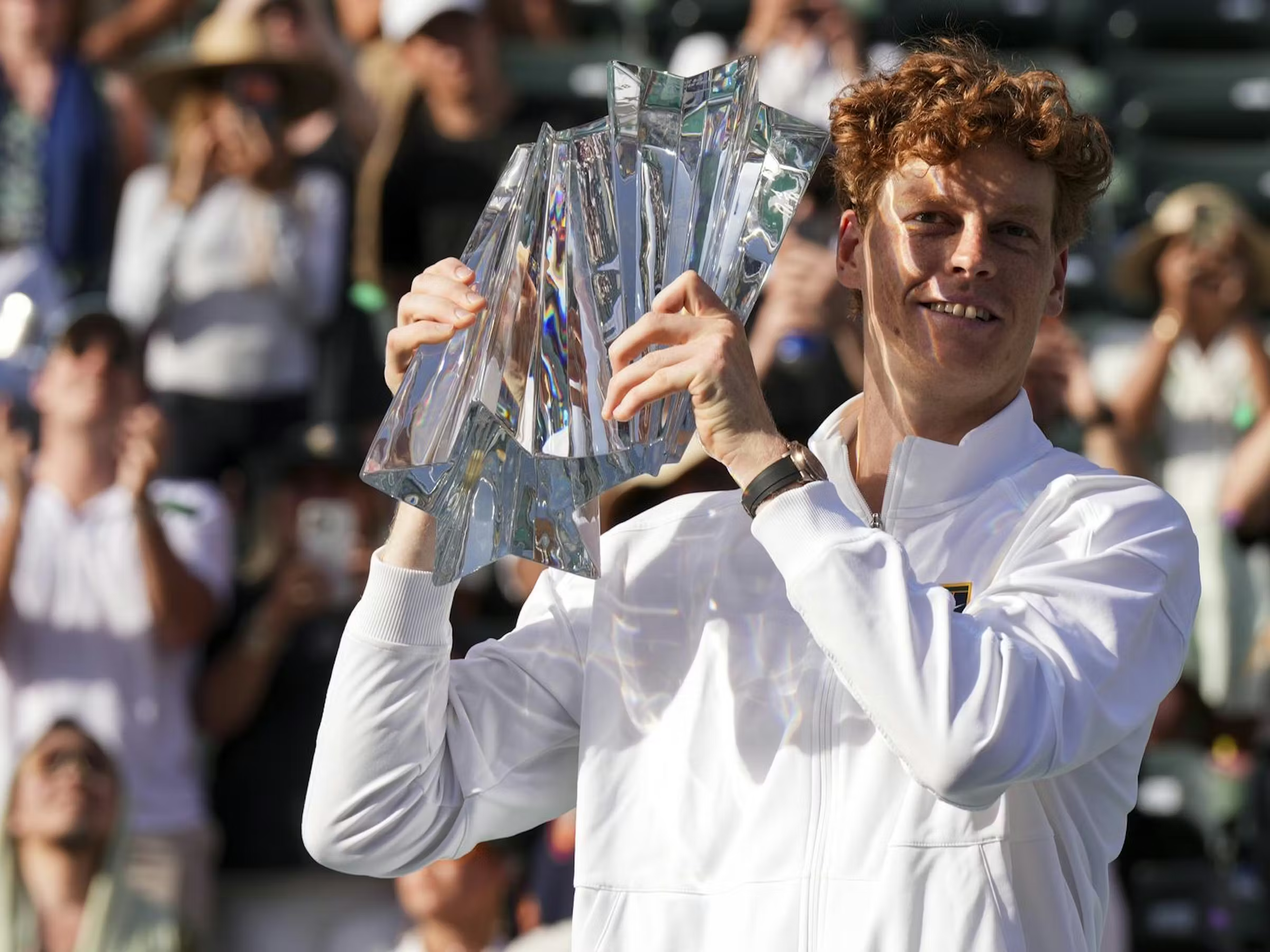
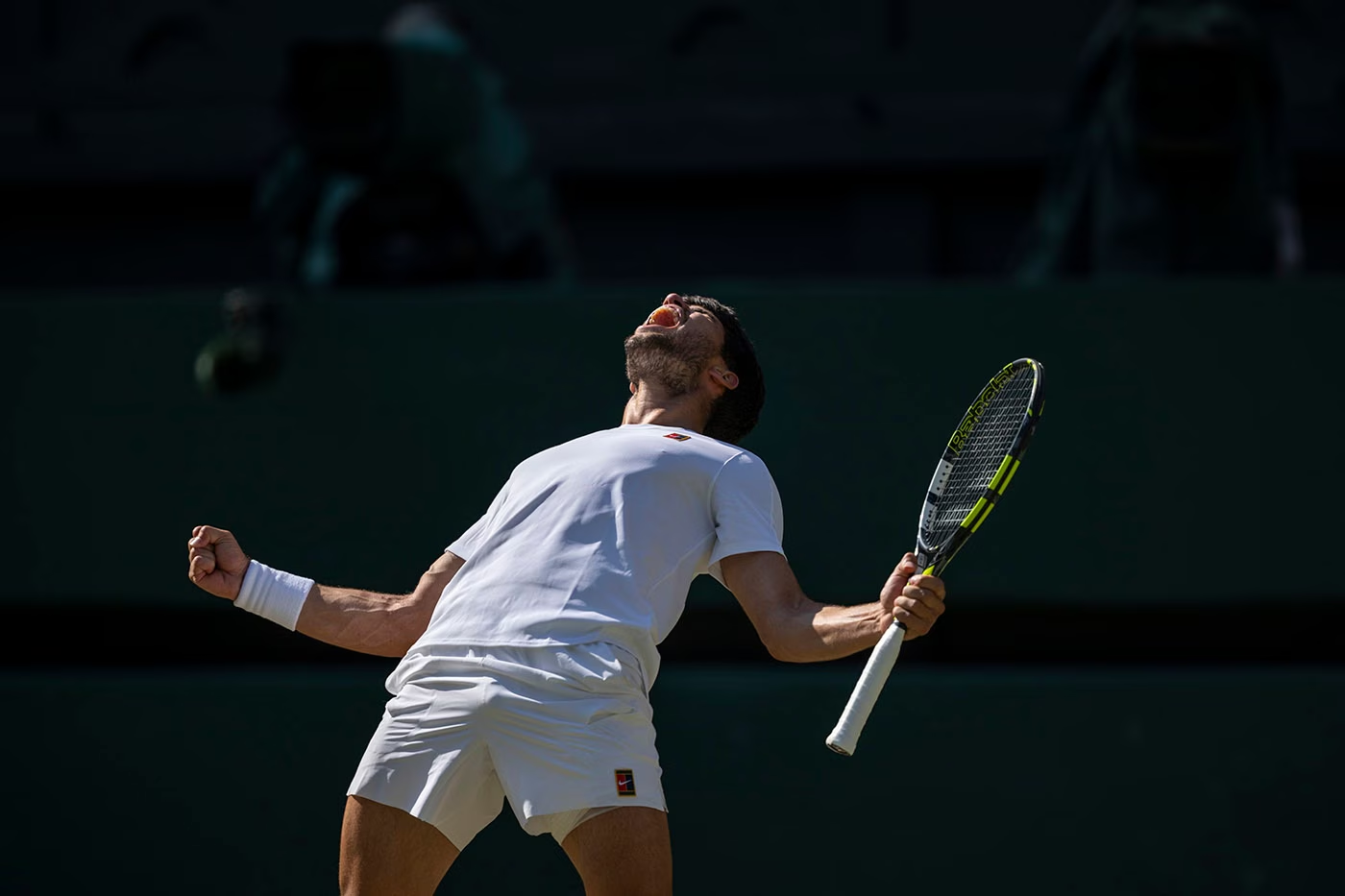
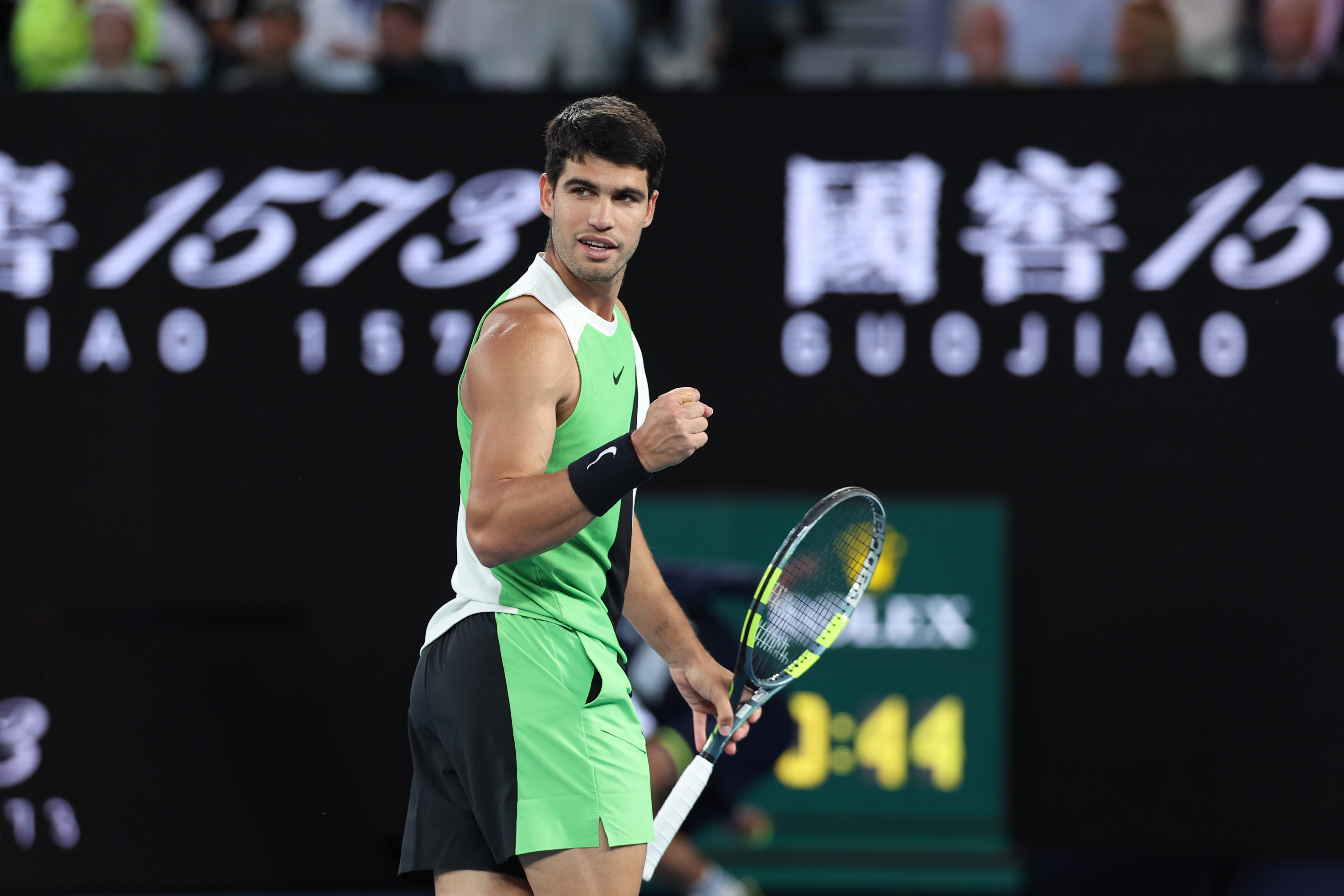
Medvedev had previously ousted Carlos Alcaraz with hard-court precision and an attacking mindset - an approach that had also troubled the Spaniard earlier in the tournament. In Indian Wells, the Russian looked refreshed, reborn and reconnected with his finest attributes: a flat, penetrating serve backed by relentless baseline consistency. He arrived in the US carrying a nine-match winning streak after claiming the Dubai Tennis Championships. His journey was far from smooth, however, as he fled the UAE following Iranian missile strikes, travelling via Oman and Turkey on an exhausting 48-hour route. Yet the ordeal did little to derail his resurgence. Medvedev swept aside his disappointing 2025 form to confront Alcaraz head-on, defeating the top seed 6–3, 7–6(3) and momentarily stripping away the aura that had surrounded the Spaniard. Even Alcaraz was left stunned. “I have never seen, to be honest, Daniil playing like this” he admitted to journalists afterwards.
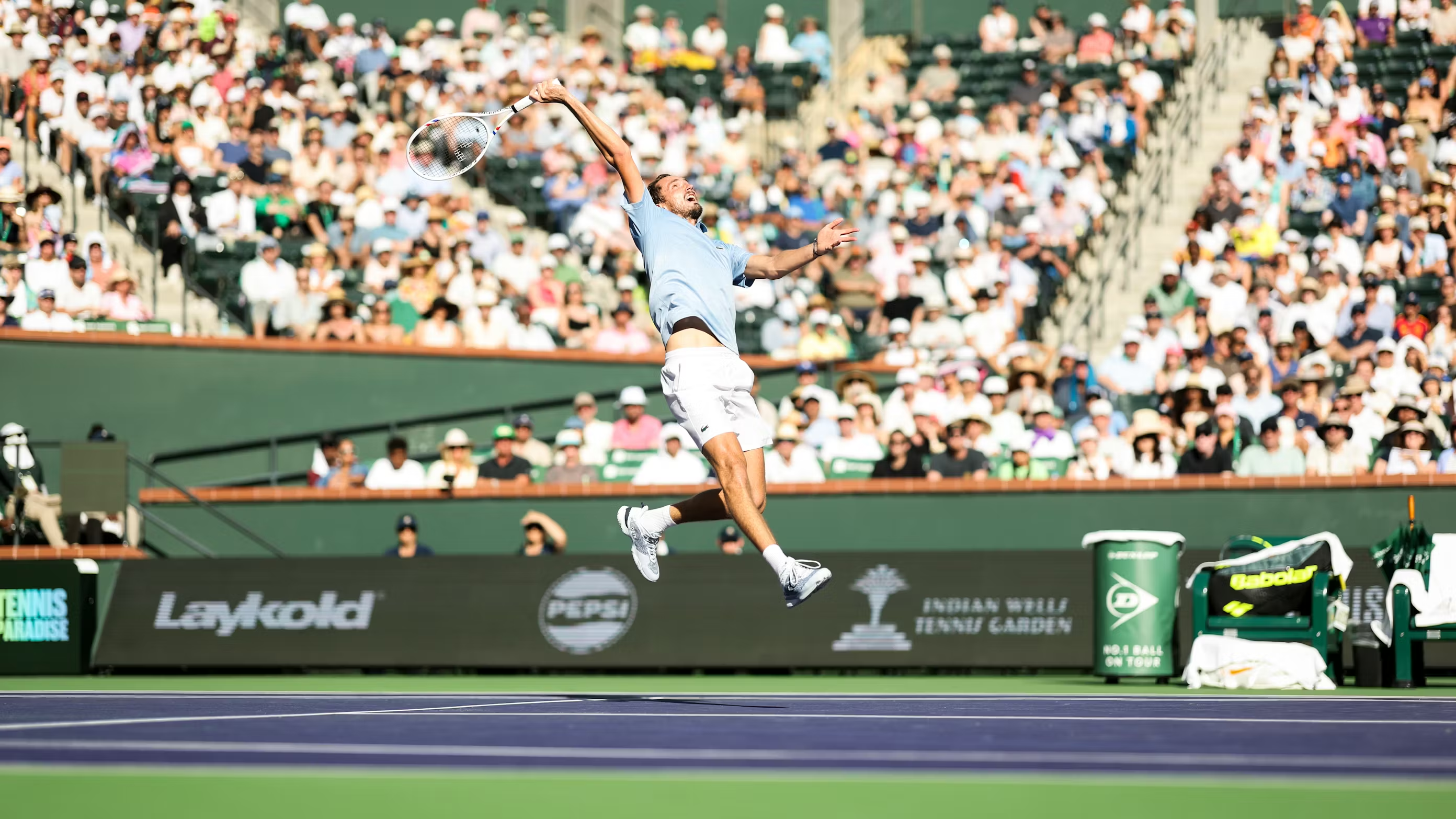
While Medvedev produced the tournament’s biggest upset, lifting the trophy ultimately required overcoming Jannik Sinner. On the eve of the final, it seemed the Russian had found the blueprint to dismantle the Italian after stunning the world No.1 - a result few had anticipated. Yet Sinner once again demonstrated his surgical tactical discipline, punishing any lapse in execution. Medvedev’s camp targeted the Italian’s forehand with first-serve aggression, a strategy that paid dividends as his exceptional serving secured key deuce points. But in the tie-break, the Russian faltered. A slower first serve invited pressure, Sinner forced an awkward backhand exchange and seized the mini-break. Moments later, a sharp delivery down the inside line and a mistimed return handed the Italian the opening set.
The second set followed a similar script. Both players sustained the intensity, though Sinner introduced greater variation than Medvedev’s tidy baseline-and-serve patterns. The Italian mixed in deft drop shots and low slices to draw the 1.98m Russian forward, exposing a net game that remains a relative weakness. Still, the contest drifted once more into a tie-break. Medvedev surged to a 4–0 lead as a visibly fading Sinner battled hand cramps and struggled to find his first serve. Yet the momentum shifted. Sinner struck clean winners, aided by a fortunate net cord from Medvedev that handed him a crucial point. Reconnecting with his trademark resolve, the second seed unleashed a world-class forehand to complete the comeback, take the tie-break and secure his first Indian Wells crown.
Indian Wells has reignited the men’s season. At age 30, Medvedev reminded the tour of his enduring class while Sinner reclaimed the biggest stages - and Alcaraz was put on notice: 2026 will have to be earned, not claimed.
A few hours earlier on Stadium 1 at the Indian Wells Tennis Garden, Aryna Sabalenka faced her long-time nemesis Elena Rybakina, the reigning Australian Open champion. The final carried the unmistakable tension of the hunter becoming the hunted: Sabalenka has occupied the world No.1 ranking for more than 80 consecutive weeks. Rybakina, meanwhile, closed the 2025 season ranked No.5 and rose to world No.2 following Indian Wells, pushing Iga Świątek down to No.3. The two had met 15 times prior to the final, with the Belarusian holding a narrow 8-7 advantage overall - though Rybakina had won four of their five previous championship encounters.
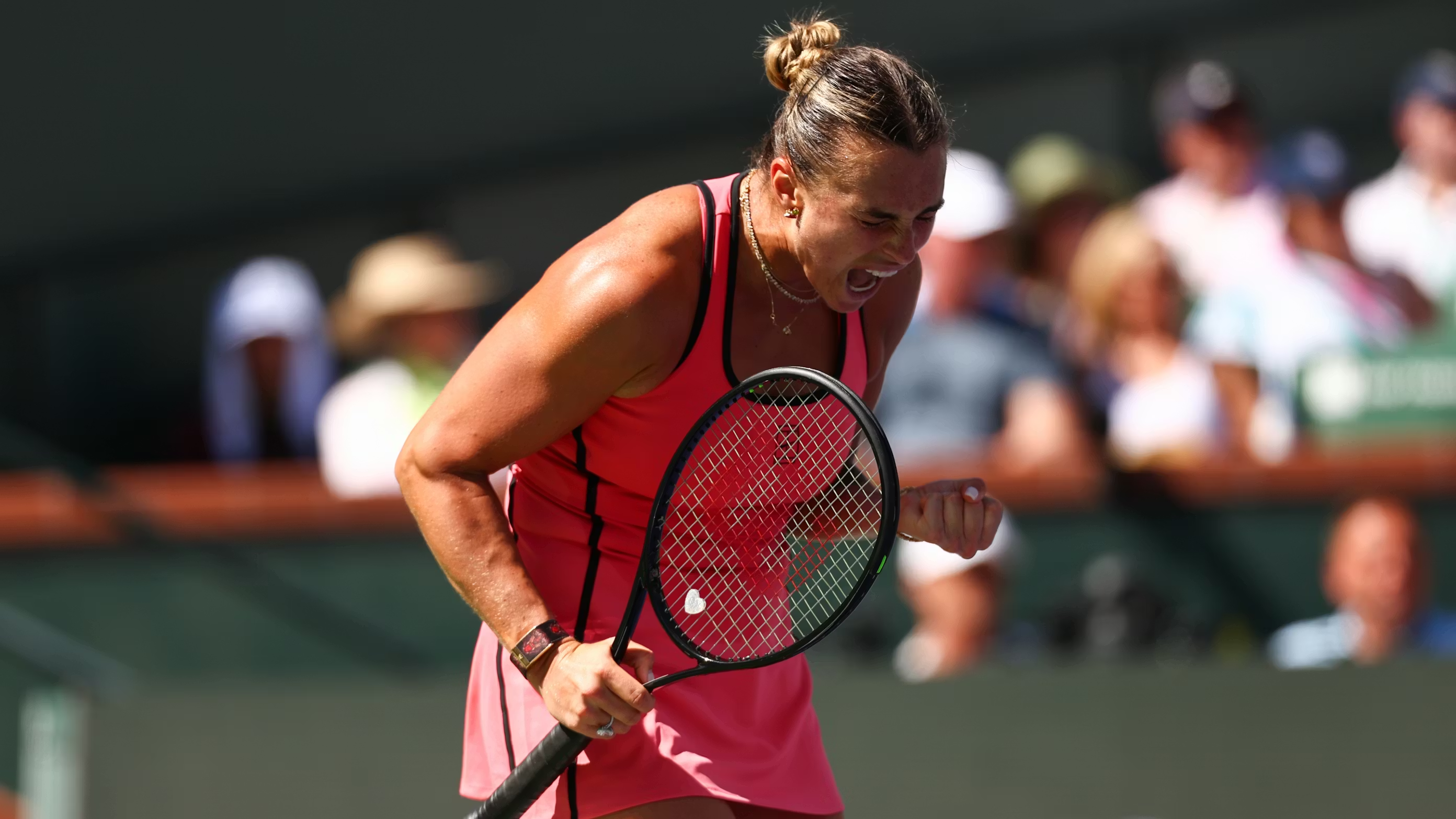
Before the final, it was evident Sabalenka was confronting a familiar adversary: closing out championship matches. Despite an enviable collection of silverware - including titles across all four Grand Slams - the world No.1 has often struggled on the sport’s biggest stages. She knows it. “I am so tired of losing these big finals,” Sabalenka admitted in the press conference. Yet she remained composed and resilient under pressure. Even after she dropped the opening set to a ferocious Rybakina. For a moment ,the second set felt like a battle for control. Gradually, Sabalenka recalibrated - neutralising the Kazakh’s near-flawless shot-making and reasserting her own game plan. After conceding the first set 3–6, she responded with authority to level the match 6–3.

Self-belief proved decisive. Inevitably, memories of the Australian Open - and its defining point resurfaced. In the third set, Sabalenka forced a tie-break and found herself under pressure on Rybakina’s serve, with the Kazakh holding championship point. This time, however, Sabalenka was ready. She denied Rybakina the space to strike the ace that had sealed victory in Melbourne. A wide serve was returned cleanly, the rally turned in her favour, and she claimed the next two points to complete the comeback and crown herself - like Sinner - a first-time Indian Wells champion.
Self-confidence was the trick. Admitedly, memories of Australian Open and their defining point came back to her. In the third set, Sabalenka forced a tie break and was down under Rybakina’s serve, who held a chamionship point at her hadn. Yet this time Sabalenka, was prepared, and wouldn’t give Rybakina the space to ace and win -as in Australia. Rybakina served wide, Sabalenka returned, won the point and slotted in two more point to seal the win and crown herself, as Sinner, a first-time Indian Wells champion.
Across two weeks in the Californian desert, Sabalenka displayed form, evolution and unmistakable dominance. On Sunday, she proved that her mental fortitude can unlock another level - shedding the scars of past finals and dismantling opponents through seamless shifts between defensive resilience and attacking intent. Her variety and psychological strength arguably make her the most complete player in women’s tennis today.
She now turns her focus to the Sunshine Swing and the upcoming Miami Open, a tournament that suits her perfectly. As defending champion after last year’s victory over home favourite Jessica Pegula, Sabalenka arrives with momentum and belief. If Indian Wells is any indication, 2026 could yet become another defining chapter in her reign at the top of the women’s game.