Rafael Nadal’s arrival at the summit of tennis redrew the map of the men’s game. Now retired, the Spaniard returns to Madrid not as a contender, but as a presence - watching from above as the next generation emerges, led this week by another Rafael, Jódar. Few athletes have commanded such global respect: Rafa Nadal’s legacy is built on persistence, precision and an unmatched command of clay. From Manacor to the world stage, his 92 titles - and, above all, his reign at Roland Garros - define a career that shaped an era. Twenty-four years on from his debut, we revisit five moments that capture his legacy in tennis history.
The statistics don't capture the impactful effect Rafa Nadal had on the players around him in his tennis career. Federer became a better grass-court player because Nadal pushed him there. Djokovic built his physical game in response to what Nadal demanded. A generation of Spanish players grew up with a different understanding of what professional standards looked like. The 22 Grand Slams and 14 Roland Garros titles are the record. The shift in how the men's game was played across two decades is the legacy that this icon left on the tennis court.
Nadal's retirement marked the end of the "Big Three" era's dominance, but his influence continues through players who mirror his intensity. After all, he is the only male player to be ranked World No. 1 and win Grand Slam titles in three different decades (2000s, 2010s, and 2020s).
Born in 1986 into a family steeped in sport, Rafael Nadal was initially drawn more to football than to tennis. His uncle, Miquel Àngel Nadal, a former FC Barcelona player and Spanish international, shaped those early instincts. Yet at four years old, just across the road from home, Rafa stepped onto the courts of the Club Tenis Manacor under the guidance of another uncle, Toni. In those early years, proximity and discipline proved more decisive than passion.
Talent followed quickly. At eight, Nadal won the Balearic under-12 championship, defeating older opponents - a victory he would later describe as “one of the greatest of my career”. It marked the beginning of something deeper: a lasting attachment to the act of winning. By 15, he had already stepped onto the professional stage, debuting at the ATP Mallorca in 2002 and claiming his first match.
As his career expanded across Europe, Manacor remained his anchor. Between tournaments, Nadal returned to those same clay courts, training until the day’s final booking forced him off. The setting never changed, even as his stature did. That evolution eventually outgrew the club itself. In 2016, Nadal opened the Rafael Nadal Academy - a high-performance centre on the island, complete with museum and global ambition - transforming his origins into an institution. From a small club across the street to a globally renowned tennis academy, Nadal’s base was always in Manacor.
Still a teenager, Rafael Nadal’s 2005 season marked the beginning of his conquest. Titles in Monte Carlo, Barcelona and Rome announced his arrival, but it was in Paris where everything aligned. At 19, and ranked world No.5, Nadal stormed Roland Garros with a style as striking as his tennis - the sleeveless Nike outfit, the relentless intensity, the unmistakable presence. The New York Times captured it best: “a flashy Majorcan with a ruffian’s swagger and an angelic grin.”
He defeated Roger Federer in the semi-finals and overcame Mariano Puerta in the final to become only the second man in history to win the French Open on debut. This first ronald garros title felt less like a breakthrough than a warning.
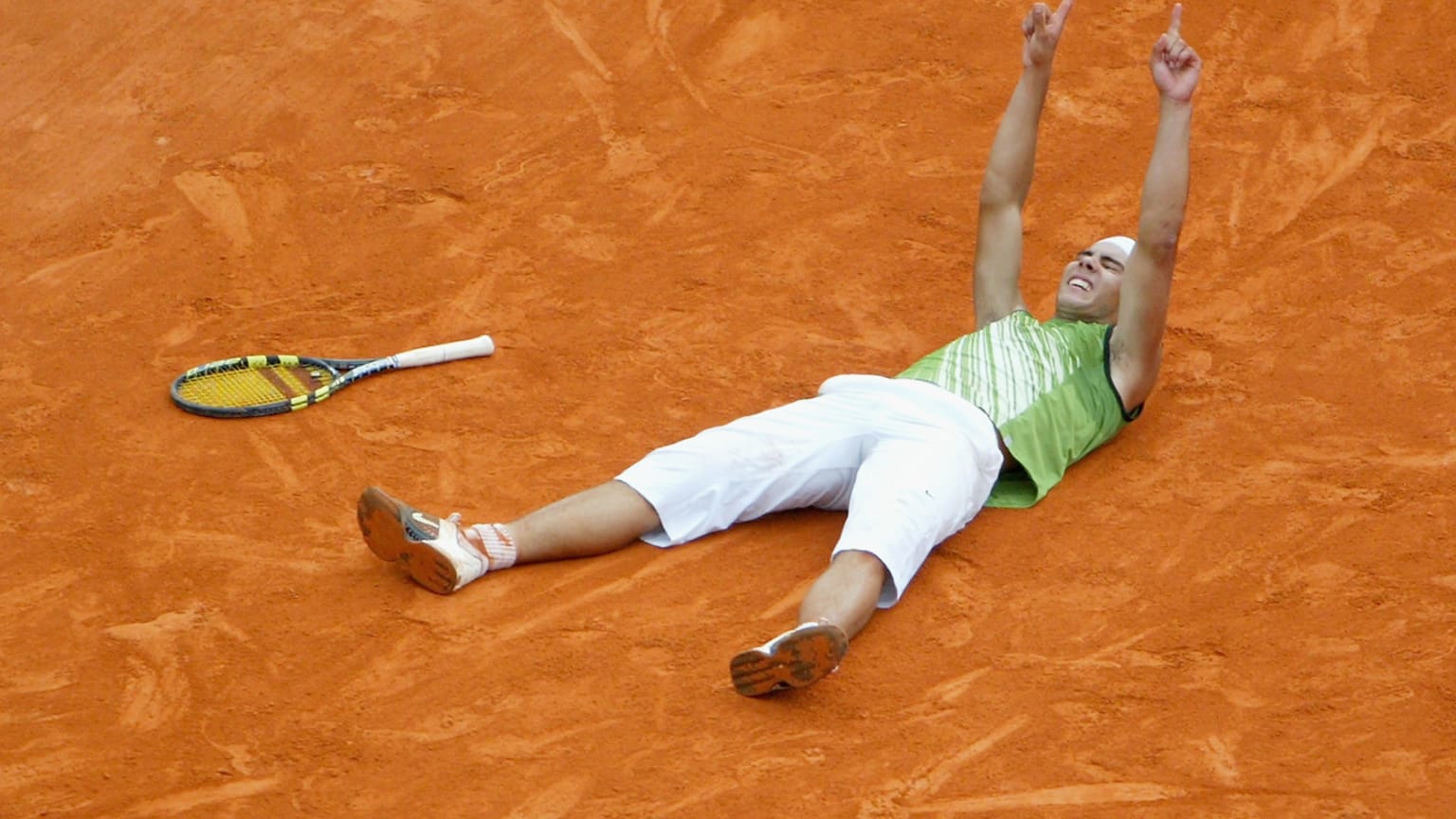
What followed redefined the limits of dominance. Nadal went on to claim a record 14 Roland Garros titles, earning the title of ‘King of Clay’, a statue within the grounds and a permanent place on Court Philippe-Chatrier. Nadal’s story at Roland Garros began in 2005 - the year he decided to turn his ambition into a reign.
Toni Nadal began coaching his nephew when Rafa was just four, at the Club Tenis Manacor, under rules that never bent. Throw your racket in anger and the session ends - permanently. His philosophy was as simple as it was uncompromising: it is better to be a good person than a good tennis player. Across more than two decades and over a thousand professional matches, Nadal never broke a racket in public. Not once. The result was a player admired not only for what he won, but for how he carried himself.
Yet the 33-year relationship that forged that identity was not without fracture. When the split came in 2017, Toni announced it in the press - and Rafa learned of it as the public did. The explanation was characteristically unsentimental: “I understood it didn’t cause him the slightest disturbance - that’s why I left.” At Nadal’s retirement in Málaga, Toni was not visibly courtside. The distance between them showed that 33-years of disciplined coaching can destroy even the strongest family ties.
The Federer-Nadal rivalry remains one of the most revered in modern sport: a clash of surfaces, styles and eras. Nadal ruled clay; Roger Federer owned grass. By 2008, the Swiss had beaten Nadal in two consecutive Wimbledon finals and arrived chasing a sixth straight title at the All England Club.
But this time felt different. Nadal came prepared - sharper on serve, bolder in his shot-making, ready to disrupt Federer on his own stage. What followed was a final that stretched over 4 hours and 48 minutes, still regarded as one of the greatest matches ever played.

Nadal took the opening two sets, only for Federer to respond with two tie-breaks of his own, dragging the contest into a fifth. As daylight faded and tension peaked, they stood level at 7-7. Nadal struck first, breaking Federer’s serve, then held his own to close the set 9-7. He collapsed onto the grass, overwhelmed. It was more than a victory. It was a shift in balance: the moment Nadal proved he could conquer his biggest rival surface: grass.
Nike’s relationship with Rafael Nadal began in 1998, a modest deal worth $500,000 over five years, signed while he was still a teenager. A decade later, the scale had transformed: a renewal reportedly worth $10 million per year, followed by another extension through to 2023. In total, Nike invested an estimated $200 million in Nadal - not just in performance, but in identity.
That identity evolved with him. The teenage disruptor who arrived at Roland Garros in capri-length shorts, sleeveless tops and bandanas - a look as unconventional as his game - gradually transitioned, from 2009 onwards, into a more refined, tailored silhouette. The aesthetic matured, but the essence remained.
At the centre of it all sits his personal mark: the bull. More than a logo, it embodies a distinctly Spanish heritage - strength, intensity, resilience - and reflects the qualities that defined Nadal’s career. Over time, the partnership became more than sponsorship. It became a visual language of dominance and a sense of belonging to it.
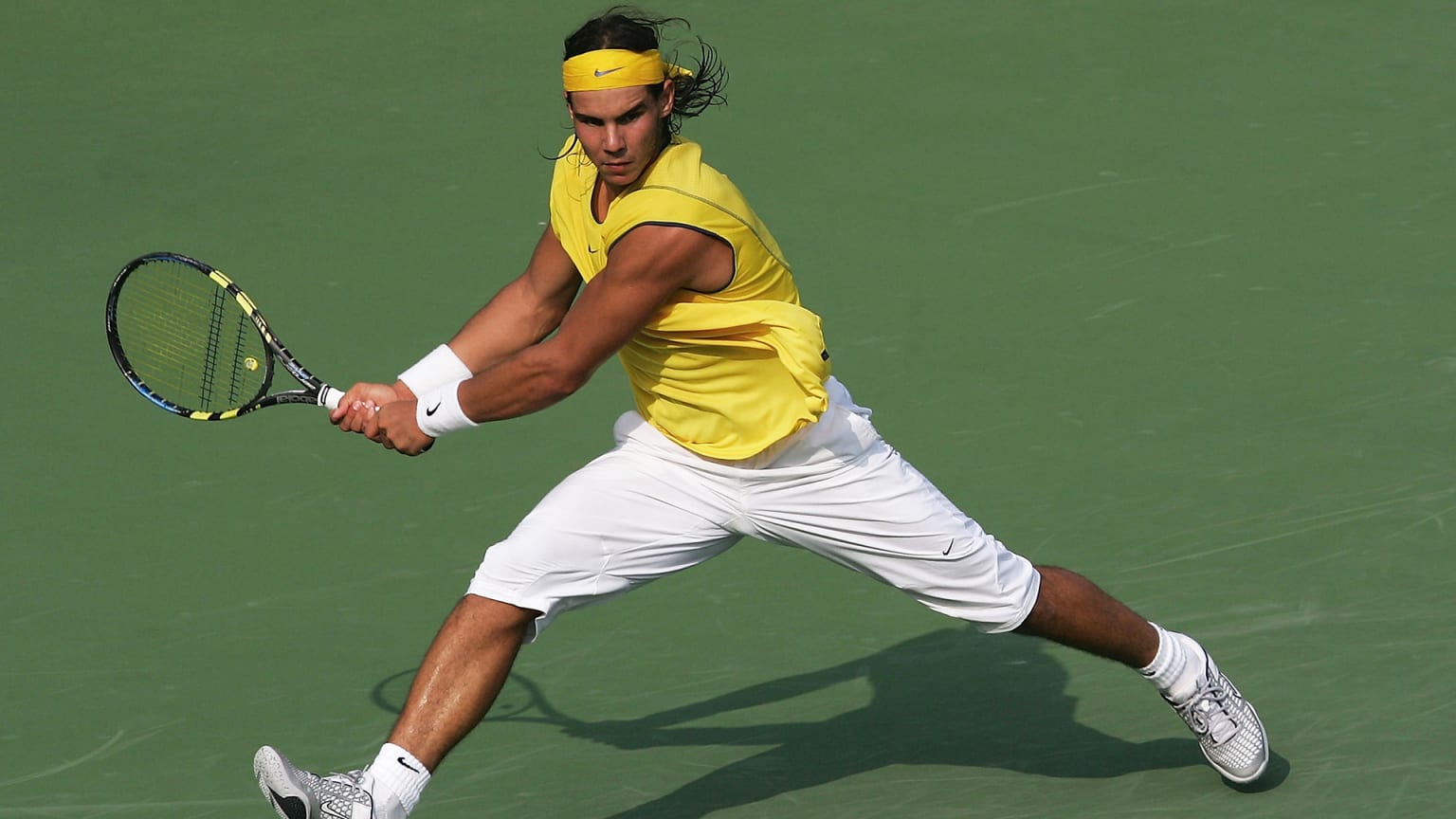
Retirement has not diminished Nadal's presence in the world of tennis. If anything, it has clarified it. The three-quarter length shorts, the bandana, the bull: details that once seemed unconventional are now inseparable from the sport's visual memory. Across nearly two decades on the professional tour, he won not just titles but the kind of personal satisfaction that comes from having played the game exactly as he believed it should be played. Mueller-Weiss syndrome, chronic knee inflammation, months away from the tour; none of it interrupted the trajectory for long. The eternal legacy of a player like Nadal is that the standard he set does not retire with him.
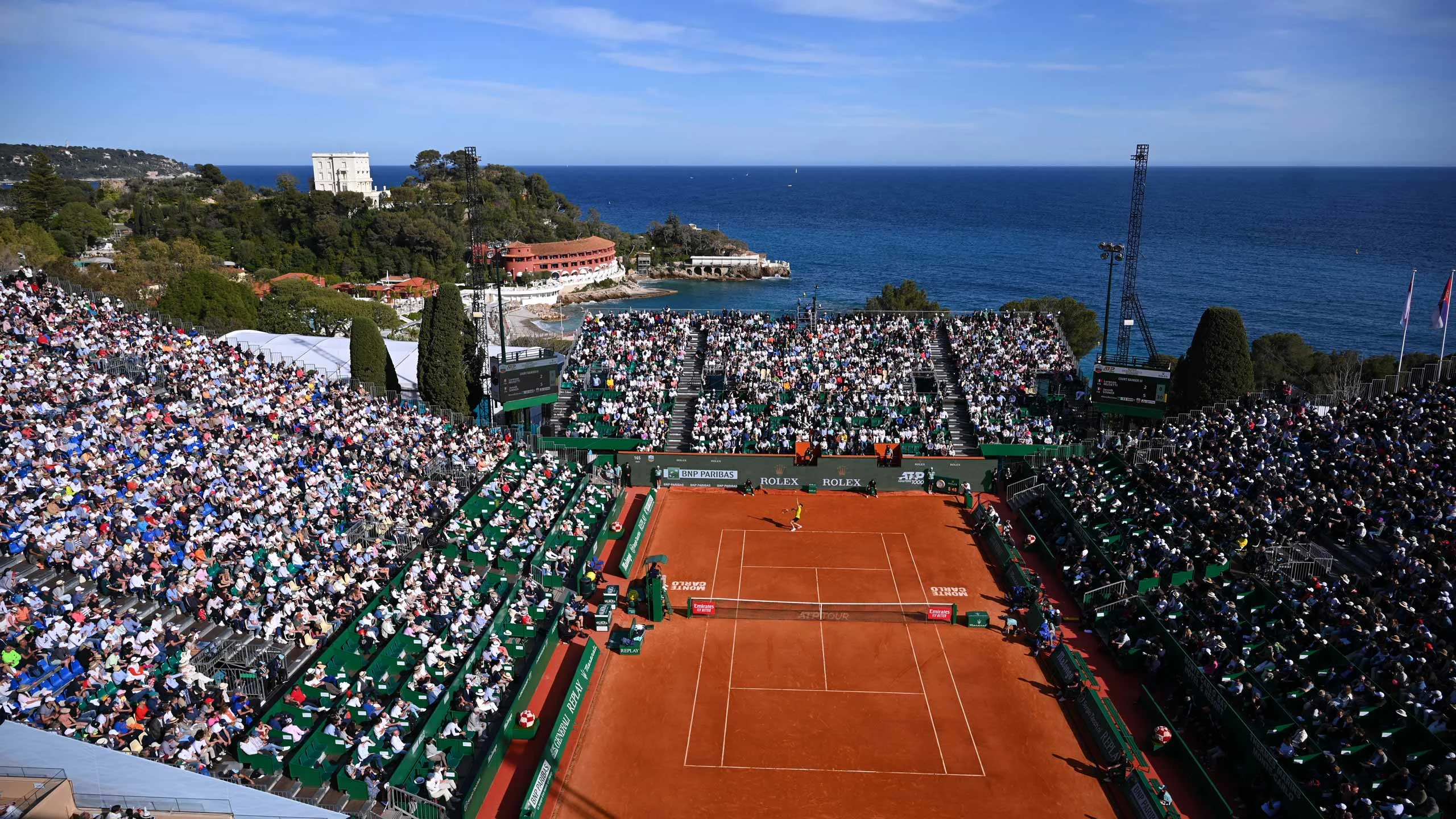
The generation now competing for the titles he left behind has inherited a different game because of him. At the Rolex Monte-Carlo Masters, where Nadal won eleven times, Jannik Sinner claimed his first title on the terre battue, defeating Carlos Alcaraz in a final that showed how completely the next era has arrived. The race for world No.1 that Nadal once defined now belongs to others, and the battle between Sinner and Alcaraz at the top of the rankings is, in its own way, a continuation of what he built. Even those who never watched Nadal play a single moment will feel his influence in the game they're watching now.