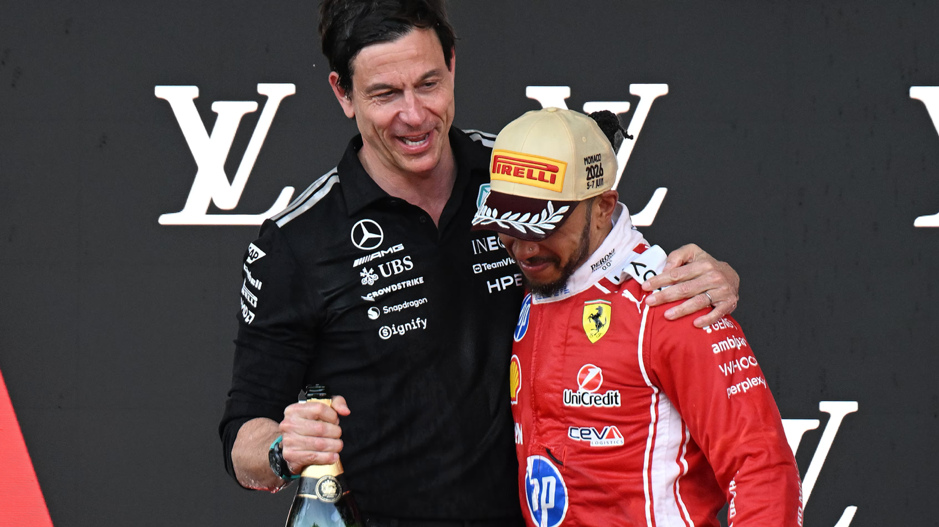
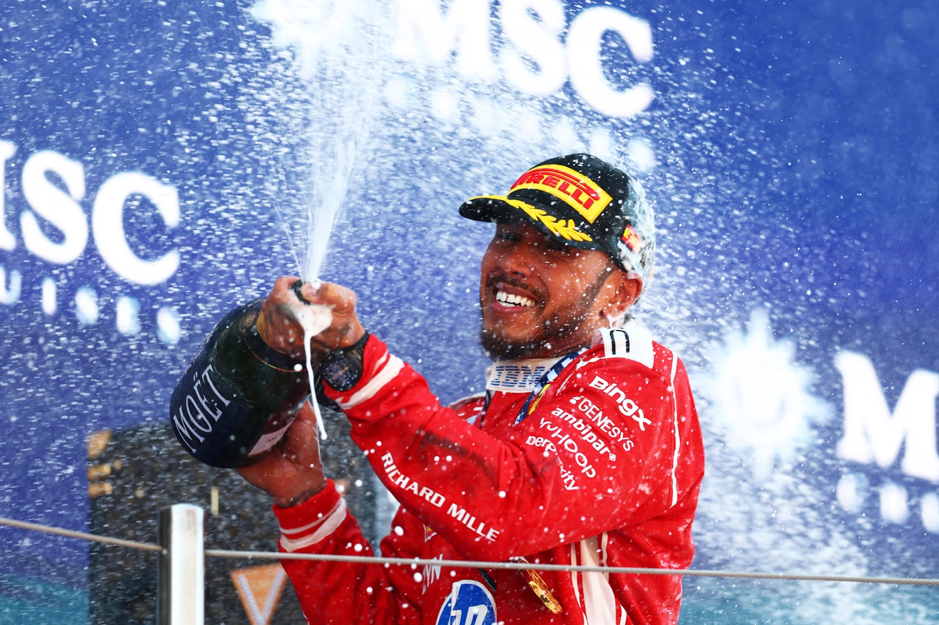
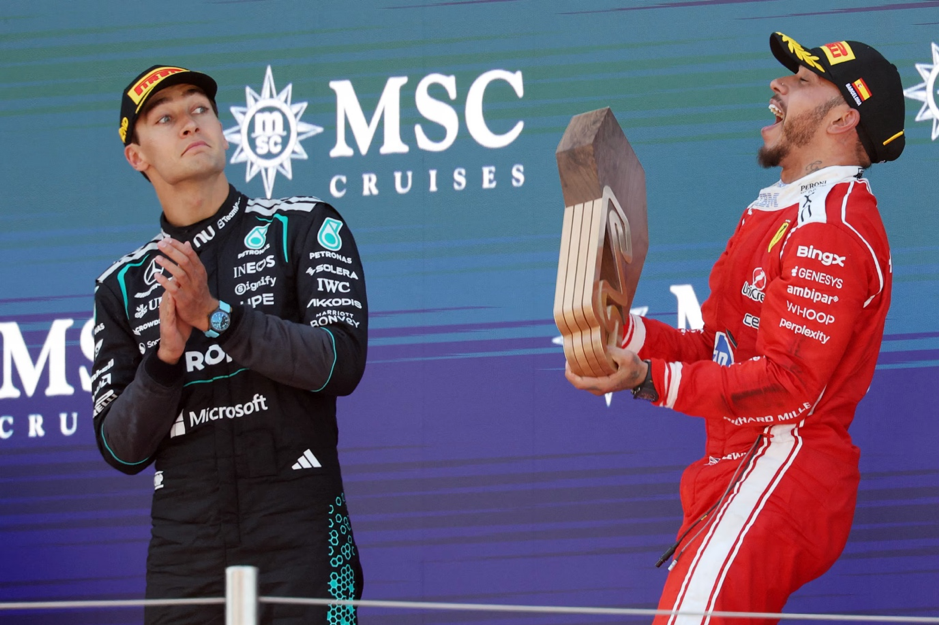
Few will have been anything other than delighted to see Lewis Hamilton take his maiden Ferrari win at this year’s Barcelona-Catalunya Grand Prix. Not only has this win provided some much-needed respite for both Hamilton and Ferrari, both of whom endured a torrid 2025, it has also served as a startling reminder of Hamilton’s continued form. An inevitable byproduct of Hamilton’s immense standing in global motorsport is the flurry of new records he breaks with every passing achievement. With this win, Hamilton has become the first driver to win a grand prix in his forties since Nigel Mansell in 1994, he is the oldest race winner since Sir Jack Brabham in 1970 and has broken the record for the longest gap between first and latest grand prix wins at a staggering 19 years and four days.
But what is perhaps more impressive than all of that was the lack of luck involved in this win. This wasn’t some fortuitous victory that fell into Hamilton’s lap; it was an eye-catching combination of inspired strategy and brilliant pace. One that had many harking back to Hamilton’s prime.
Ferrari arrived in Spain with a slew of fresh aerodynamic upgrades. The SF-26 sported a new front wing, a redesigned floor, reshaped sidepods, and an altered diffuser. The fresh package yielded near instant results as Hamilton topped the timesheets in Q1 and missed out on pole by just 0.64s in Q3. A quick look at the ‘ghost lap’ that overlaid his best run with that of George Russell confirms that the Mercedes driver’s superior engine allowed him to edge ahead on the short sprint to the line. Mercedes had the edge, but Ferrari was in close attendance.
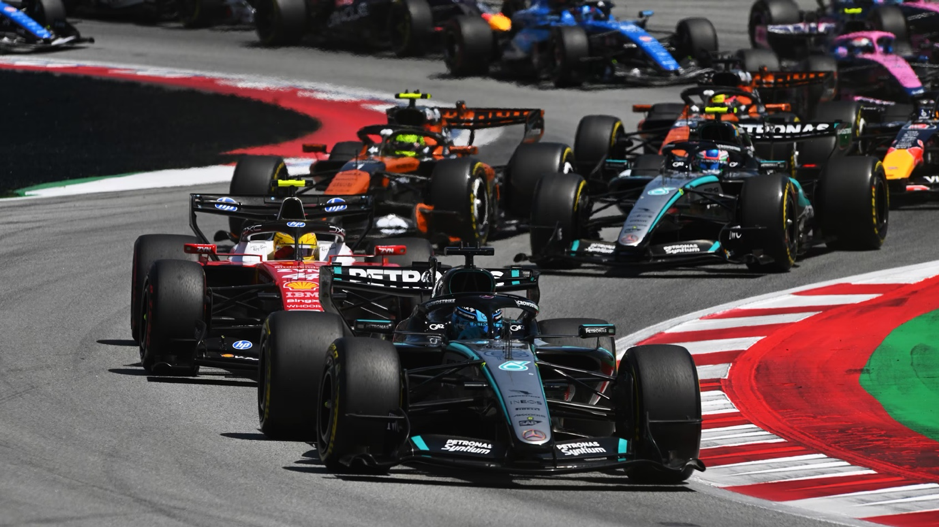
At the start, Russell retained the lead going into turn one, while Hamilton fended off Kimi Antonelli and held onto second. Having started on the softs on a track that is notoriously tough on tyres, Hamilton pulled the strategic trigger early by pitting for hards on lap 11, thereby committing to a three-stop strategy. Mercedes had no choice but to respond, pitting Russell a lap later. The seven-time world champion stayed within three seconds of his former teammate until his second stop on lap 27. Armed with a fresh set of mediums, Hamilton went on an absolute tear, carved his way through the pack and took the lead on lap 38 after both Mercedes drivers completed their stops. At which point, Hamilton had taken roughly 20 seconds out of Russell.
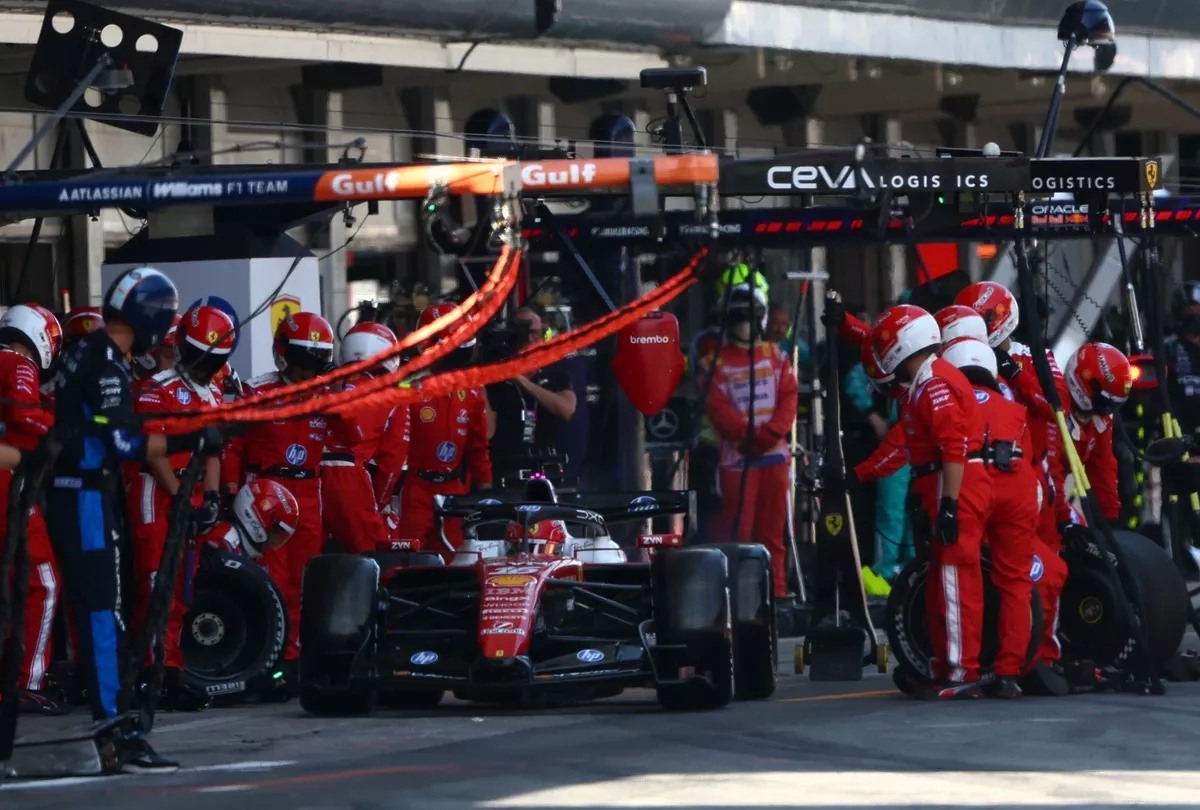
With one more stop ahead of him, Hamilton had a lead of around 16 seconds by lap 41, when Fernando Alonso coasted to a halt with a battery issue and triggered a virtual safety car. Ordinarily, Hamilton would not have been able to pit and retain the lead, as the amount of time lost in the pits at Barcelona is typically around 23 seconds. However, with the rest of the field reducing their pace, this served as the ideal opportunity for Hamilton to complete his third stop, switch to hard tyres and come out ahead.
Once the racing resumed, Hamilton was simply untouchable. As the two Mercedes squabbled over second place, Hamilton streaked away with the same consistency and assertion that defined his peak. Antonelli sweetened the deal by retiring five laps from the end and Hamilton was left free to claim his first win since Belgium 2024, nearly 20 seconds ahead of second place Russell.
Despite the overwhelming fanfare, this win has attracted a modicum of sceptics who insist that Hamilton was aided by that fortuitous VSC, which afforded him a free stop that would have otherwise cost him track position. However, a swift examination of the race is all it takes to dispel these doubts. Ferrari’s original plan was to pit Hamilton on lap 46, five laps after they actually did.
With Russell 16 seconds behind and around 23 seconds lost in the pits, Hamilton would have likely come out around seven seconds off the lead, a gap he would have had 20 laps to close down. This would have required him to catch Russell by around 0.35s a lap. Post-race data analysis has confirmed that stopping a lap later than another driver would yield a pace advantage of around 0.15s per lap. With Russell stopping on lap 38 and Hamilton originally scheduled to stop eight laps later, it means the latter would likely be up to 1.2s a lap faster. Add to the equation the late race tussle between Russell and Antonelli, which cost them time relative to Hamilton, and it's safe to say he had the pace and rubber to win with or without the virtual safety car.
After a year of underwhelming strategy, frustrating mistakes and lean performances that had him questioning his own abilities, the assertion and composure Hamilton displayed en route to victory in Barcelona was the tonic he needed and could serve as the bedrock on which Hamilton could build the dignified final chapter his career deserves.
Given, the added excitement generated by both Lewis Hamilton and Ferrari, this win has sparked an additional conversation, one that revolves around a far loftier goal. Can Hamilton actually challenge for that elusive eighth world title? He may be 41 points off the championship lead, but so too is he in a rich vein of form. He’s ended Mercedes’ monopoly of race wins, has outperformance his teammate for the last four successive races, and currently lies second in the drivers’ championship.
Crucially for Hamilton, the qualifying woes that plagued for much of the ground-effect era seem to have gone away, at the time of writing he is currently winning the inter-team qualifying head-to-head 3-4. What’s more, Mercedes’ current power unit advantage could be under threat as Ferrari will be bringing an engine upgrade of their own to the power-sensitive Red Bull Ring. Should the new components yield the expected result, Ferrari could be in with a shout.
However, Hamilton is unlikely to have it all his own way. Never mind the significant gulf separating him and Antonelli, the seven-time world champion is soon going to have his teammate to worry about. He may have experienced a dip in form as of late (personified by another unforced error in Barcelona), but Leclerc is nothing if not resilient. Having experienced more than his fair share of professional and personal setbacks in the past, the Monegasque has long since proven his ability to bounce back, never mind the fact that he can claim to have beaten both Sebastian Vettel and Lewis Hamilton in equal machinery.
While Leclerc’s reemergence is almost guaranteed, the same can’t be said of Ferrari. The team is looking more promising than it has for some time, but if history has taught us anything, it's that Ferrari in the modern era has a habit of cracking under pressure when. Never mind the 18 years that have elapsed since their last constructors’ crown in 2008, this team has been involved in just two title deciders in the last 14 seasons. 2010, 2012, 2017, 2018, 2022 and 2024 were all scuppered to one degree or another by strategic woes, operational failures, driver error and developmental trouble.
It’s far too early to write Ferrari off, but it is impossible to ignore the extent to which history is not on its side. It remains to be seen whether or not Hamilton and Ferrari will be able to mount a credible title challenge going forward. What is certain is that, having endured the worst season of his career in 2025, Hamilton has all the tools he needs to reignite his love of racing, restore his reputation and test himself against the best Formula 1 currently has to offer.