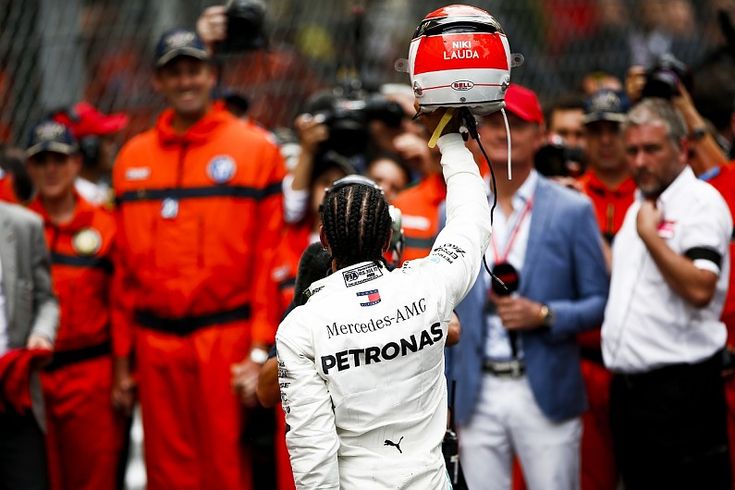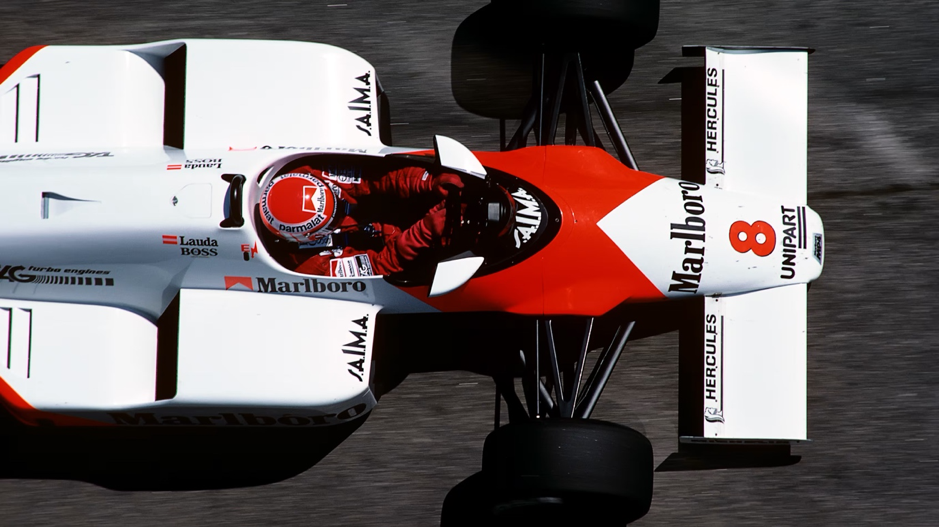
Niki Lauda won his third Formula 1 world championship in 1984 by half a point, the smallest winning margin in the sport's history, beating a teammate widely considered faster, younger and better suited to the machinery, the drivers championship that year came down to a single race in Portugal. That teammate was Alain Prost. The championship came seven years after Lauda's second title, following a two-year retirement and a return most of the paddock had written off before it began. What made it possible wasn't raw pace. It was experience, mechanical sympathy and the discipline to maximise every opportunity Prost's misfortune created.
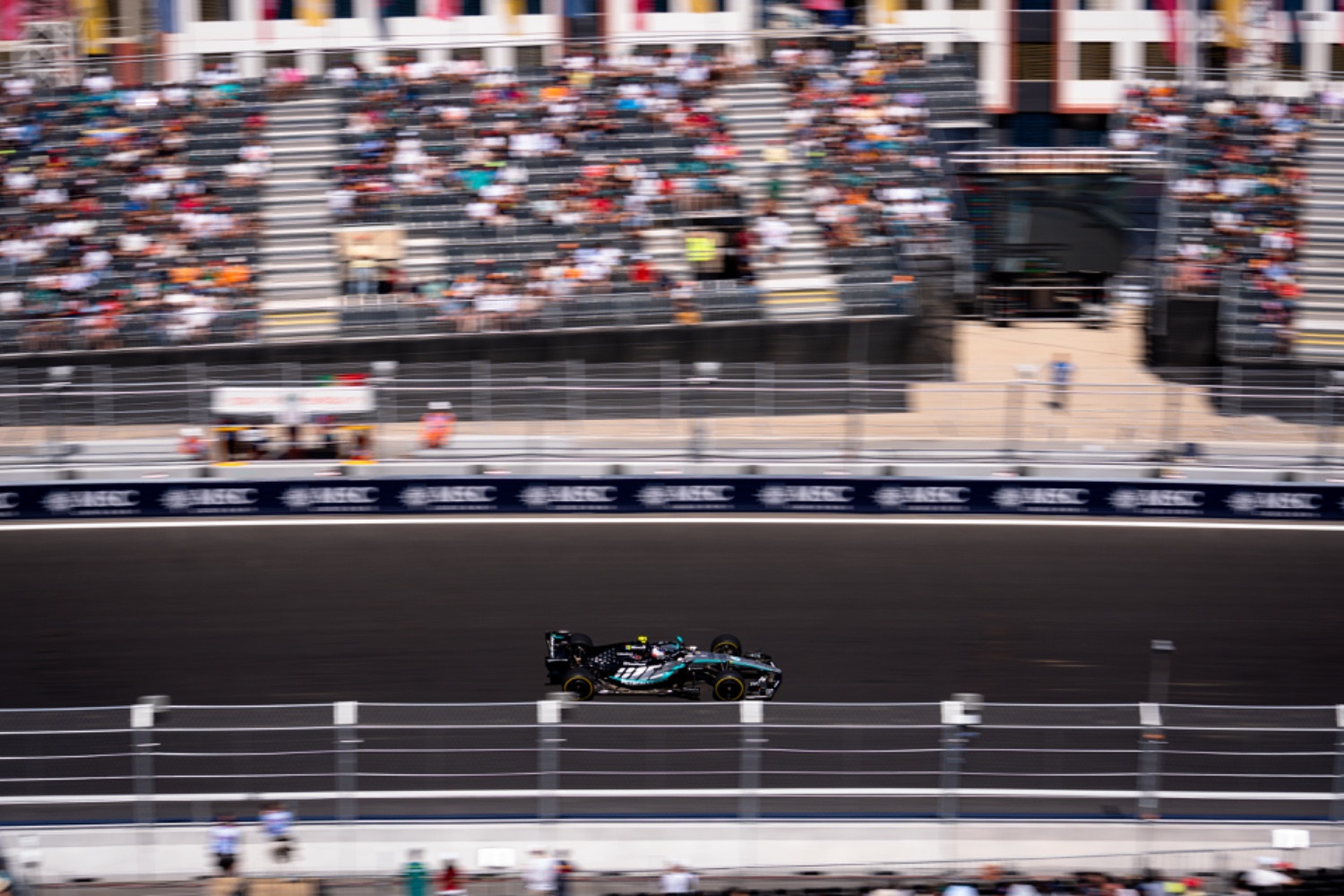
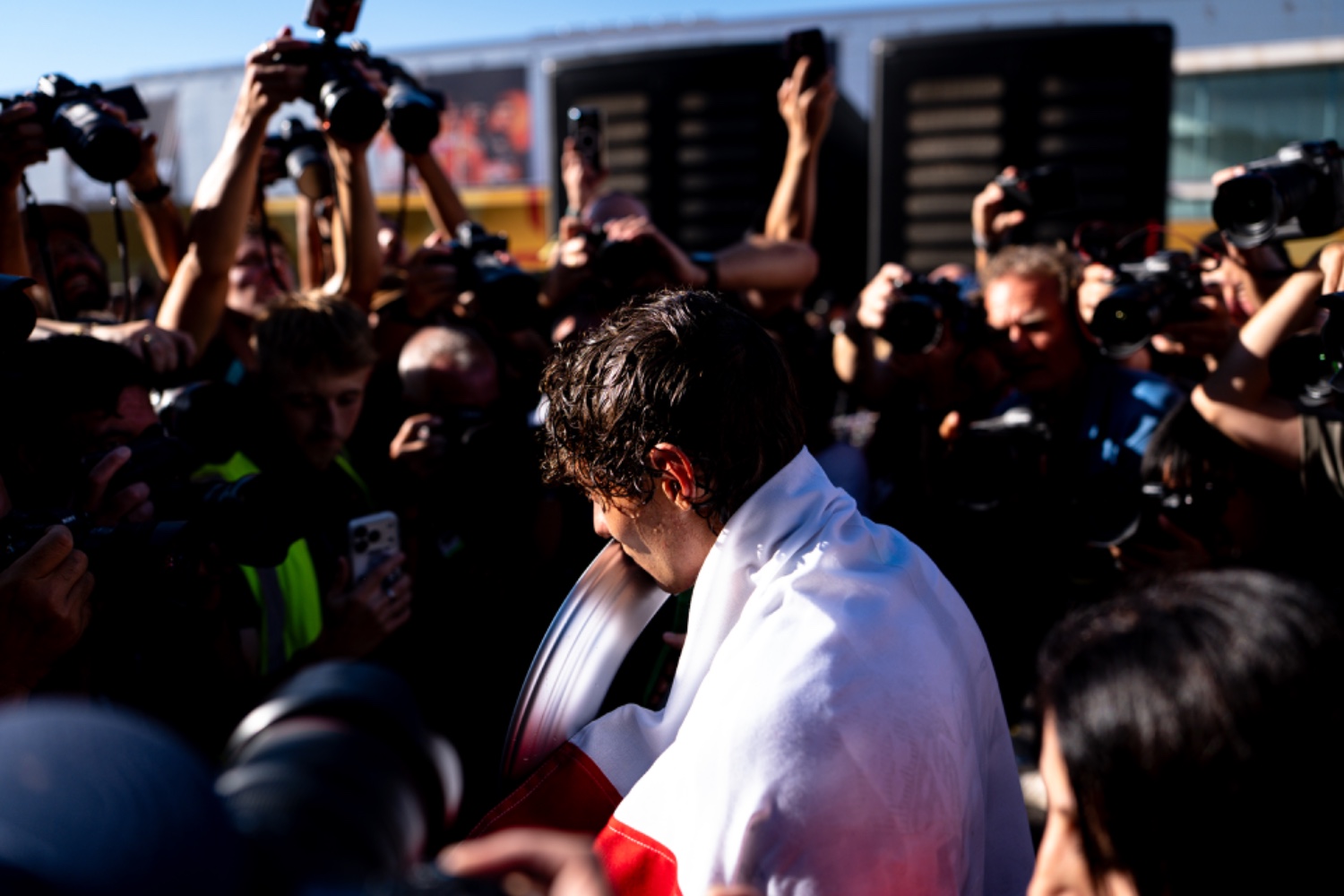
Forty-two years on, Lewis Hamilton arrives at Scuderia Ferrari facing a version of the same problem. But, for the first time in what must feel like forever, Lewis Hamilton’s legions of fans finally have something to smile about. Having endured a miserable first season with Ferrari, in which he failed to make the podium for the first time in his Formula 1 career, Hamilton has approached 2026 with renewed vigour. Armed with the promising SF-26, the seven-time world champion has finished in the top six in each of the opening three rounds and secured his first podium in red in China, after a memorable race-long tussle with his teammate Charles Leclerc.
These performances have sent the fandom into raptures and have even reignited speculation over a potential, record-breaking eighth world title. Some claim that a competitive car is all Hamilton needs to return to his brilliant best, while others argue that time waits for no man and that at 41 years of age, Hamilton’s best is behind him.
Should Ferrari produce a title-challenging car, there’s little denying that Leclerc will have the edge regarding outright pace. However, that does not mean it's impossible for Hamilton to get the better of a younger, faster teammate. Not least because 42 years ago, another all-time great defied the odds to do just that.
For many, the name Andreas Nikolaus Lauda is, quite literally, the stuff of legend. Never mind his three world championships and countless grand prix wins, the story of Lauda bouncing back after a near-fatal accident at the 1976 German Grand Prix was one so epic, even Hollywood took note (those of you who haven’t seen Ron Howard’s 2013 epic ‘Rush’ are sorely missing out). But it's Lauda’s third and final championship that’s of particular note today. After missing out on the ’76 title by just one point, Lauda duly reclaimed his crown the following year. A falling out with Enzo Ferrari and Luca di Montezemolo prompted him to leave the Scuderia, and subsequently join Brabham in 1978. After two lean years with the British squad, Lauda decided to call time on his F1 career, having fallen out of love with the sport. Instead, he focused on establishing his airline and had little to no interest in racing.
That was until 1981, when, having been talked into a handful of appearances as a commentator, Lauda watched as John Watson walked away from a seismic shunt at the Italian Grand Prix. Never mind his growing intrigue with the changes Formula 1 had undergone, Lauda was amazed by the apparent safety of this new breed of car. The switch was flipped; the former world champion was ready to take risks and push himself once more.
For McLaren boss Ron Dennis, this was the change of heart he’d been waiting for. Having just taken over the team with the backing of Phillip Morris, Dennis had been persistently hounding Lauda for the best part of two years. A private test was arranged at Donington in late 1981, and fifty-odd laps later, the decision was made: Niki Lauda was coming back. It may have been music to Dennis’ ears, but this announcement had its fair share of detractors, as many doubted Lauda’s speed and questioned his ability to contend with the current crop of F1 talent. There were even suggestions that Lauda’s comeback was born out of a need for capital for his burgeoning airline, a claim he was quick to refute.
After signing a contract he later claimed had a break clause after just three races, Lauda prepared for his return at the 1982 South African Grand Prix. Fourth place in his first race back was a promising start, while his victory at round three at Long Beach dispatched any lingering doubts. Another win at Silverstone, coupled with a third place at the Swiss Grand Prix (confusingly held in Dijon), meant Lauda ended his comeback year a promising fifth in the standings, just nine points behind his teammate Watson. As a racing driver returning from a two-year absence, the consistency Lauda showed across that season was more than most had expected.
However, this momentum suffered a body blow the following year, as poor reliability meant Lauda scored points in just four of 1983’s fifteen rounds. Despite another stunning performance at Long Beach, where he went from 23rd to second, it looked as though Lauda’s comeback was set to be a middling one. However, major changes, both good and bad, were inbound for 1984.
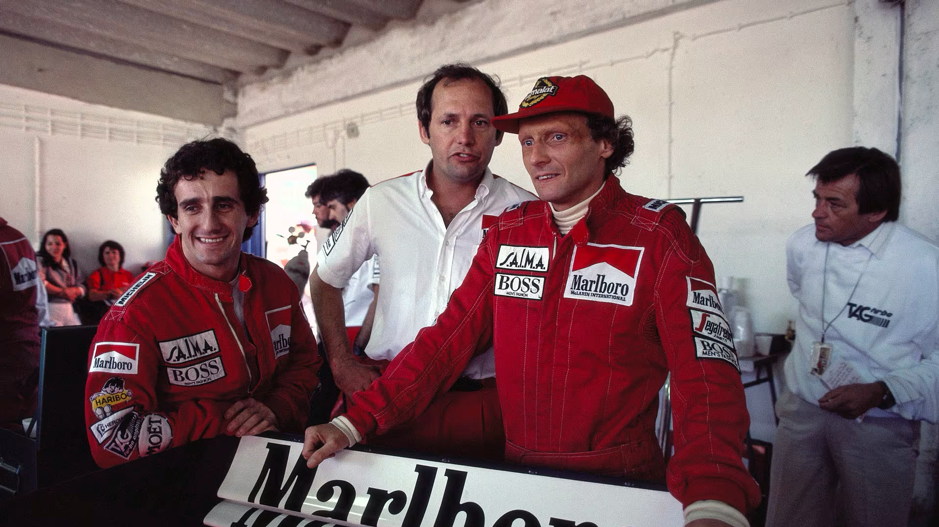
Having called time on their partnership with Ford the previous year, McLaren switched to Porsche-designed TAG V6 engines for 1984. It's worth mentioning that this generation of turbocharged cars (that could produce up to 1,200 horsepower in qualifying trim before being dialled back to 600 for the race in order to save fuel) was not one with which Lauda was ever comfortable. Compounding his woes was the arrival of Prost. He may have been six years Lauda’s junior, but Prost’s ability was already crystal clear. He’d racked up ten wins in three seasons with Renault and narrowly missed out on the world title in 1983. Lauda was less than enthused about Prost’s arrival: having enjoyed a good working relationship with Watson, the Austrian viewed this up-and-coming phenom as a threat.
Famously self-assured, Lauda nevertheless believed he would have the measure of his teammate.
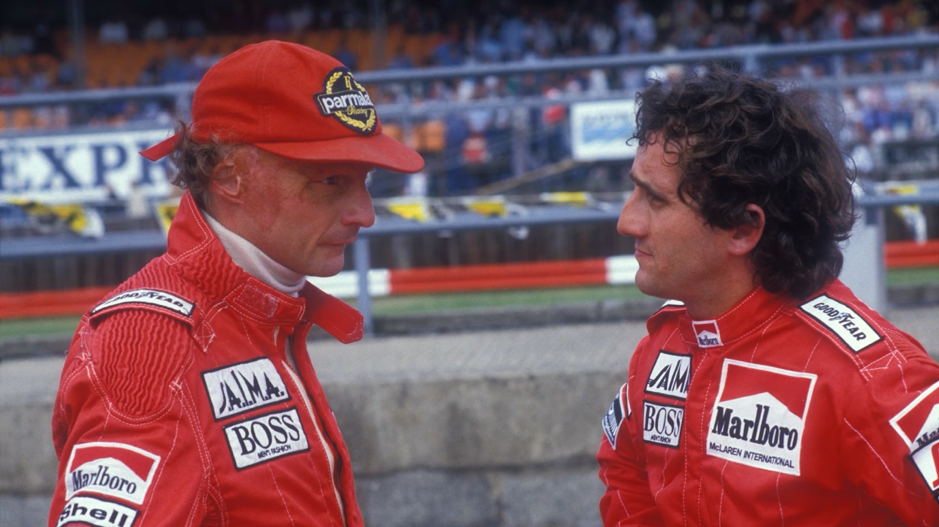
A belief that was shattered at the very first race, where Prost qualified fourth, two places and half a second clear of his teammate. A good start from Lauda saw him move into the lead on race day, only to retire with electrical issues. Having fought his way back into contention, Prost came through to take the win and an early championship lead. Although disappointed, Lauda vowed to take more risks and outqualify Prost at the next race in South Africa.
Once again, Lauda’s optimism would prove to be short-lived as Prost qualified fifth with Lauda even further adrift in eighth, but fortune would favour the Austrian on race day as a last-minute switch to the spare car forced Prost to start from the pit lane. Lauda made the most of his McLaren MP4/2’s straight line speed to work his way into the lead by lap 21 and duly claimed the win, one that was somewhat dampened by Prost recovering to second.
A double DNF for the team in Belgium was followed by an engine failure for Lauda at Imola, all while Prost led from start to finish and extended the points gap between them to 15 (bearing in mind this was an era where just nine points were awarded for a win). Lauda got the rub of the green at round five in Dijon, where he was able to complete a credible recovery drive from ninth to first, while Prost finished out of the points, but the next race at Monaco would prove pivotal in determining the outcome of the world championship.
As he stared at the timesheets, Lauda was at a loss to explain the 1.2 seconds that separated him and Prost in qualifying, and with this being Monaco, the Austrian could do little to save face on Sunday.
Starting eighth, Lauda was unable to make any progress in the pouring rain and spun off on lap 23. He was also a high-profile casualty of one Ayrton Senna. Starting 13th in the unfancied Toleman TG 184, Senna produced one of the greatest wet-weather drives of all time and moved into second place after just 19 laps. He began catching Prost by around three seconds a lap, only for the race to be red-flagged on lap 31. With less than 75% of the scheduled having been completed, half points were awarded. Prost therefore scored 4.5 points instead of the usual nine, an anomaly that would prove crucial come season’s end.
Lauda, though, was faced with a grim realisation: for the first time in his career, he had a faster teammate. Pole position was no longer a realistic ambition.
Beating Prost over one lap was now out of the question; Lauda concentrated his efforts on race pace. His tyre choice, setup and race craft would now revolve around optimising his performances on Sunday to ensure that he would be best placed to capitalise should Prost ever hit trouble.
At the tenth round at Brands Hatch, this approach finally paid off. Running in second, Lauda took the win thanks to a gearbox problem for Prost and closed to within one and a half points of the Frenchman. There was little he could do to stop his teammate at the next race in Germany, but as the F1 circus headed for Austria, Lauda would be handed a lifeline. It was, by any measure, his home grand prix, and the crowd knew exactly what they were watching.
Lying third after the opening exchanges, well behind the leading duo of Prost and Nelson Piquet, Lauda’s race was turned on its head by Elio de Angelis, who suffered a major engine failure on lap 28 that left much of the main straight covered in oil. As the leaders arrived on the scene, Piquet was able to take evasive action, while Prost (who was driving one-handed as he battled yet more gearbox trouble) was not.
With his main rival out of the way, Lauda made short work of Piquet and seized the lead on lap 40. A memorable home win looked to be on the cards until Lauda lost fourth gear and ground to a halt with less than ten laps to go. Not wanting to walk back to the pits, Lauda attempted to regain drive and, in doing so, realised that third and fifth gear were still available. He soldiered on but was haemorrhaging up to five seconds a lap. Piquet gave it his all, but Lauda’s extraordinary mechanical sympathy saw him take a momentous win and with it the championship lead.
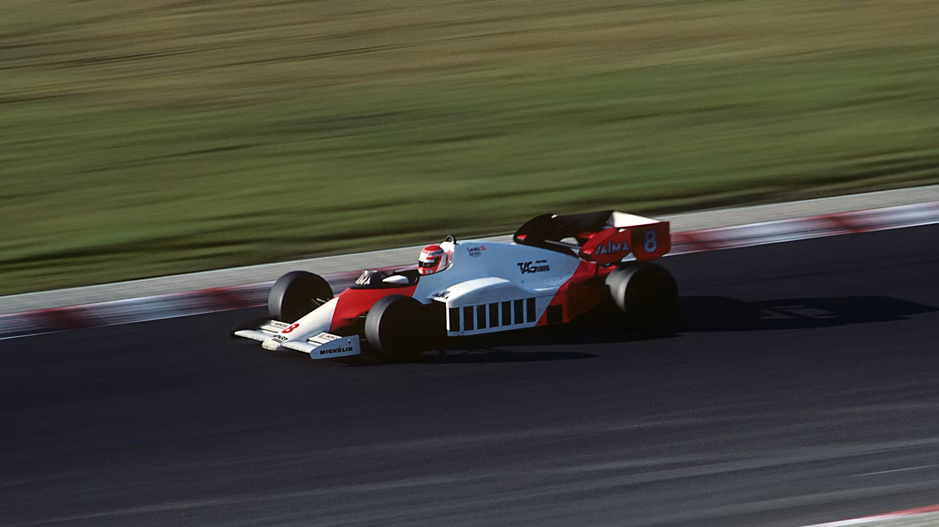
And so, the tone for the rest of the season was set with Prost having the edge, particularly in qualifying, and Lauda capitalising on his teammate’s misfortune. The former hit back with victory at Zandvoort, but Lauda kept himself in the hunt with second. Prost suffered an early engine failure at Monza, leaving the door wide open for Lauda, who took the win and a ten-and-a-half-point championship lead. With two races remaining, Lauda could have wrapped up the title at the European Grand Prix (held at a sanitised variant of the track that nearly took his life eight years earlier), but an ill-judged move on a backmarker relegated him to fourth.
Prost took his seventh victory of the season to take the title battle down to the wire.
With three and a half points in hand, Lauda would be world champion if he finished ahead of Prost in Portugal, but as qualifying unfolded, it was clear that such a scenario would not occur. Struggling with an underpowered V6, Lauda suffered a spin and started a lowly 11th. With Prost on the front row, it looked like Lauda would fall just short.
Niki Lauda won three Formula 1 world championships, his third world championship the most improbable of the three: in 1975 and 1977 with Ferrari, and in 1984 with the McLaren team. His 1984 title came seven years after his second, making him one of the few drivers in the sport's history to win a championship after a significant gap between titles. Across his career, Lauda started 171 grands prix, won 25 and retired from the sport for the final time at the end of the 1985 season.
But after losing a place off the start on race day, the resolve and determination that had defined much of Lauda’s career began to show. Knowing that was his best, and probably last, shot at glory, Lauda pushed harder than he ever had before. Not my opinion, but that of 1982 world champion Keke Rosberg. Managing his tyres, turbo and passing to perfection, Lauda picked off those ahead of him one by one and moved into third by lap 33. It looked as though that was as far as he could go, and with Prost out in front, it meant the Frenchman was champion elect.
However, this seesaw championship bout delivered one final twist as second-place Nigel Mansell retired with brake failure with just 18 laps to go. Lauda gratefully inherited second place, enough to claim his third world title, a record seven years after his second.
Having defied expectations, precedent and his recalcitrant machinery, Lauda had prevailed over a faster teammate by just half a point, the smallest winning margin in Formula 1 history. He may have lacked the raw pace of Prost, but Lauda’s experience, guile and racing know-how allowed him to maximise the opportunities afforded to him, and it is those traits that stand to benefit Lewis Hamilton over four decades on.
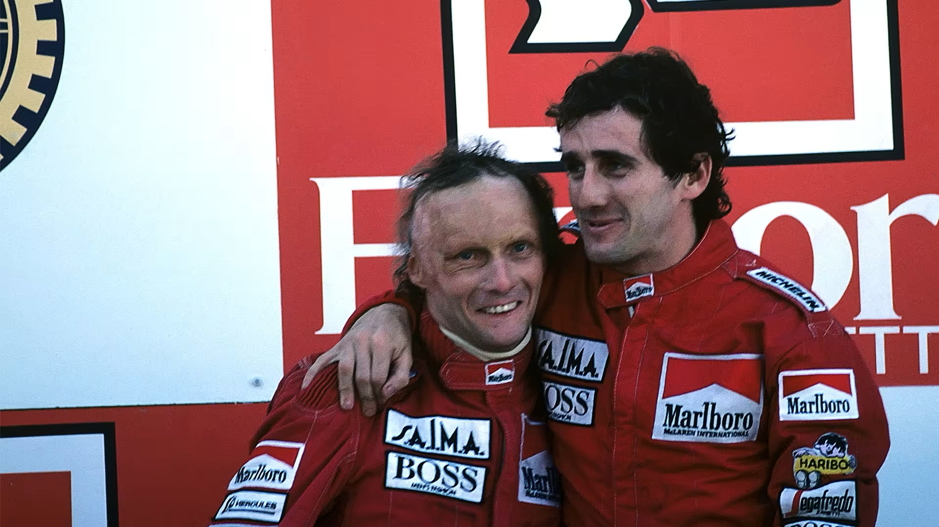
Widely regarded as one of the best drivers of his generation, Leclerc is at the peak of his powers and will likely remain the faster of the two Ferrari drivers, but with 20 seasons and 383 race starts to his name, Hamilton has a wealth of experience to draw from, Jackie Stewart once said that the most important quality in a racing driver isn't speed, it's knowing when not to use it. That is precisely the lesson the 1984 season teaches. Should he find himself embroiled in an intra team title bout, it is that which Hamilton has acquired over the years that will give him his best chance at that elusive eighth world championship. Raging against the dying of the light is never easy, but as Niki Lauda demonstrated, it's by no means impossible.