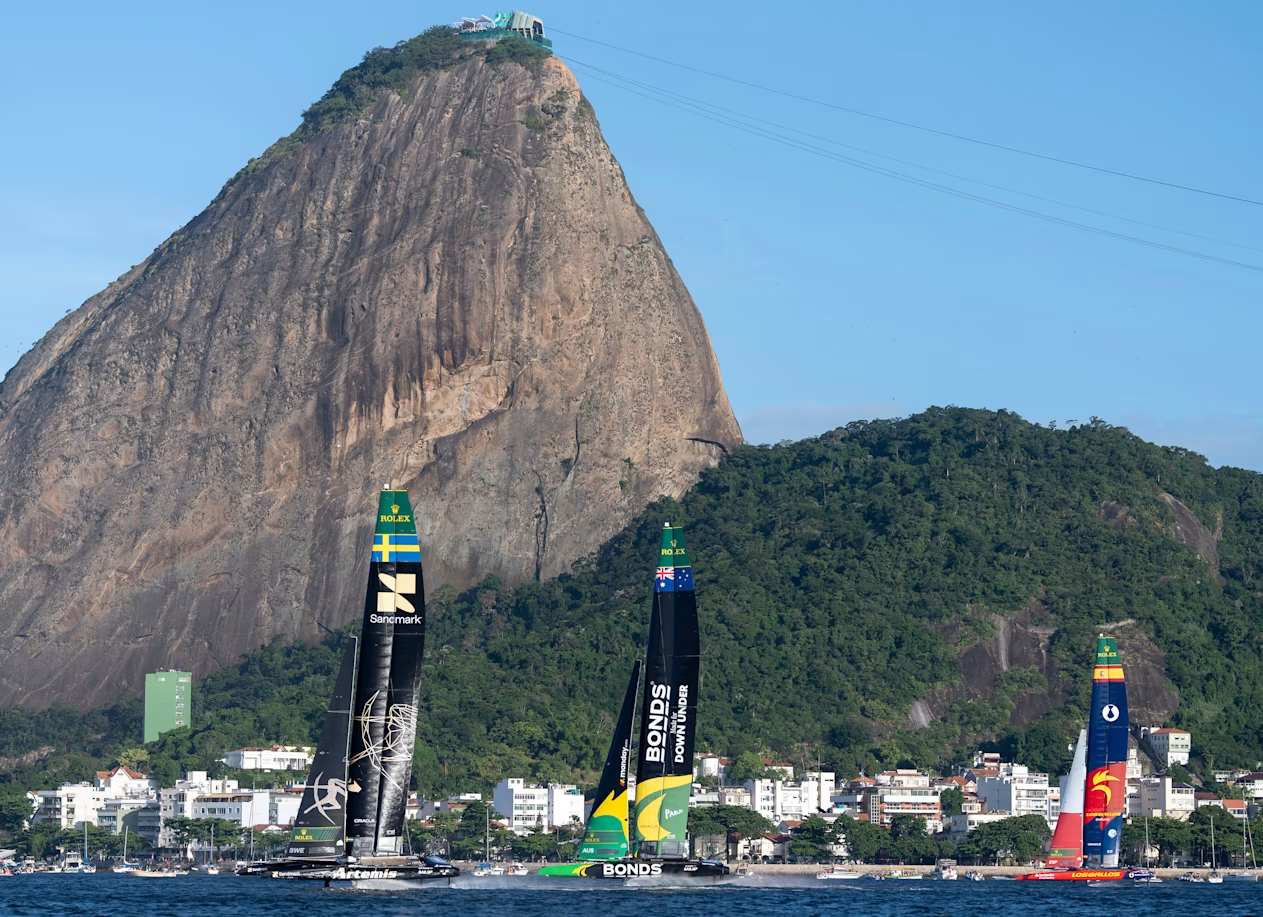
Guanabara Bay, with the imposing Sugarloaf Mountain guarding the horizon, was the setting for one of the most clinical displays in the history of SailGP, where the Australian SailGP team, the BONDS Flying Roos, delivered a strategic comeback that culminated in absolute dominance over Brazilian waters at the Rio Sail Grand Prix. The league's arrival in South America for the first time carried enormous expectation, not only for the debut on a new continent, but for the need to see the F50 catamarans truly take flight after an opening day marked by fickle and frustrating winds in Rio de Janeiro.
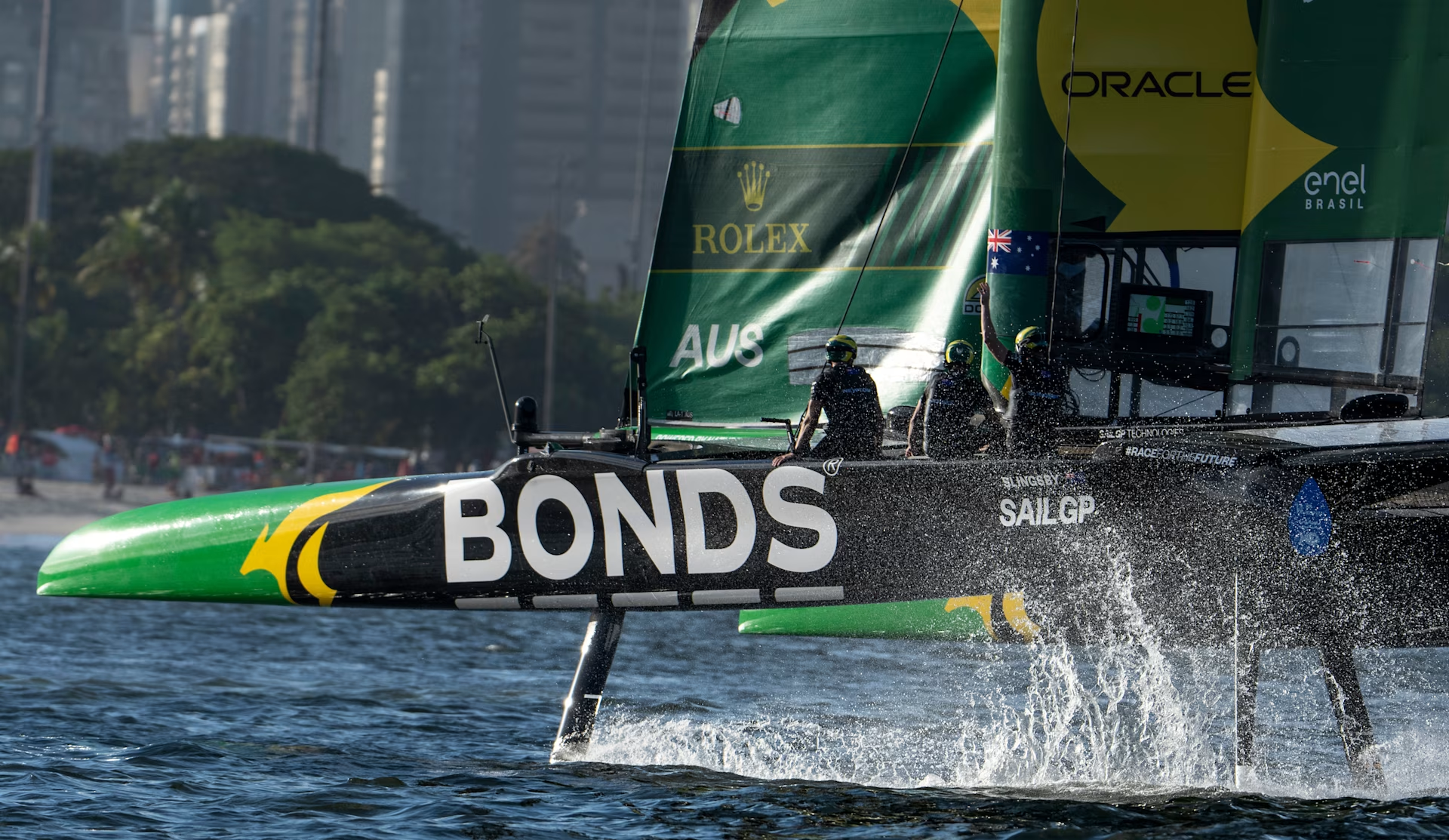
Saturday began with an electric atmosphere, with thousands of people cheering on the shoreline, but nature decided to test the crews' patience with light gusts and patches of calm that turned the regatta into an exercise in tactical survival rather than pure speed. In this context, Tom Slingsby and his crew finished the first day with a bittersweet feeling, leading the table by the narrowest of margins with 28 points, but without having managed to cross the finish line in first place in any of the four fleet race contests.
It was a Saturday of varied winners, where Artemis Racing, Los Gallos from Spain, Italy, and Germany shared the victories, leaving Australia in a position of constant pursuit, racking up podiums thanks to an astonishing consistency that allowed them to absorb even penalties in the fourth race to remain at the top of the provisional overall Rolex SailGP Championship standings. However, Slingsby, known for his competitive nature and perfectionism, left the racecourse that day visibly unhappy with some umpiring decisions, a state of mind that is usually the prelude to a storm for his rivals.
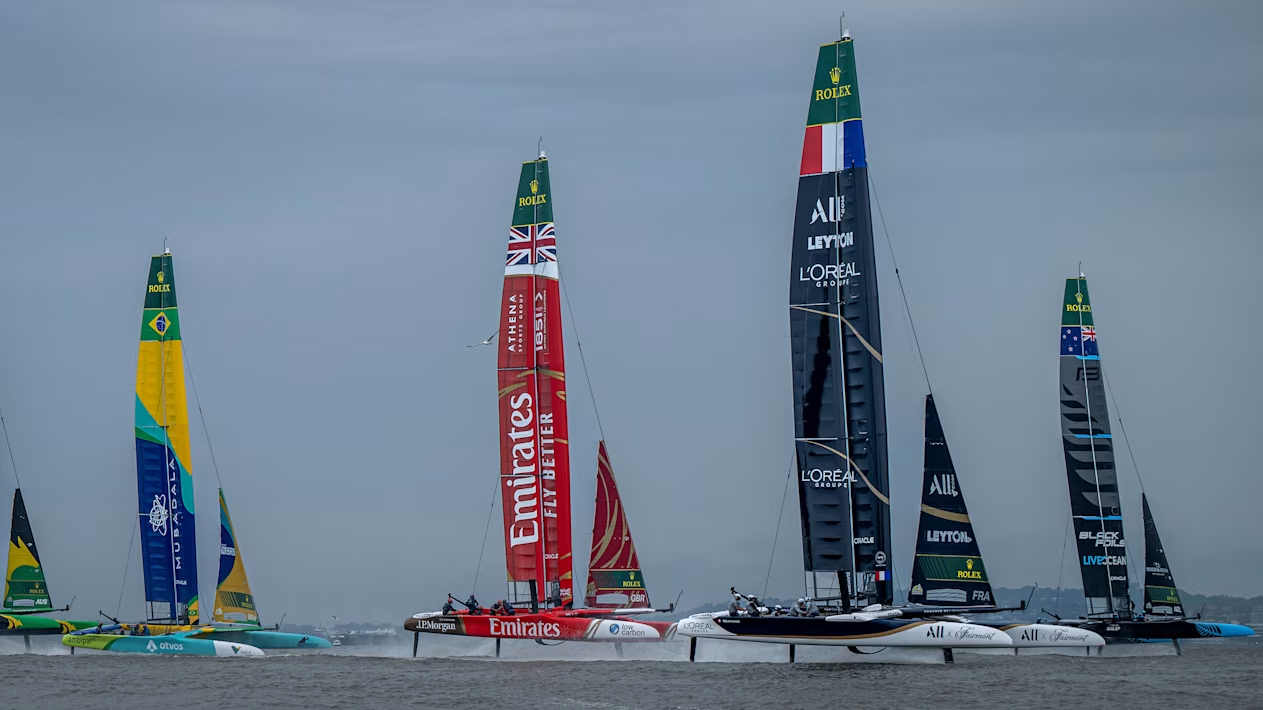
What followed on Sunday was, in essence, a statement of intent, a radical script change where the Australians decided there was no longer any room for speculation. Guanabara awoke to a 25-knot breeze, a potent and shifty wind filtering through the mountains that demanded millimetre precision in manoeuvres. With the F50s finally settled stably on their foils, the Flying Roos transformed into a clinical and ruthless machine, with the BONDS Flying Roos delivered one of the most dominant performances seen in a SailGP event.
In race five, the first of the second day, Australia proved that heavy wind was their natural element, for despite carrying a penalty at the start for an OCS, they managed to charge through the back of the fleet with a top speed that no one could match. While teams like Emirates GBR foundered in the chaos of protests and lack of rhythm, Slingsby sailed with astonishing mental clarity, choosing perfect pressure lines to overtake Artemis and Phil Robertson’s Italy, sealing their first victory of the event and setting the tone for what was to come.
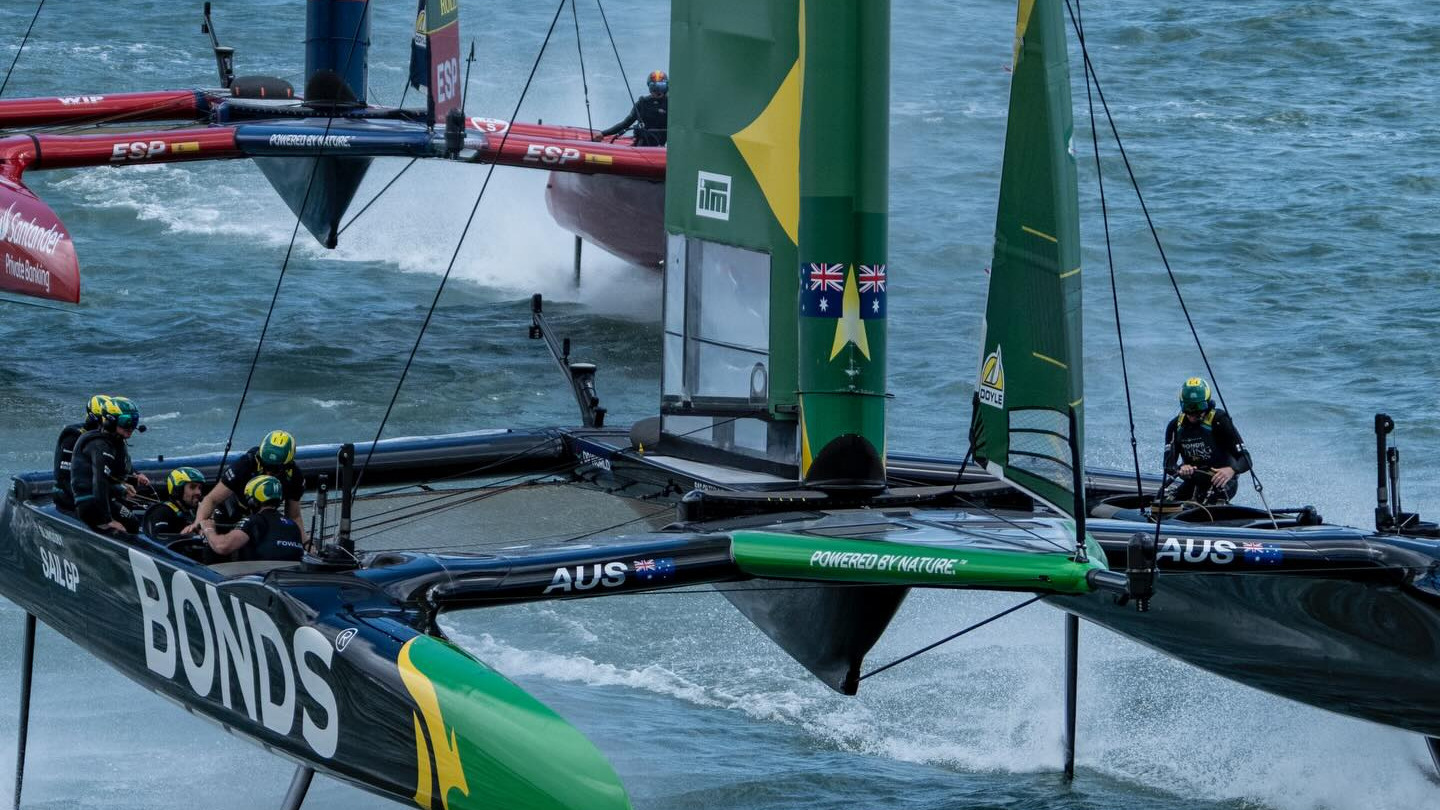
The Australian team was not just winning, they seemed to dance between the marks while the rest of the fleet struggled to maintain control in the tight turns and narrow boundaries of the racecourse. Race six was perhaps the clearest proof of the Flying Roos' mental superiority, as they were once again forced to serve a penalty after an incident with Switzerland in the opening moments.
In a sport where ten seconds of delay is usually a death sentence, Australia passed the first mark in tenth position, eleven seconds behind the leaders. What followed was a masterclass in navigation; the team was able to read the unpredictable gusts falling from Sugarloaf to climb positions leg after leg, until by the third mark they had snatched the lead from Denmark.
The gap only grew, finishing the race eighteen seconds ahead of Spain and consolidating a streak that began to stifle the hopes of their pursuers. Slingsby and his team were in that state of grace where every tactical decision turns to gold, connecting the wind shifts with a fluidity that made what was actually a tactical minefield look simple.
With qualification for the grand final practically assured, the seventh and final fleet race was the perfect close to the group stage, achieving their third consecutive victory of Sunday in a heart-stopping finish where they beat Germany by a mere seven-tenths of a second, totalling fifty-eight points, the highest figure recorded at an event since last season in Sydney.
The three-boat final, the winner-takes-all format that defines SailGP, pitted Australia against a revitalised Artemis SailGP Team and the consistent Spaniards of Los Gallos. With pressure at its peak and the Brazilian crowd roaring from the shore, the start was a moment of extreme tension where Sweden tried to win the inside, but Slingsby, with the grit of someone who has won seventeen finals, knew how to protect his position and lead from the first mark.
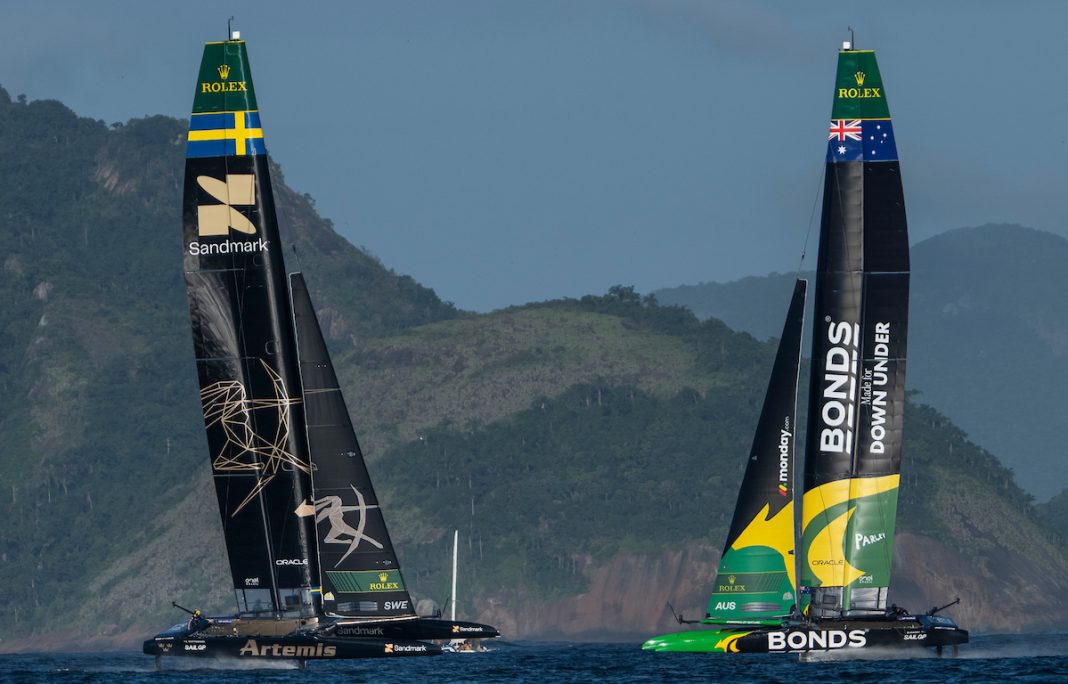
Although there were moments of visual contact between the boats in the early stretches, a tactical error and a penalty for Artemis against Spain gave the Flying Roos the space they needed to break away. From that moment on, the final ceased to be a fight and became an Australian monologue, extending the lead until crossing the line with staggering ease, thus completing a perfect Sunday of four wins from four starts.
Upon finishing, the team radio captured a sober and pragmatic Slingsby telling his teammates that they had simply raced well, a short phrase that hid the magnitude of having completely swept aside the best sailors in the world in a new and complicated setting. This victory at the ENEL Rio Sail Grand Prix not only gave them the trophy on South American soil but allowed them to make a definitive statement in the 2026 Rolex SailGP championship standings.
The Flying Roos now sit in pole position, with a seven-point lead over the reigning champions Emirates GBR, who endured a weekend to forget, finishing in last place, and eight points ahead of the United States team. While other teams like the French suffered disqualifications for excessive aggression or the New Zealanders continued to watch the races from the sidelines waiting for their new boat, Australia proved why they are the gold standard of the fleet among the world’s top SailGP teams.
Spain’s consistency in second place and a historic first podium for the new Swedish Artemis team were notable highlights, but the primary narrative was the unstoppable resurgence of the Roos. SailGP’s debut in South America could not have been more spectacular, with nearly eight thousand people witnessing how Guanabara Bay turned into a high-speed stadium where, at the end of the day, the experience and calm under pressure of the Australian crew made the difference.
Now, with the wind in their sails and confidence through the roof, the fleet looks towards the waters of Bermuda for May, knowing that to beat Slingsby and his crew they will need something more than speed; they will need to find a crack in an armour that, after what was seen in Rio, appears entirely impenetrable.
The SailGP results are one thing, but global success in professional sailing is another. Australia did not just win in Brazil, they reclaimed that aura of invincibility that forces every other competitor to sail always at the limit, often making forced errors simply due to the presence of the Flying Roos in their wake. The sailing carnival in Rio ended with the green and gold at the very top, making it clear that the road to the 2026 title inevitably involves overcoming a team that has found an extra gear just as the season enters its most critical phase.
The leaderboard for the 2026 Rolex SailGP Championship was significantly shifted by the results in Rio.