After the opening round of the 2026 season, marked by the victory of Emirates Great Britain SailGP Team in Perth, the Rolex SailGP Championship arrives in Auckland with a storyline shaped by the home team’s return, technical rebuilds and a demanding weather forecast.
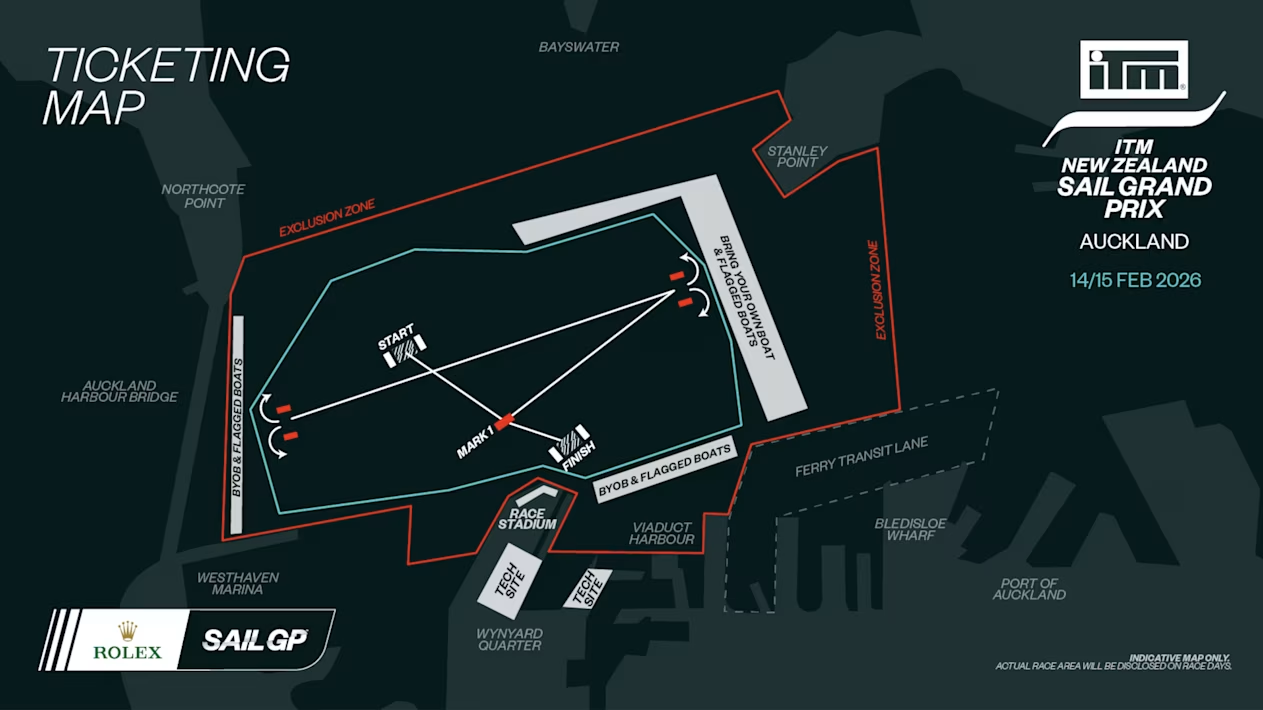
In Australia, the British team confirmed it remains the benchmark following its winning momentum from Abu Dhabi 2025. They travel to New Zealand aiming to improve on last season’s third-place finish here and to consolidate their early lead in the championship. However, Auckland is not solely about the current frontrunners.
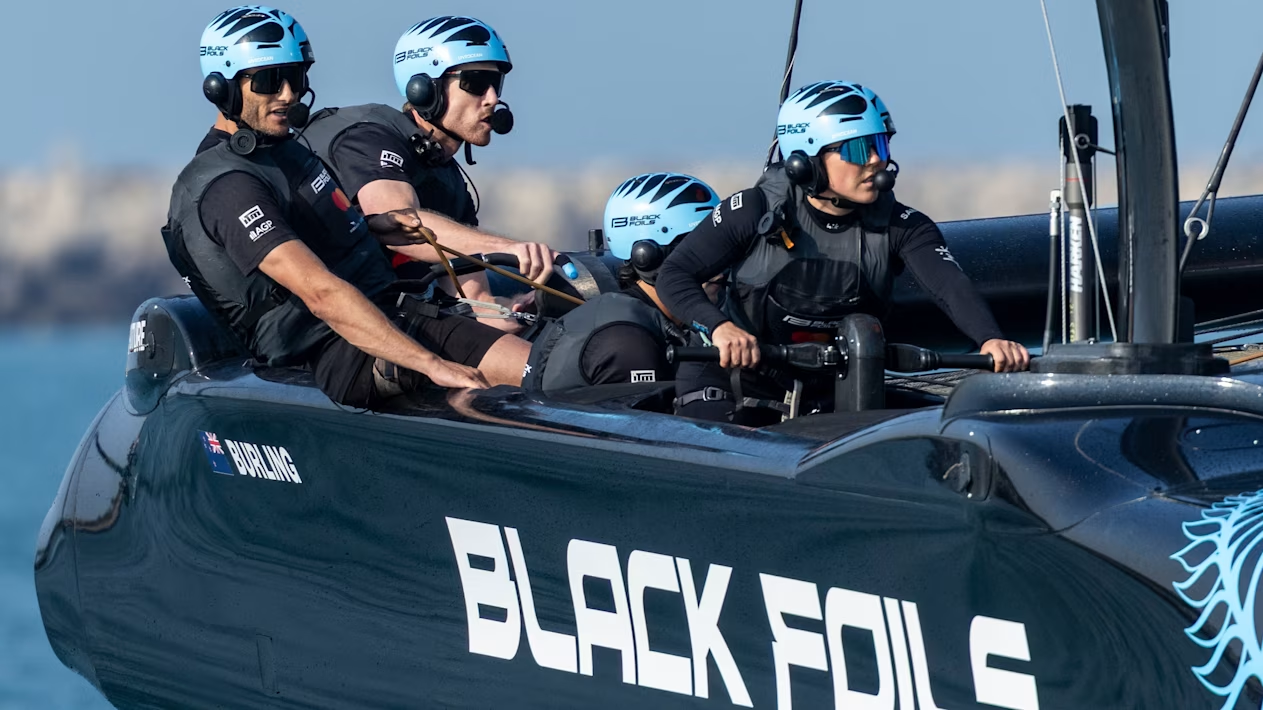
The host team, New Zealand SailGP Team, suffered a setback in Perth after a collision with Switzerland left its F50 out of action shortly after the start of the event. A precise technical operation followed, with an approximately two-metre structural section of the hull manufactured from scratch in the United Kingdom by SailGP Technologies and shipped to Auckland for final assembly.
Specialists worked to integrate the new segment, reinstall composite panels and align control systems to ensure the boat met safety and performance standards. The objective was clear, to return the Black Foils to the water for their home event.
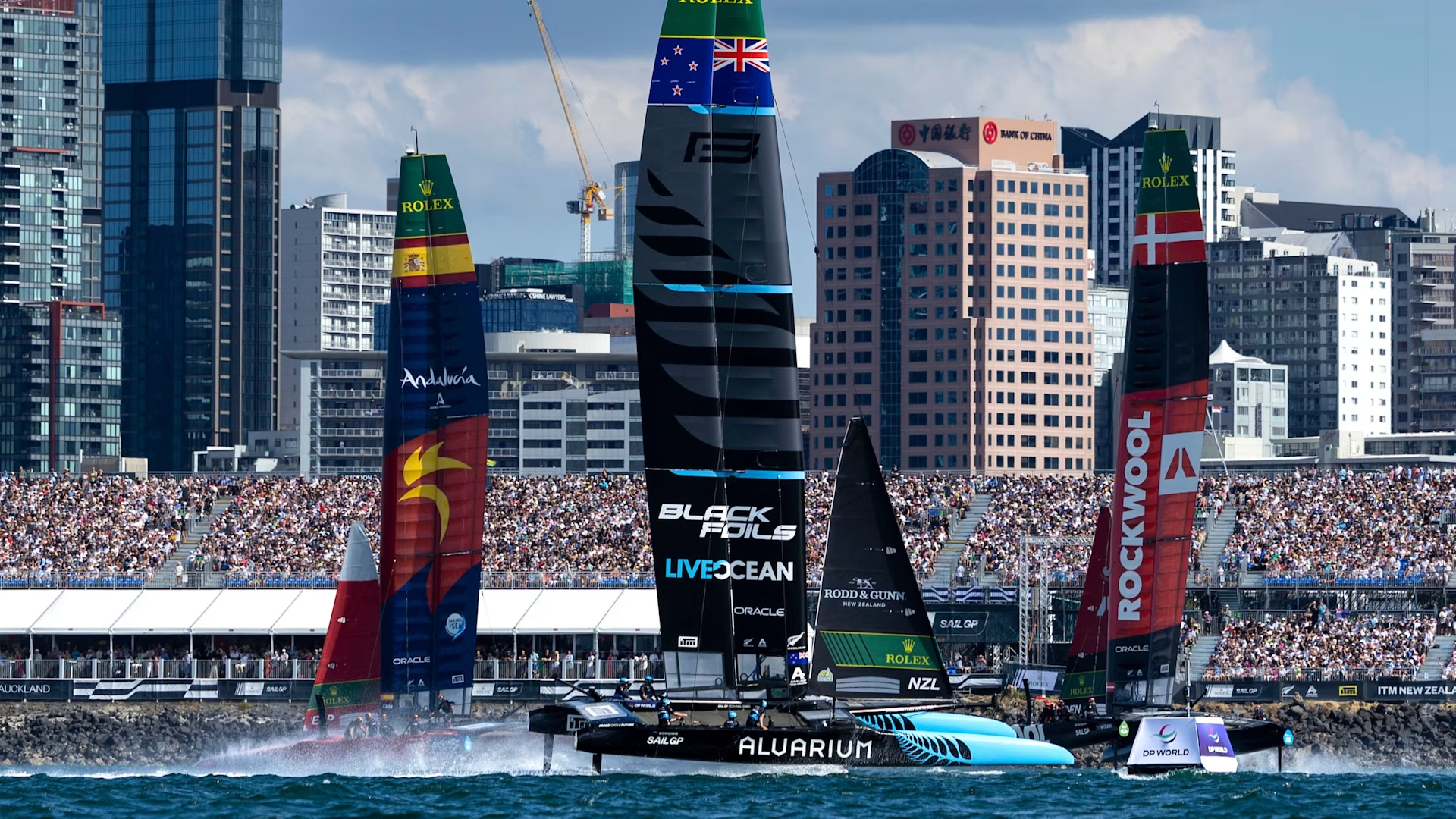
Led by Olympic champions and America’s Cup winners Peter Burling and Blair Tuke, the team restarts its season in front of a crowd estimated at up to 26,000 spectators across the weekend on the Waitematā Harbour. The presence of 13 boats and the expansion of the Race Stadium underline the scale of the event in the city.
The technical work did not stop with New Zealand. Switzerland lost part of its bow in the original collision, while Los Gallos, representing Spain and champions in 2024, return after missing Perth due to a pre-season training crash.
In Spain’s case, the structural damage prevented them from competing and scoring points in the opening round. The technical team rebuilt the necessary components and restored the boat to operational condition. For Spain, Auckland marks the effective start of its 2026 campaign.
With all teams prepared, the championship could see 13 F50s lined up on the start line for the first time. More boats mean greater congestion on the racecourse and a reduced margin for error.
Among the teams to watch are the BONDS Flying Roos, winners in Auckland last season and recognised for their strength when the breeze builds. Forecasts indicate winds between 30 and 40 km per hour on Saturday, with gusts potentially reaching 55 km per hour on Sunday, conditions that suit their competitive profile.
Artemis showed consistency in its debut in Perth, while the United States team finished fifth with clear improvements in strong-wind sailing compared with the previous season. After several internal changes over the past year and a half, the American squad appears to have found stability, an important factor in a discipline that demands constant coordination.
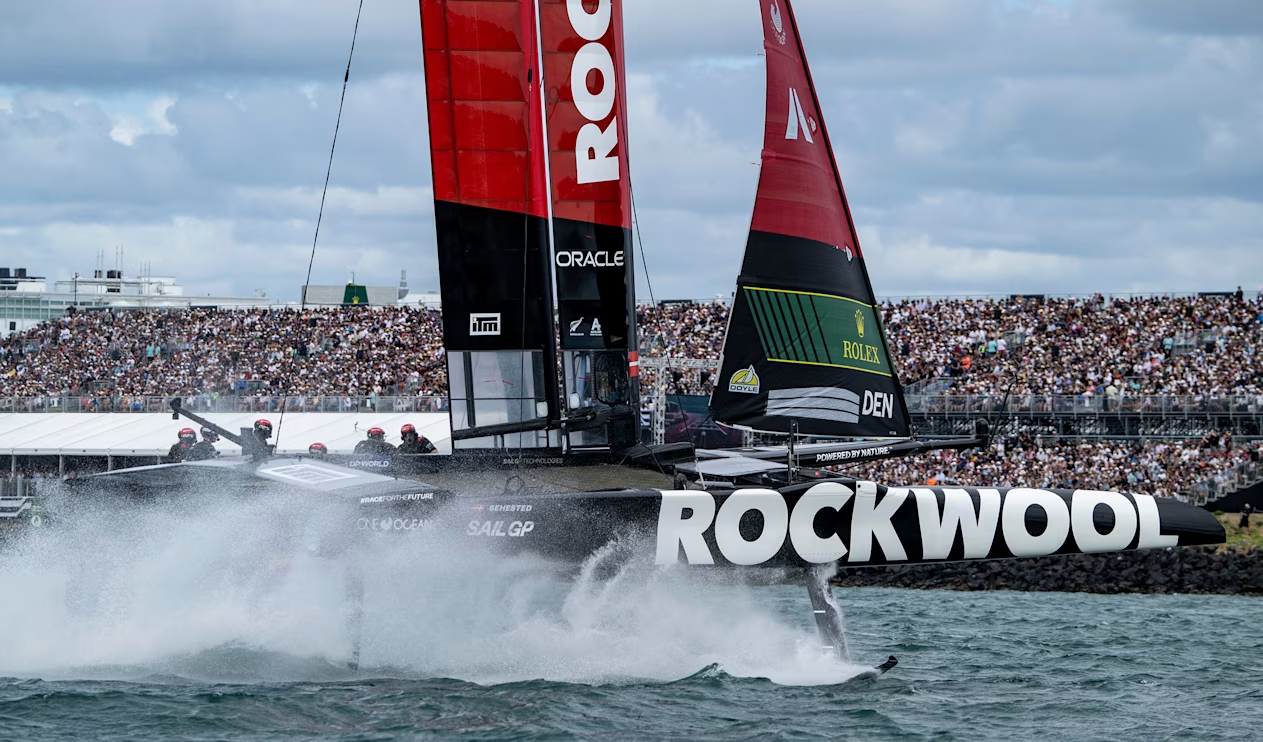
ROCKWOOL Racing, eighth in Perth under Nicolai Sehested, will compete for the first time under new ownership. The Danish team has been acquired by sports investor and American Magic co-founder Doug DeVos, marking a new institutional phase within the championship.
While Perth presented ocean swell, Auckland offers a flatter surface inside the harbour, favourable for reaching higher speeds. However, a low-pressure system east of the North Island and the geography of the Waitematā create gustier and more variable wind conditions.
These gusts require constant adjustment and narrow the gap between tactical decision-making and technical control. In such conditions, maintaining stability on the foils is as decisive as racecourse strategy.
Thunderstorms led to the cancellation of official practice on Friday. Organisers brought Sunday’s start forward to 11.30 am local time for safety reasons in light of the forecast strong winds, while Saturday’s racing remains scheduled for 4 pm.
Last season, ROCKWOOL Racing set a speed record of 103.94 km per hour in Sassnitz. With the ongoing technical development of the F50s and a relatively flat racecourse, Auckland could offer suitable conditions to approach that figure.
The second stop of the 2026 calendar will serve as a technical and competitive test in an environment where the wind can alter the outcome within minutes. With the F50 rebuilt, home support behind them and a demanding racecourse ahead, the question remains, can the Black Foils turn their home return into a victory?