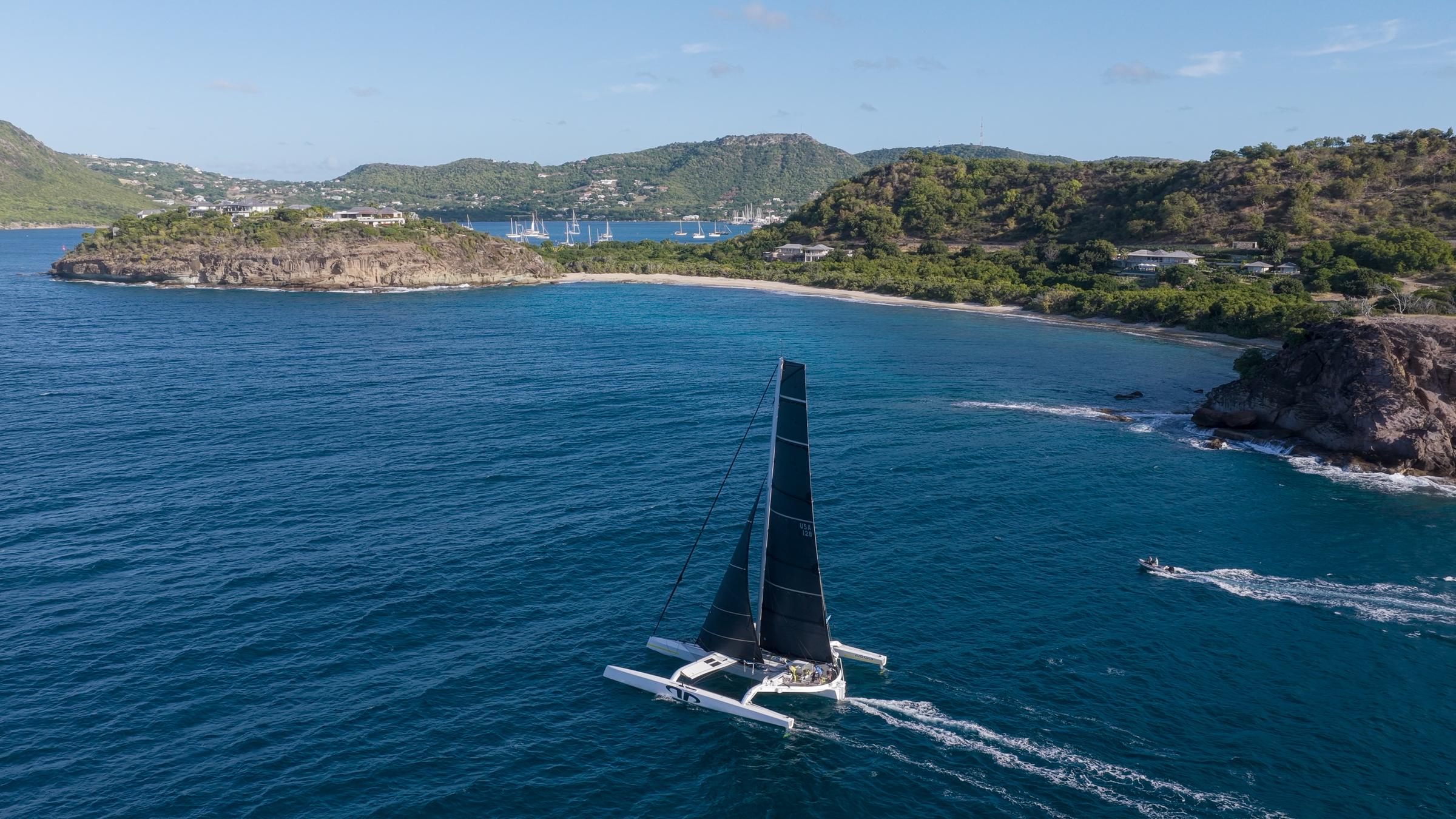
Jason Carroll’s MOD70 Argo delivered one of the most commanding performances seen in recent offshore racing history, claiming Multihull Line Honours at the 2026 RORC Transatlantic Race and setting a new outright multihull record on the Lanzarote–Antigua course. The American trimaran crossed the finish line off English Harbour, Antigua, on Friday 16 January at 12:31:15 UTC, completing the Atlantic crossing in 4 days, 23 hours, 51 minutes and 15 seconds.
The victory not only secured line honours for Argo, but also established a new benchmark for multihulls on this iconic ocean route. This year’s edition introduced a revised finish in Antigua, replacing the traditional arrival in Grenada, a change that increased the course length and added a new layer of complexity to any historical comparison.
From the moment the fleet departed Marina Lanzarote, Argo and its closest rival, Erik Maris’ MOD70 Zoulou, engaged in a direct and relentless duel at the head of the race. For much of the crossing, the two trimarans were separated by only a handful of miles, matching each other stride for stride at sustained speeds well above 30 knots.
Zoulou crossed the finish line just two hours and 32 minutes behind Argo after five days of unbroken pressure, bringing to a close one of the closest and most intense multihull contests ever seen in the RORC Transatlantic Race. For Chad Corning, skipper of Argo and a long-time architect of the project, the result reflected exactly the kind of race the team had anticipated. A small early advantage was established, then defended and extended incrementally, with Zoulou pushing hard throughout and leaving no room for complacency.
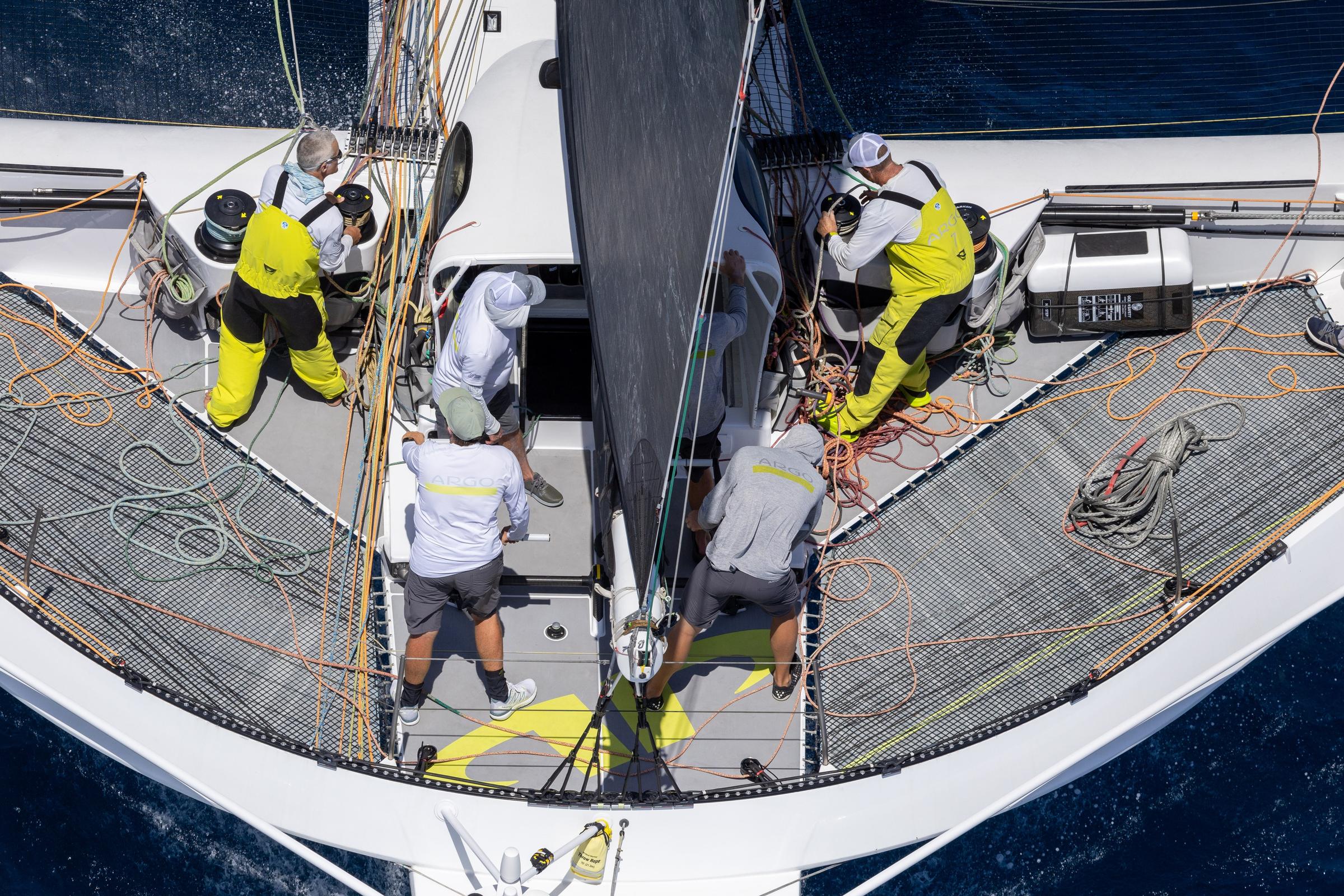
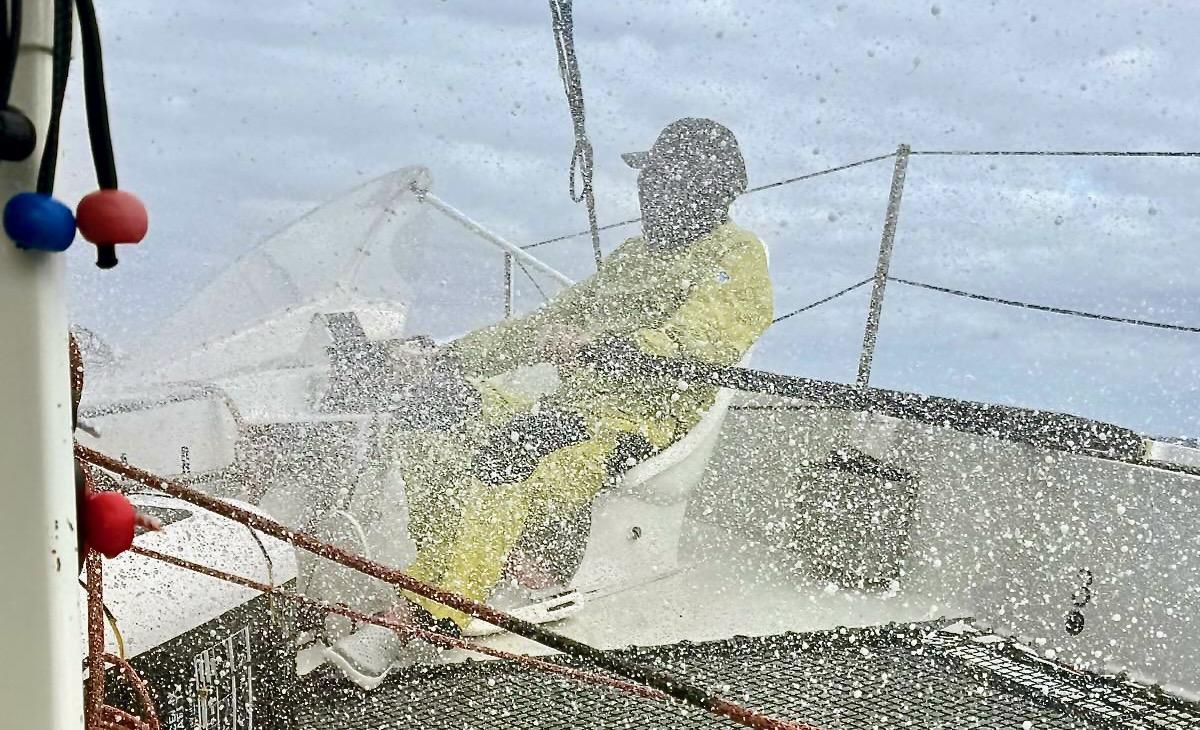
The physical and mental toll of the crossing was significant. Even after docking in Antigua, the crew were still coming down from the intensity of the effort. Long, dark nights with minimal moonlight and a growing sea state demanded absolute focus, as the boat surfed at extreme speeds through heavy Atlantic swell. Corning later described the experience as navigating at full pace with almost no visual reference, relying entirely on feel, instinct and trust in the boat.
That trust was built well before the start. Argo was based in Lanzarote from September, undergoing a comprehensive refit and inspection programme at Marina Lanzarote. Every mechanical system on board was removed, inspected and either serviced or replaced, with extensive non-destructive testing carried out across the platform.
The value of that preparation became clear mid-race when Argo developed a serious issue with the port rudder. Vibration and movement were detected just as daylight was fading. Alister Richardson immediately intervened, working over the stern with limited light to secure the system. Without that repair, continuing safely at racing speed would have been impossible.
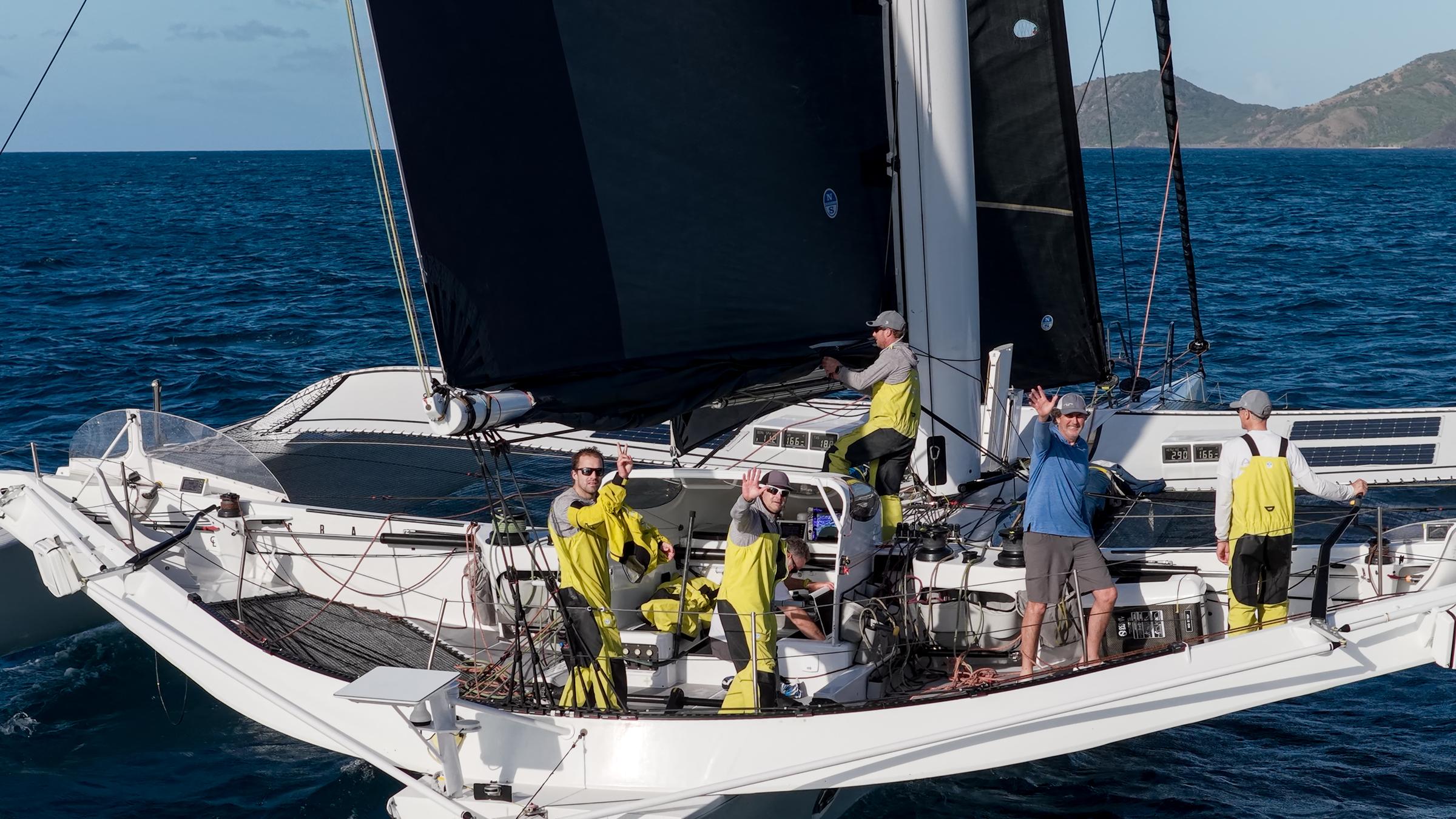
Argo’s crew for the crossing combined deep offshore experience with versatility. Chad Corning was joined by Pete Cumming, Sam Goodchild, Charles Ogletree, Alister Richardson and Brian Thompson, all of whom rotated through key roles on board. The approach demanded constant communication and honesty, with crew members stepping back when fatigue set in and others covering without hesitation.
For Sam Goodchild, who has raced extensively aboard the larger Ultim trimarans, the MOD70 offered a very different dynamic. Lighter, more agile and sailed by just six people, the boat responds instantly, allowing aggressive manoeuvring and sustained sailing close to the edge. Speed comes not from sheer size, but from balance, precision and trust within the crew.
Veteran offshore sailor Brian Thompson placed the achievement firmly in historical context. Thousands of boats have crossed from the Canary Islands to the Caribbean since the late 15th century. To be the fastest ever over such a well-travelled route, in a true race environment, is a rare distinction.
Attention now turns to the monohull fleet, with the Baltic 111 Raven expected to arrive in Antigua on Sunday. Her performance positions her to claim the IMA Transatlantic Trophy as the first maxi monohull to finish, while also setting the reference for the overall IRC corrected-time victory.